


Where engineering meets community
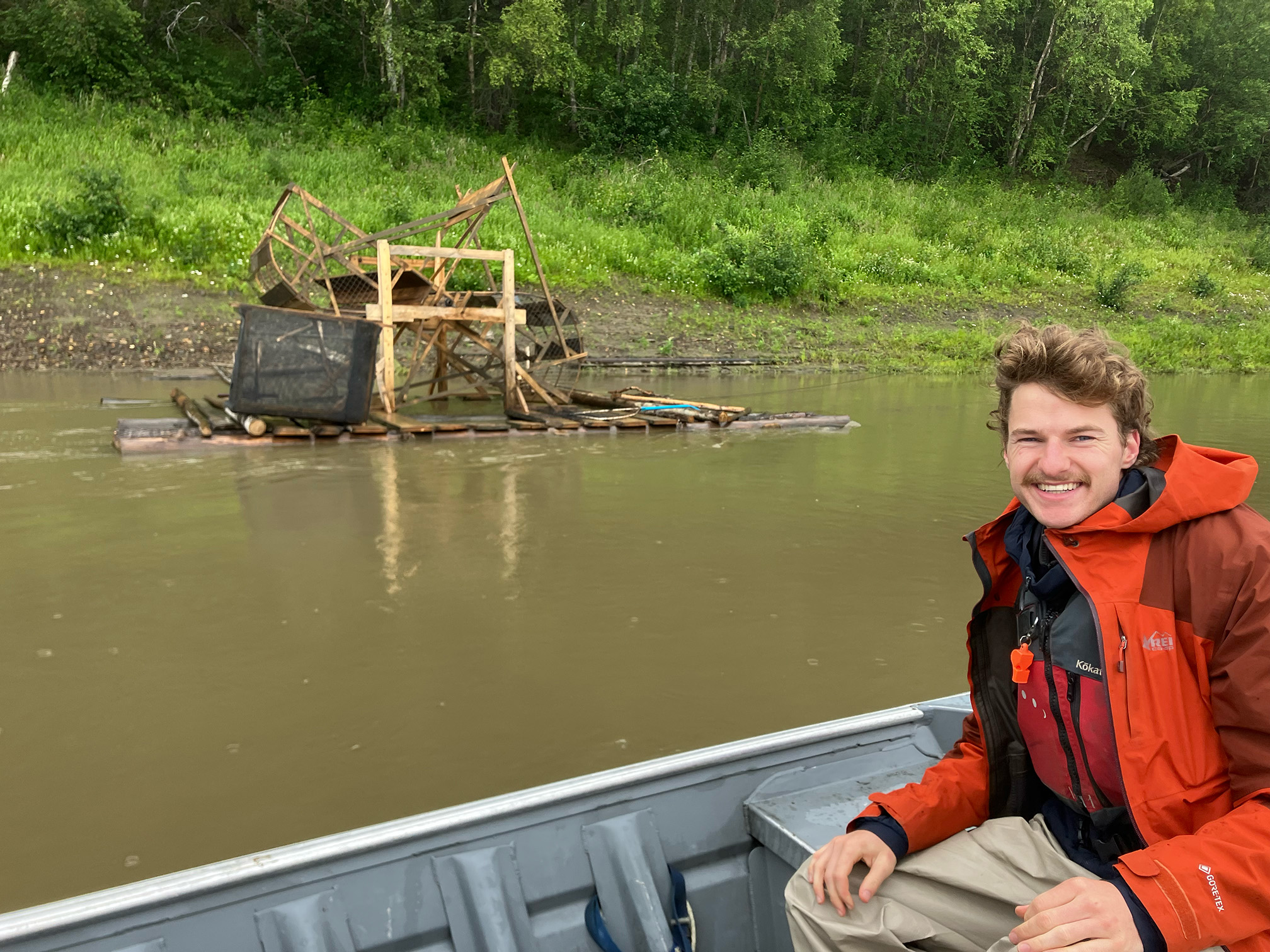
2026 ACEP summer intern Ries Tveit visits the Native Village of Napaimute on the Kuskokwim River. Behind him is their traditional fish wheel used to passively catch fish for subsistence.
September 22, 2026
Ries Tveit enjoys technical work. As a student studying mechanical engineering, mathematics and physics at the University of Alaska Anchorage, he is also interested in energy and its importance to communities.
This summer, he had the opportunity to bring those interests together as an intern at the Alaska Center for Energy and Power.
Under the guidance of ACEP’s Eloise Petrone Brown, Tveit worked on a community-driven river energy project in McGrath, on the Kuskokwim River in Alaska. The project explored how locally produced river energy could be used to help meet the community’s energy needs.
Like many remote Alaska communities, McGrath relies heavily on diesel for electricity generation, contributing to high and volatile electricity costs. Using river energy alongside other renewable resources could reduce diesel dependence, lower costs and improve energy security.
As part of the project, Tveit evaluated a hybrid microgrid in McGrath that combines river energy, solar panels and a battery with existing diesel generation. Using HOMER, a grid modeling software, he tested different combinations of energy sources and compared how the systems performed, including diesel use, energy production and cost.
His work was intended to support the City of McGrath and the local utility, McGrath Light & Power, in their efforts to reduce dependence on diesel.
Growing up in Salt Lake City, Tveit knew little about microgrids before beginning this project. One of the things that surprised him was how carefully a microgrid must be designed to maintain a reserve of power because different generators respond at different speeds.
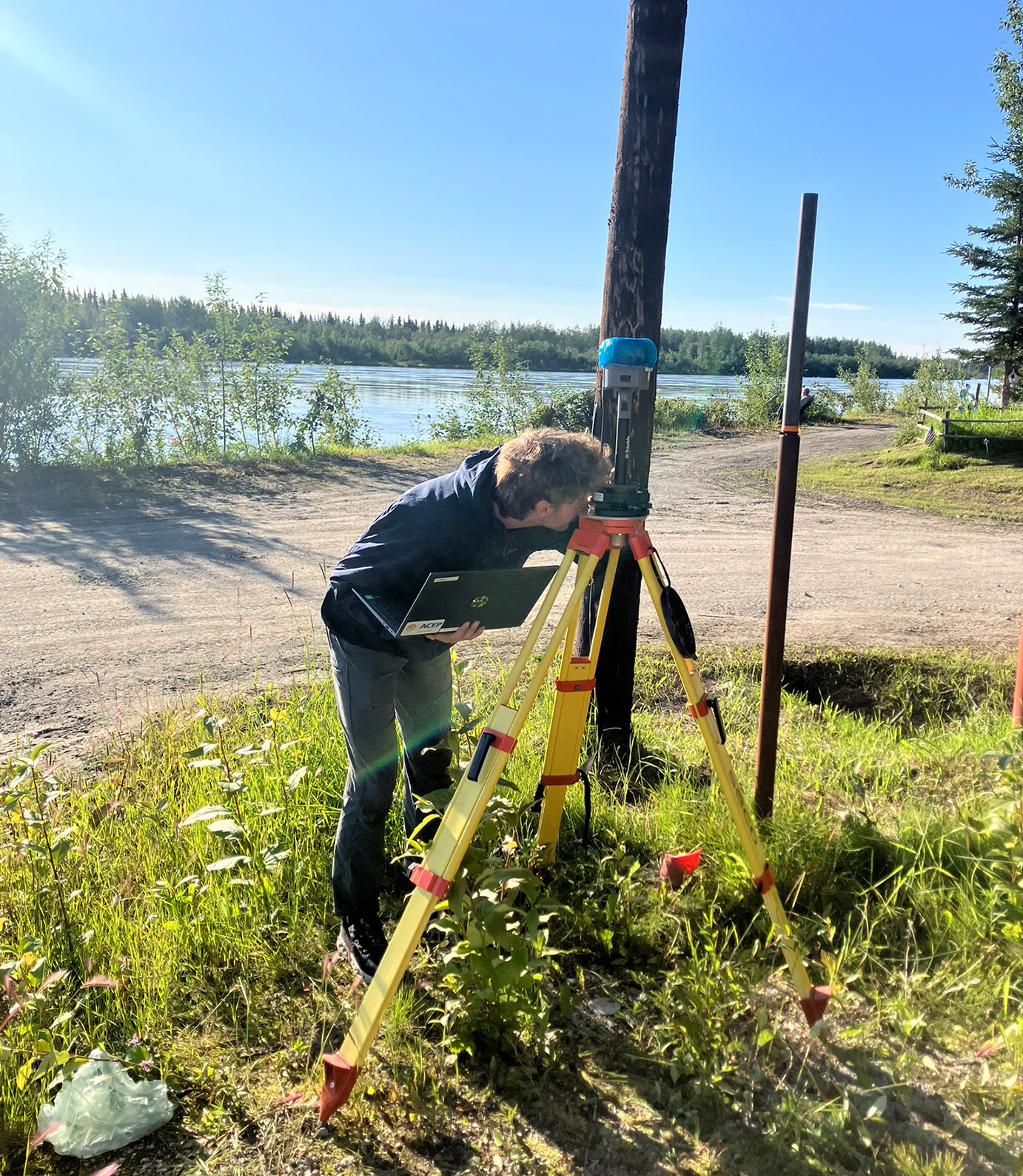
2026 ACEP summer intern Ries Tveit prepares to collect survey data to measure the water level on the Kuskokwim River in McGrath.
With a mix of diesel, solar and batteries, the system needs enough reserve power to respond when conditions change suddenly.
“I’ve learned a lot about how microgrids work, how to model them and how to perform energy balance analyses,” he said.
But the project also taught Tveit that rural energy systems involve more than technical considerations. In rural Alaska, energy projects can involve Alaska Native corporations, municipal and tribal governments, local utilities and residents, each with different priorities and perspectives.
“Each group plays an important role, but they may have different priorities,” he said. “I learned how important it is to understand each group’s perspective and how to navigate these relationships.”
He gained that broader perspective through visits to McGrath, where he met with the City Council, the McGrath Energy Committee and other community members. He also worked with power plant operators and a lineman from the utility, who taught him about the power plant and how the grid operates.
“Everyone I met had valuable knowledge,” he said. “They were all McGrath experts.”
Those conversations helped Tveit better understand the community’s perspectives and concerns about river energy as well as how integral the river is to cultural activities. In addition to McGrath, he made a visit to the community of the Native Village of Napaimute, also located along the Kuskokwim River. That visit, focused on listening and learning from community members, reinforced his understanding.
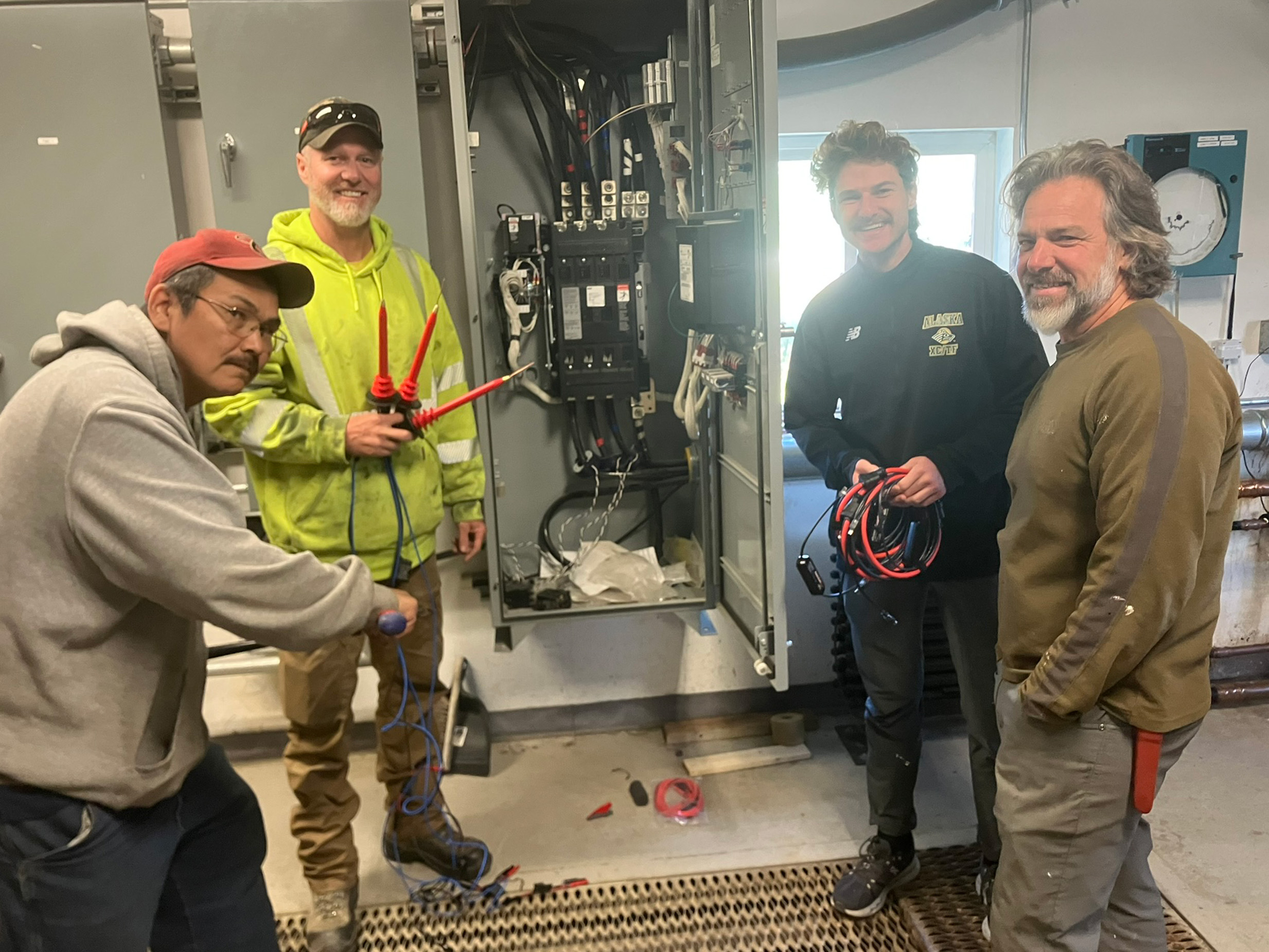
2026 ACEP summer intern Ries Tveit, second from right, poses for a photo during the installation of a power meter in the City of McGrath water plant with help from McGrath Light & Power plant operator Kevin Morgan, far left, lineman Sam Lindquist and McGrath Energy Committee member Tim Yoder.
Tveit’s internship became an opportunity to see energy projects from both an engineering and a community perspective.
“One of the biggest things I’ve learned is that successful community energy projects are about more than just engineering,” he said.
For Tveit, this project demonstrated that the success of any community energy project depends not only on how well the technology works but also on the partnerships and collaboration that support it.
“Building relationships, understanding how people use and value the land, and working together across different organizations are all important,” he said.
This internship was funded by U.S. Department of Energy’s Testing Expertise and Access for Marine Energy program through the ACEP Undergraduate Summer Internship program. View the final presentation for this project on ACEP’s YouTube channel. For more information about the McGrath project, please contact Eloise Petrone Brown at ejbrown@alaska.edu.