


Sharing lessons from Alaska’s microgrids
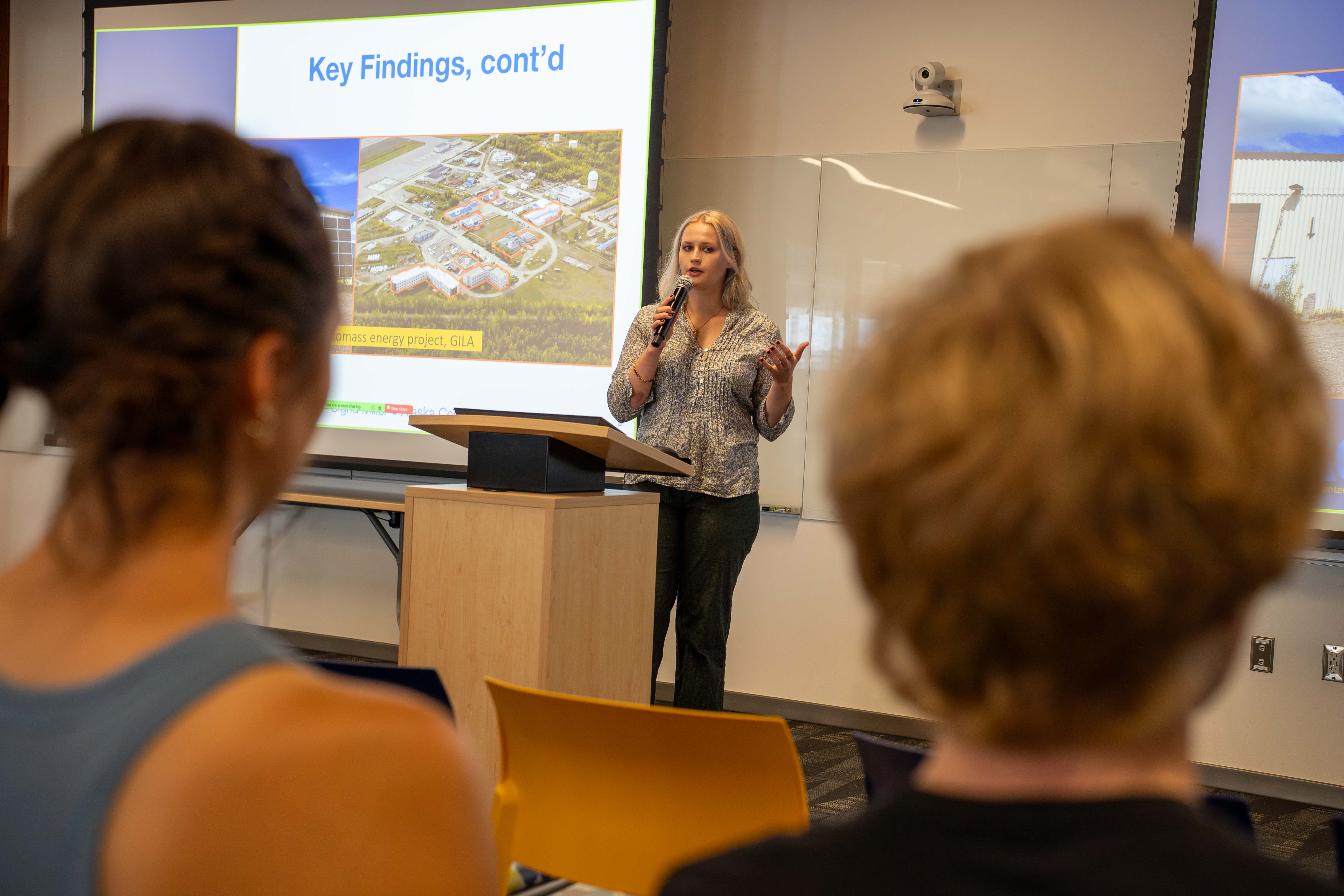
2026 ACEP summer intern Sigrid Miller shares her findings on energy resilience and renewable integration into microgrids in remote communities in Alaska.
September 24, 2026
For Sigrid Miller, an interest in engineering began in an unlikely place — the engine room of an Alaska ferry.
Right after high school, she moved from Fairbanks to the southeast community of Ketchikan, where she spent a couple of years working aboard commercial vessels for the Alaska Marine Highway System, a state-run ferry service. As a steward, she primarily handled general housekeeping duties. But occasional time in the ship’s engine room gave her a first glimpse into the engineering systems that kept the vessels running.
That experience sparked an interest in engineering that eventually led Miller to the University of Alaska Fairbanks to study mechanical engineering with a minor in tribal governance.
At UAF, her interest in engineering grew alongside an interest in a different question, “How can remote Alaska communities develop energy systems that are reliable, resilient and suited to their unique circumstances?”
Through UAF’s Climate Scholars program, Miller traveled to Kodiak and Galena for field courses, which were formative to that question.
Kodiak is powered almost 100% by renewable energy year-round, primarily through wind and hydropower. During the Kodiak course, Miller learned about microgrid implementation and the integration of renewable energy resources.
In Galena, the field course showed her that the technology itself is only part of the equation. She learned about the importance of community energy planning and engagement. She came to understand that ensuring the longevity and success of an energy project depends on involving the community throughout the process.
“[The community needs] to be involved at every step of the way, even before proposing a renewable energy solution, because it’s people in the community who actually live there with the project and keep it running,” she said.
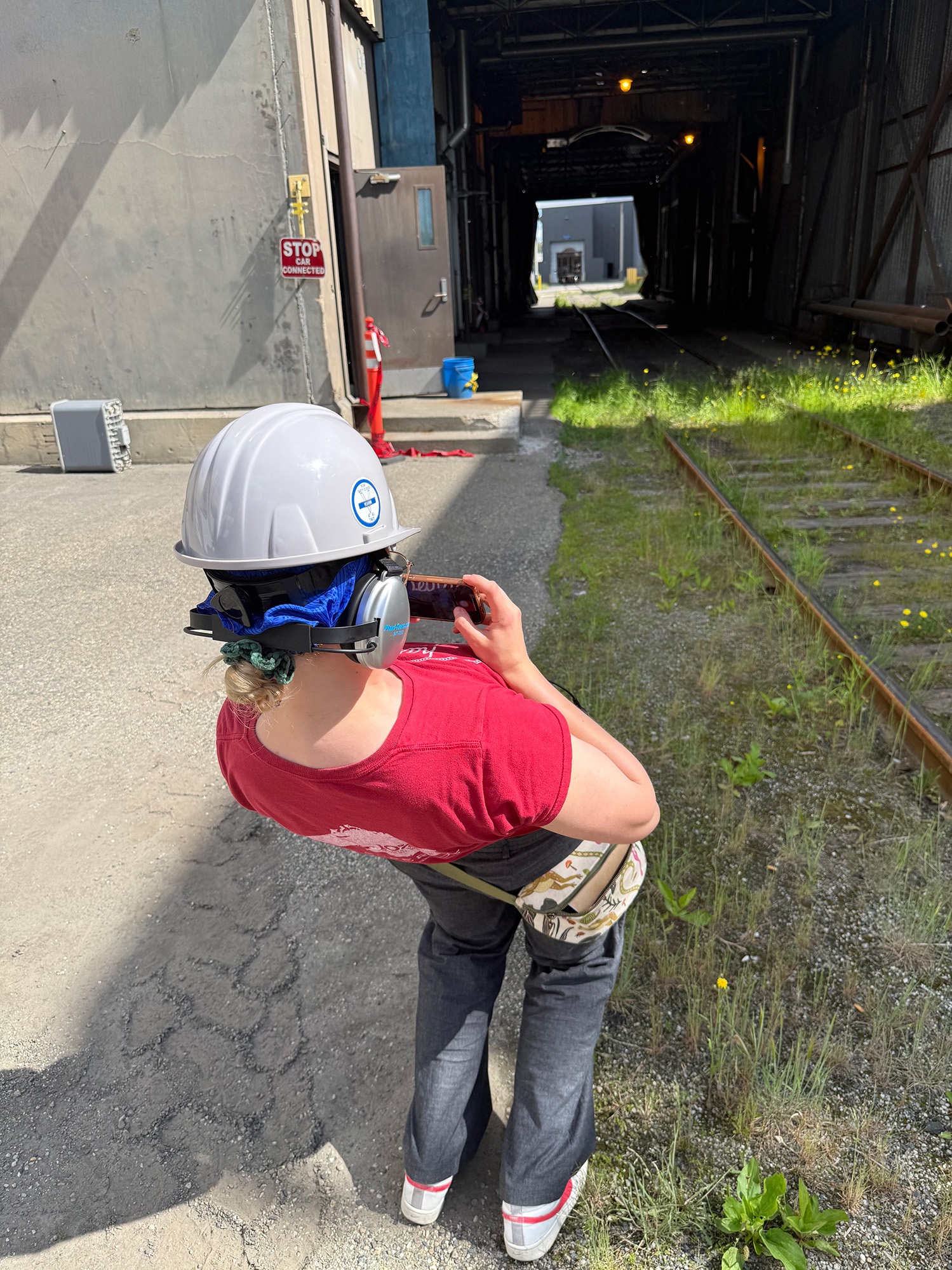
2026 ACEP summer intern Sigrid Miller takes a photo during a tour of the combined heat and power plant on the University of Alaska Fairbanks Troth Yeddha’ campus.
Those experiences led Miller to a question she explored through the ACEP summer internship program in summer 2026: What can be learned from Alaska communities that have successfully integrated renewable energy into their microgrids, and can those lessons help other remote communities build greater energy resilience?
Under the guidance of Magnus de Witt of the Alaska Center for Energy and Power, Miller examined the economic and cultural characteristics that have enabled successful microgrid development in Alaska.
She looked across rural and remote communities where renewable energy has been successfully integrated and grouped them according to factors such as environment, local governance and project funding. The goal was to identify patterns that could help explain why some energy projects succeed and what lessons might be transferable to communities with similar infrastructure and renewable energy resources.
The work has reinforced an understanding that began with her first exposure to engineering: energy systems are connected to the communities that depend on them.
Many rural and remote communities in Alaska face significant challenges to energy reliability and resilience because of their reliance on expensive diesel fuel. Greater integration of renewable energy can offer a path toward greater energy resilience, but Miller sees resilience as more than simply keeping the lights on.
“The economic benefits are significant,” Miller said. “At an individual level, money not spent on electricity for homes can be put back into households. At a community level, village or city utilities may direct savings toward the maintenance of existing infrastructure or further renewable energy integration efforts.”
Those benefits can extend into other areas of community life, she said.
“From education and workforce development to financial stability within mixed cash-subsistence economies and, most importantly, the sustained mental and physical health of community members,” she said.
That broader perspective is what Miller hopes to bring to her continued studies in engineering and tribal governance.
She hopes to publish the findings of her project as a resource for communities beyond Alaska that have similar infrastructure characteristics or renewable energy resources. By sharing lessons from communities that have already navigated the challenges of renewable energy integration, she hopes the work can help others improve grid security and make the transition from fossil fuels to local renewable energy sources.

2026 ACEP summer intern Sigrid Miller discusses her project with her mentor Magnus de Witt of ACEP.
The internship has also expanded her understanding of the economic, infrastructural and cultural factors that shape energy systems. The international perspective her mentor brought to the project further broadened her view of microgrids beyond Alaska and helped her see how the lessons from her project might apply beyond the state.
Fortified with the experience and knowledge gained through her internship, Miller is excited to continue to explore ways to develop reliable and resilient systems that suit communities.
This internship was funded by the Department of Navy awards through the ACEP Undergraduate Summer Internship program. View the final presentation for this project on ACEP’s YouTube channel. For more information about this project, please contact Magnus de Witt at mdewitt9@alaska.edu.
This work relates to the Department of Navy awards N00014-22-1-2049 and N00014-24-1-2675 issued by the Office of Naval Research. Any opinions, findings, and conclusions or recommendations expressed in this material are those of the author(s) and do not necessarily reflect the views of the Office of Naval Research.