


Mapping Alaska’s geothermal potential
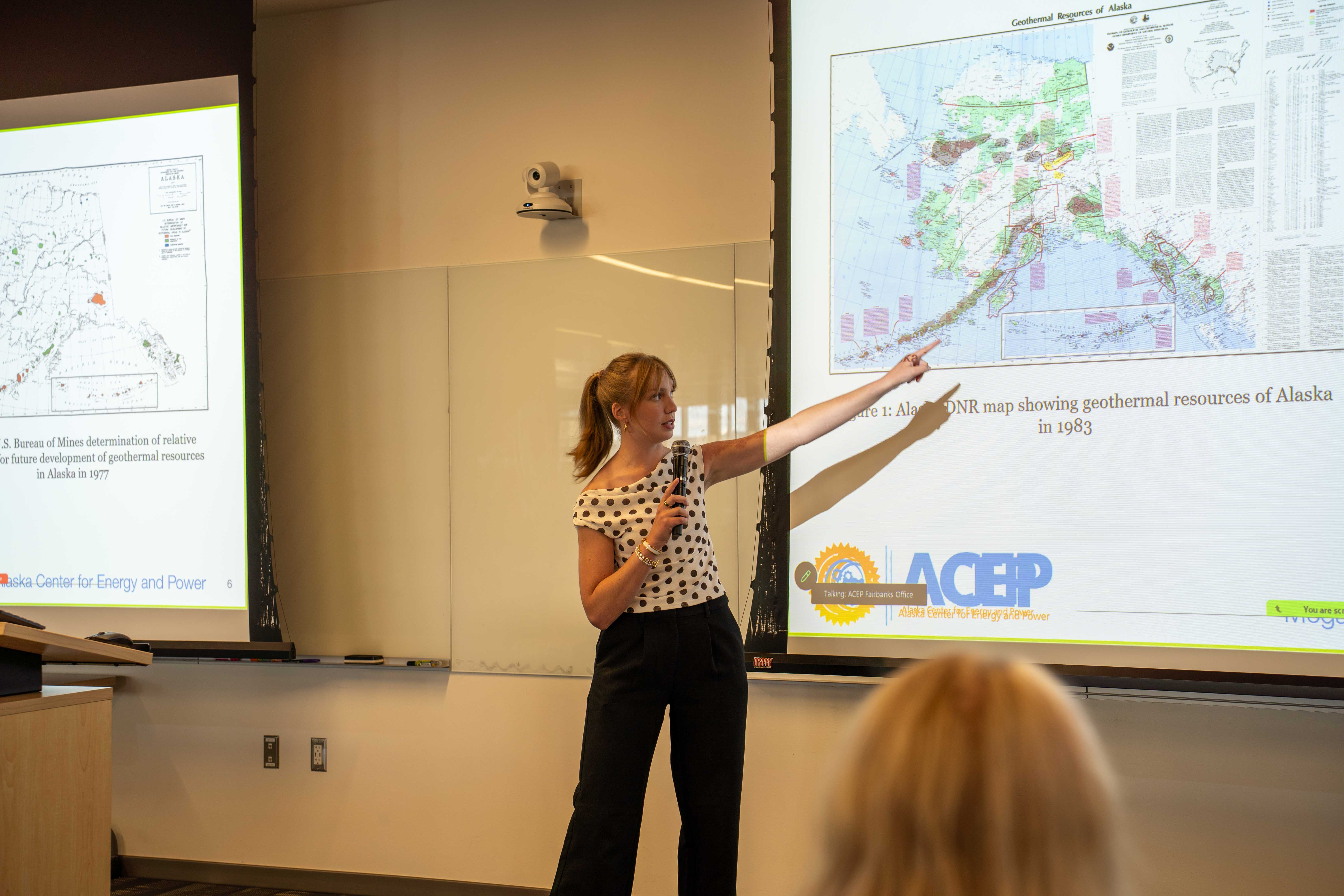
2026 ACEP summer intern Megan Harvey gives a presentation on her project to develop a geographic information systems map showing untapped geothermal energy in Alaska.
September 23, 2026
Alaska has considerable energy potential beneath its surface. The challenge is determining where geothermal resources could realistically be developed and whether they could help meet the needs of communities facing some of the state’s highest energy costs.
That question was at the center of Megan Harvey’s summer internship with the Alaska Center for Energy and Power. Rather than simply identifying places where geothermal heat exists, Harvey used geographic information systems, or GIS, analysis to identify untapped geothermal resources across Alaska and explore which resources might have the potential for practical development.
Often referred to as “stranded geothermal energy,” these resources are not currently used because they are located far from existing infrastructure or communities, making development more difficult. While heat may be available underground, it is not always practical or economical to harness for electricity or heating.
Under the mentorship of ACEP’s Magnus de Witt, Harvey compiled information from multiple databases and spreadsheets and used spatial analysis to visualize relationships among geothermal resources, electric grids, communities and other infrastructure. The goal was to identify areas where geothermal development might be most feasible.
She also developed a feasibility scoring system that allowed different geothermal opportunities to be compared using factors such as grid access, proximity to communities, utility economics and data availability.
The result was more than a map showing where geothermal resources are located. It offered a way to visualize where geothermal energy might make sense for Alaska.
By bringing disparate datasets into a common spatial framework, the project can help researchers and energy planners identify promising areas, compare potential opportunities and consider how geothermal resources might fit into Alaska’s existing energy systems.
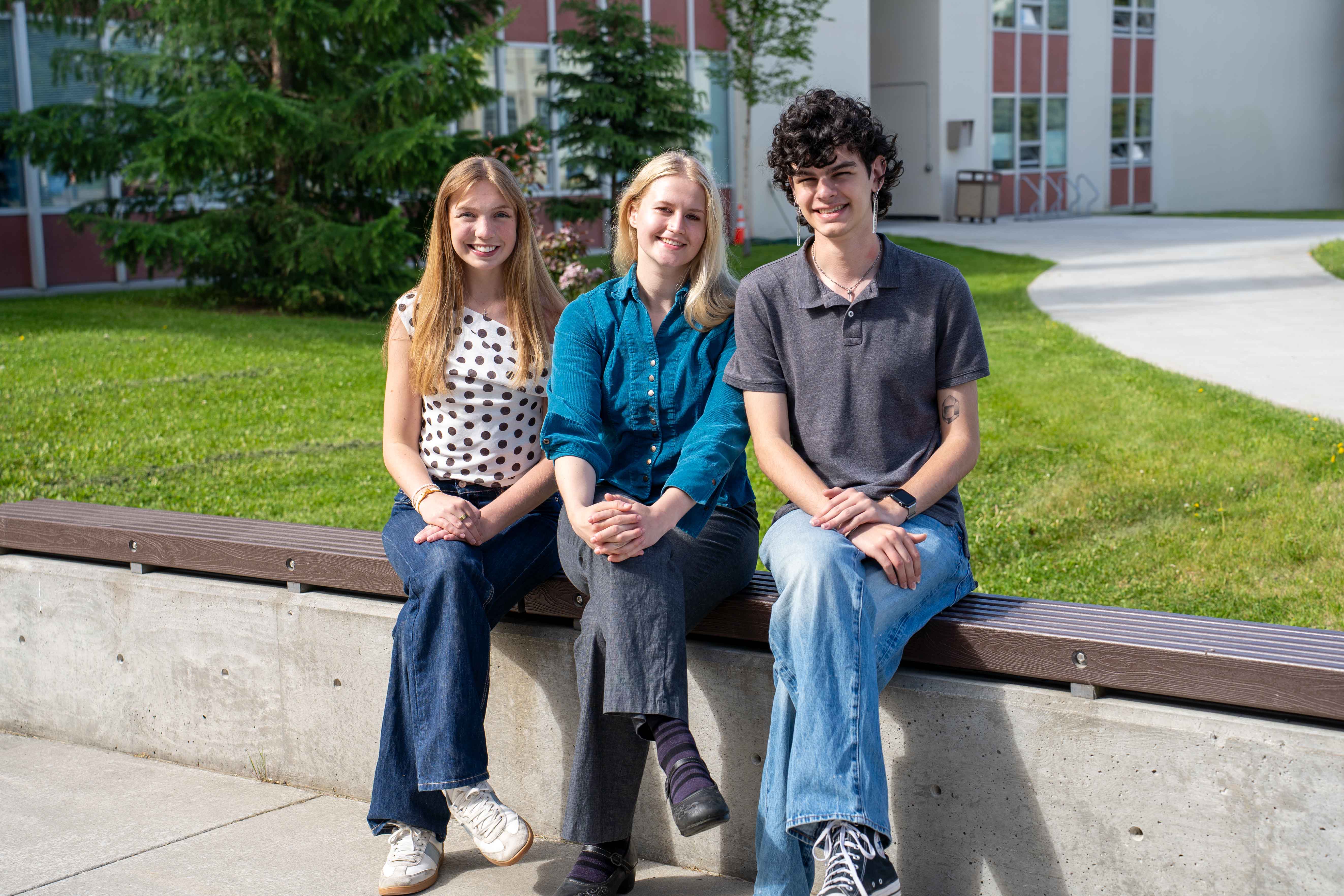
Megan Harvey, left, Sigrid Miller and Declan Goldhawk worked as ACEP summer interns with ACEP’s Magnus de Witt.
For Harvey, the internship was a natural extension of her academic and research experience. A recent graduate of Hope College in Holland, Michigan, she studied environmental science with a concentration in geology. As an undergraduate, she worked on projects ranging from research on aluminum extraction from anorthosite — a type of rock formed deep within the Earth — to water conservation and environmental health initiatives.
“I applied to the ACEP summer internship because I wanted to work in a place where energy challenges are especially real and practical solutions could have a meaningful impact,” she said.
The intersection of earth science, technology and community needs is what made the project especially compelling to Harvey.
“Alaska stood out to me because it could serve as a model for other regions where communities face similar energy access challenges,” she said.
The internship also changed how she thinks about GIS.
“Working on this project showed me how much GIS can do beyond making maps,” she said. “I learned how spatial analysis can help identify real-world energy opportunities and support conversations about what development could look like in Alaska.”
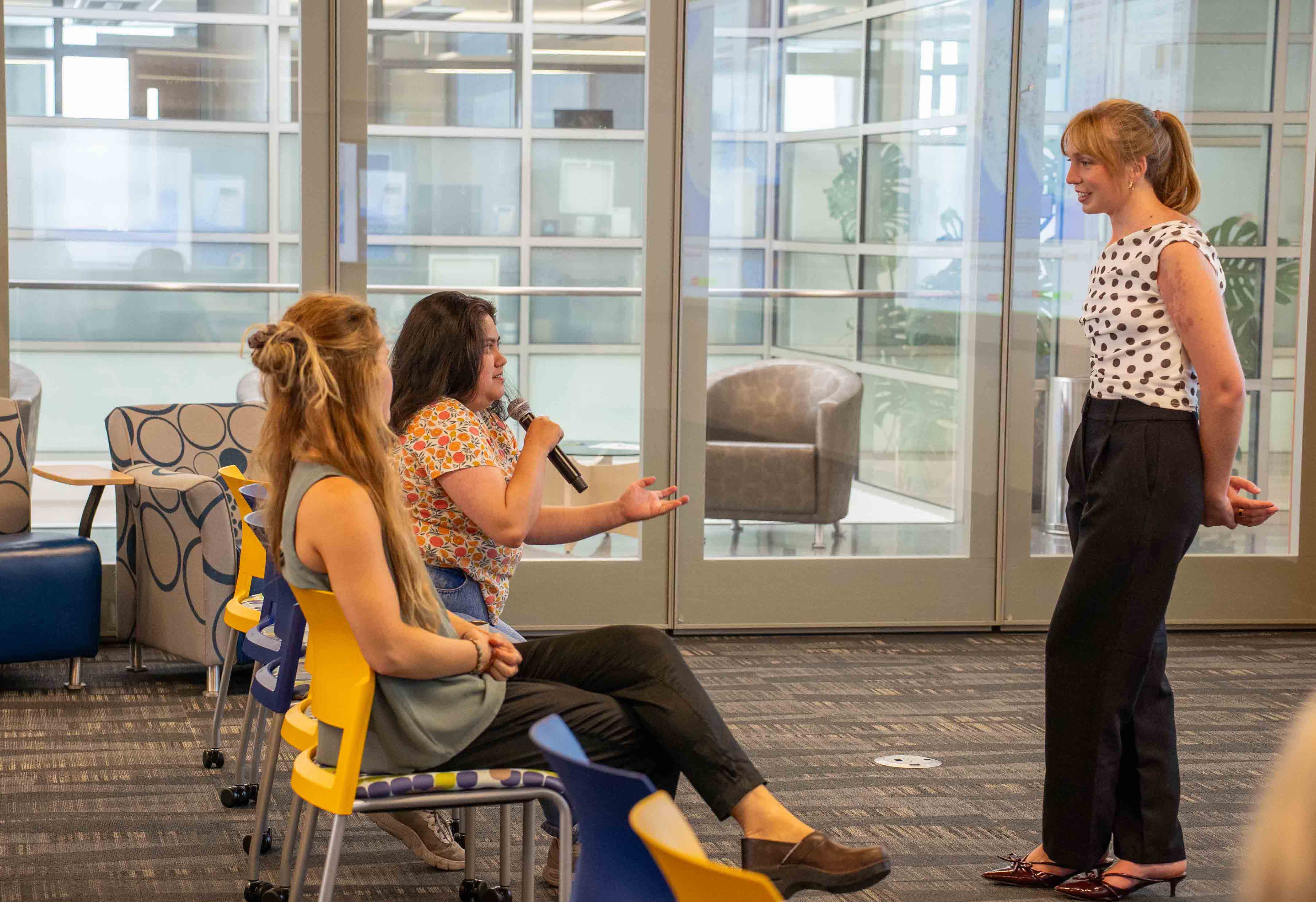
2026 ACEP summer intern Megan Harvey, standing, takes questions from the audience following the presentation of her geothermal research.
Through her project, Harvey came to see Alaska as an example of a broader challenge facing remote communities around the world — how to provide reliable, affordable energy when conventional fuels are expensive or difficult to transport, while creating solutions that are both practical and sustainable.
The experience also gave Harvey a clearer sense of where she wants to take her career.
“This internship deepened my passion for bringing solutions to communities that need them most,” she said.
This internship was funded by the National Science Foundation through the ACEP Undergraduate Summer Internship program. View the final presentation for this project on ACEP’s YouTube channel. For more information about this project, please contact Magnus de Witt at mdewitt9@alaska.edu.