


Exploring Anchorage’s geothermal energy potential
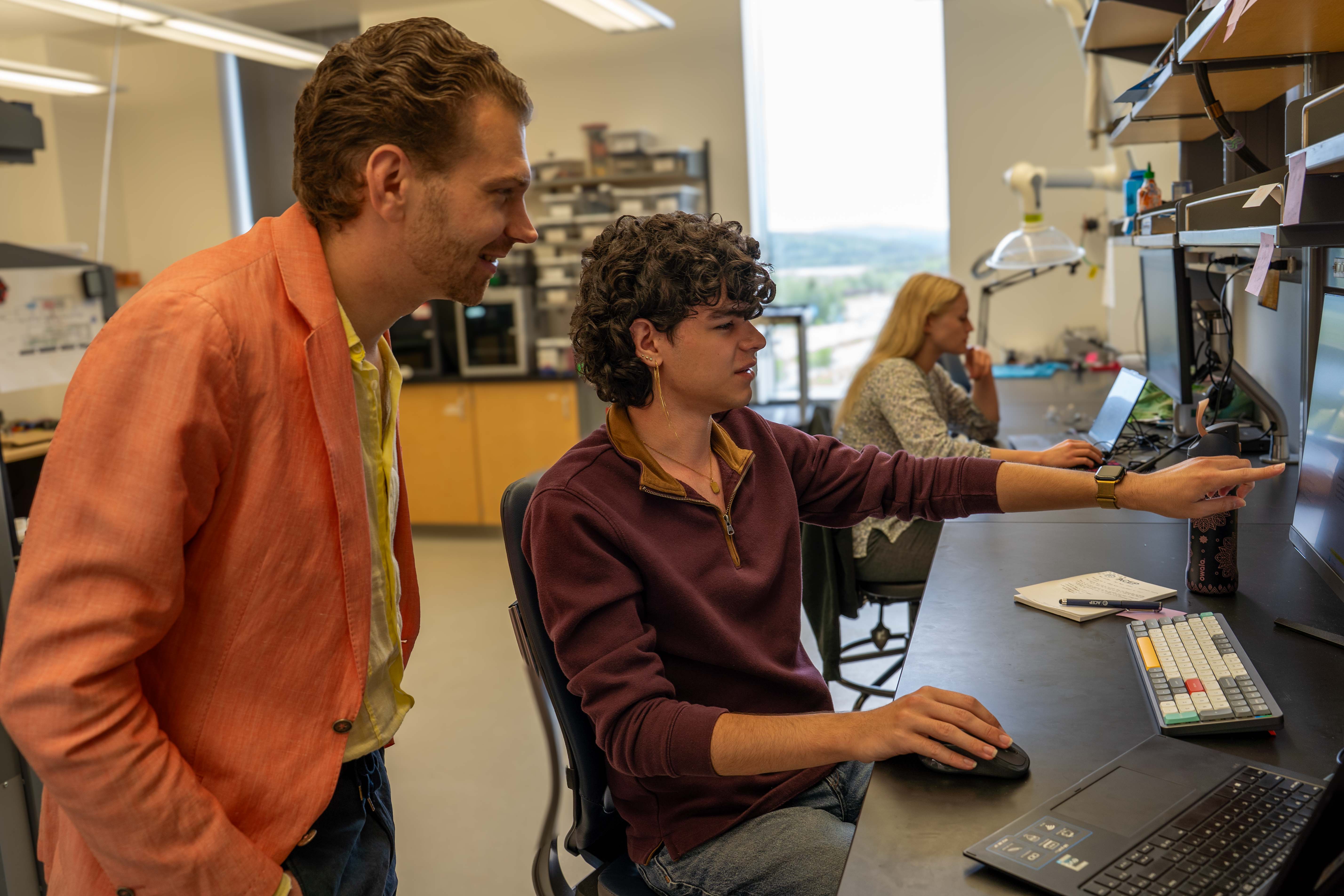
2026 ACEP summer intern Declan Goldhawk, right, discusses his project with his mentor Magnus de Witt.
September 22, 2026
As economically recoverable natural gas supplies from Cook Inlet decline, the Anchorage region is facing an energy challenge — how to meet its heating needs without relying heavily on natural gas.
ACEP summer intern Declan Goldhawk spent his summer exploring whether geothermal energy could help address that challenge. Under the mentorship of Magnus de Witt of the Alaska Center for Energy and Power, Goldhawk assessed the technical and economic feasibility of several geothermal technologies and whether they could reduce the amount of natural gas needed to heat homes in Anchorage.
Growing up in Buffalo, New York, Goldhawk developed a love for earth science at a young age and continued that passion into his undergraduate work. As an earth science and policy major at Pennsylvania State University, he sees geothermal energy as an opportunity to bring together the scientific and policy sides of his studies.
“Geothermal energy represents a perfect intersection of the earth science and humanities aspects of my major,” Goldhawk said. “Geology is essential to the feasibility of geothermal energy, and political science is needed to assess whether communities would use it.”
During his internship, Goldhawk conducted an extensive literature review and economic analysis of geothermal projects in regions whose climates, geography or energy systems offer relevant comparisons to Anchorage, including Iceland, Denmark and Finland.
He examined a range of approaches that could potentially be applied in Anchorage. These included the widespread use of ground-source heat pumps, development of a full-scale district heating system, conversion of old oil and gas wells into geothermal heat sources, drilling of new, innovative angled geothermal wells and use of nearby volcanic geothermal resources.
Goldhawk then analyzed and compared the feasibility of each technology to determine which approaches might be the best fit for Anchorage under current conditions.
Having de Witt as his mentor was an important part of the project. De Witt studied geothermal energy in Iceland, giving Goldhawk the opportunity to complement his literature review with firsthand guidance from someone with experience in the field.
“I learn about geothermal technologies from literature review, on paper, and go to him to ask questions,” Goldhawk said. “He has a great experience of living around the technologies I’m studying in my research project, which was an eye-opener.”
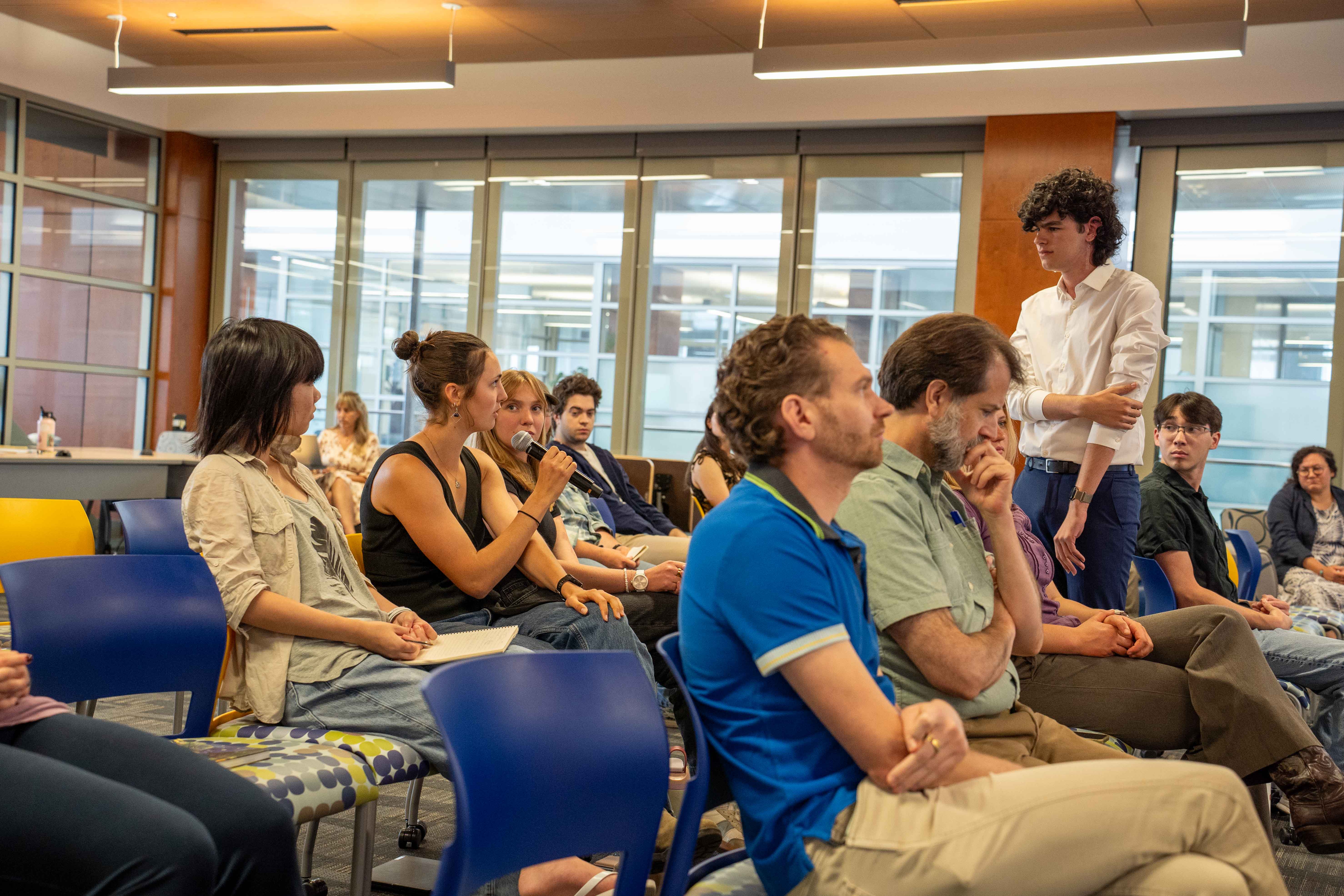
2026 ACEP summer intern Declan Goldhawk, standing, takes questions from the audience following the presentation of his geothermal research.
Goldhawk said being in Alaska also gave him a deeper understanding of the subject he was studying.
“It is one thing to learn about these technologies in school, but being able to see the results and talk to the communities affected by policy choices has given me a completely new understanding of what I learn about,” he said.
For Goldhawk, who was a sophomore with limited prior research experience, having the opportunity to conduct his own research was particularly meaningful.
“Having my own research project has been so fulfilling and rewarding,” he said.
He also made the most of his 10 weeks at ACEP by learning from experts across Alaska’s
energy sector. He toured the National Laboratory of the Rockies’ northern research
campus at the Cold Climate Housing Research Center as well as the Geophysical Institute
and the Combined Heat and Power Plant on the University of Alaska Fairbanks Troth
Yeddha’ campus.
Being part of the ACEP team was another rewarding part of the experience.
“The culture here is collaborative and educational, which is absolutely amazing to take advantage of as an intern,” he said. “Working alongside and collaborating with industry professionals, leading figures and innovative researchers in many niches of energy in Alaska has broadened my research portfolio and knowledge base in ways I never anticipated.”
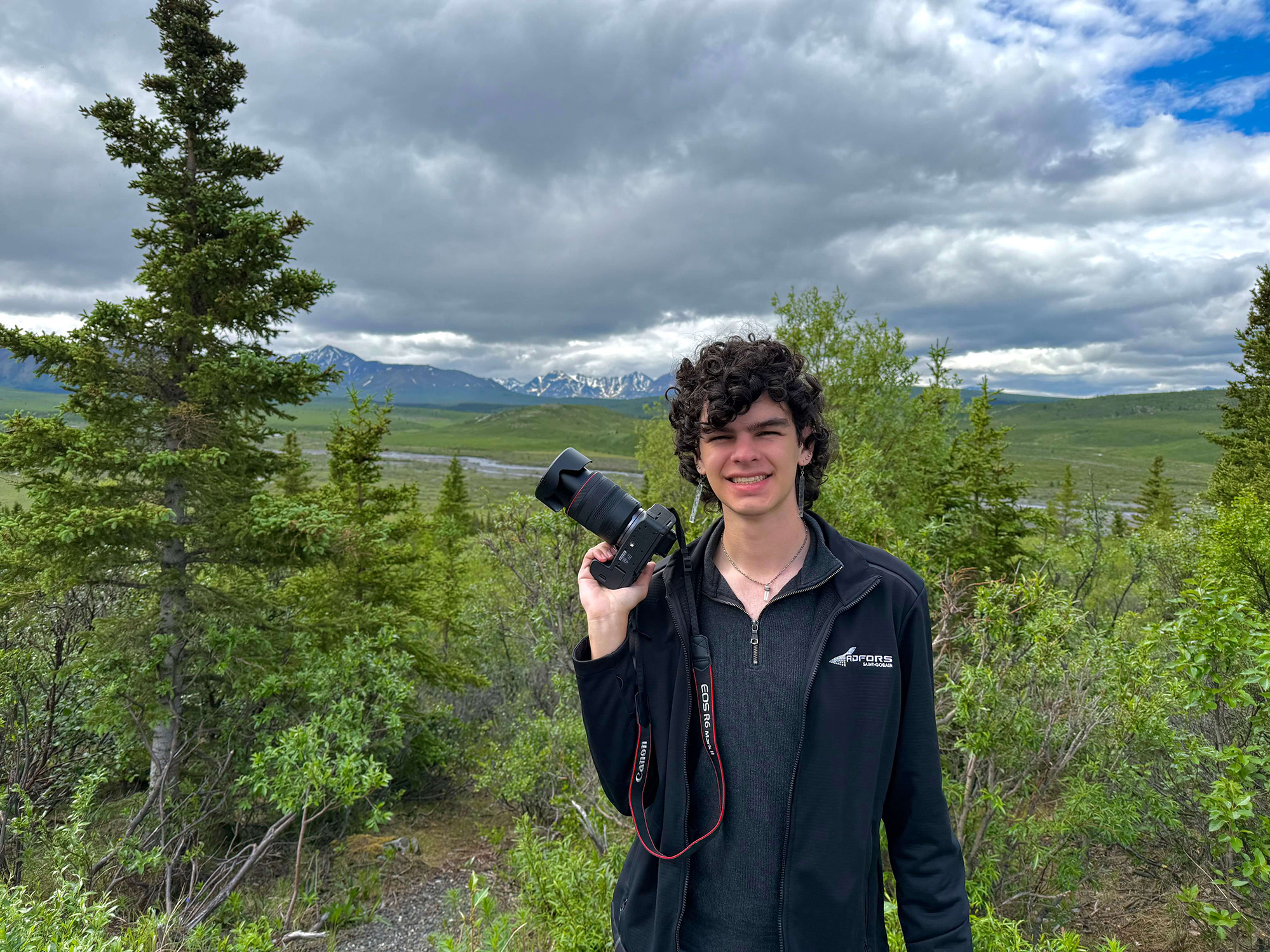
2026 ACEP summer intern Declan Goldhawk explores Denali through photography.
Outside his research, Goldhawk also explored Alaska’s natural landscape through photography, a subject he minors in at Penn State.
The internship experience left Goldhawk with a renewed interest in earth science and a broader perspective on what it means to learn through research.
“I am out of my comfort zone, thousands of miles from home, doing research I had never dabbled in before, but I know that this is how I will grow as a student, a researcher and a person,” he said.
This internship was funded by the National Science Foundation through the Research Experiences for Undergraduatesprogram. View the final presentation for this project on ACEP’s YouTube channel. For more information about this project, please contact Magnus de Witt at mdewitt9@alaska.edu.