


Camp Life
Everything you need to know to prepare your visit at the Toolik Field Station.
Please make sure to carefully read the different sections of this page, as it provides valuable information to help you prepare for your stay.
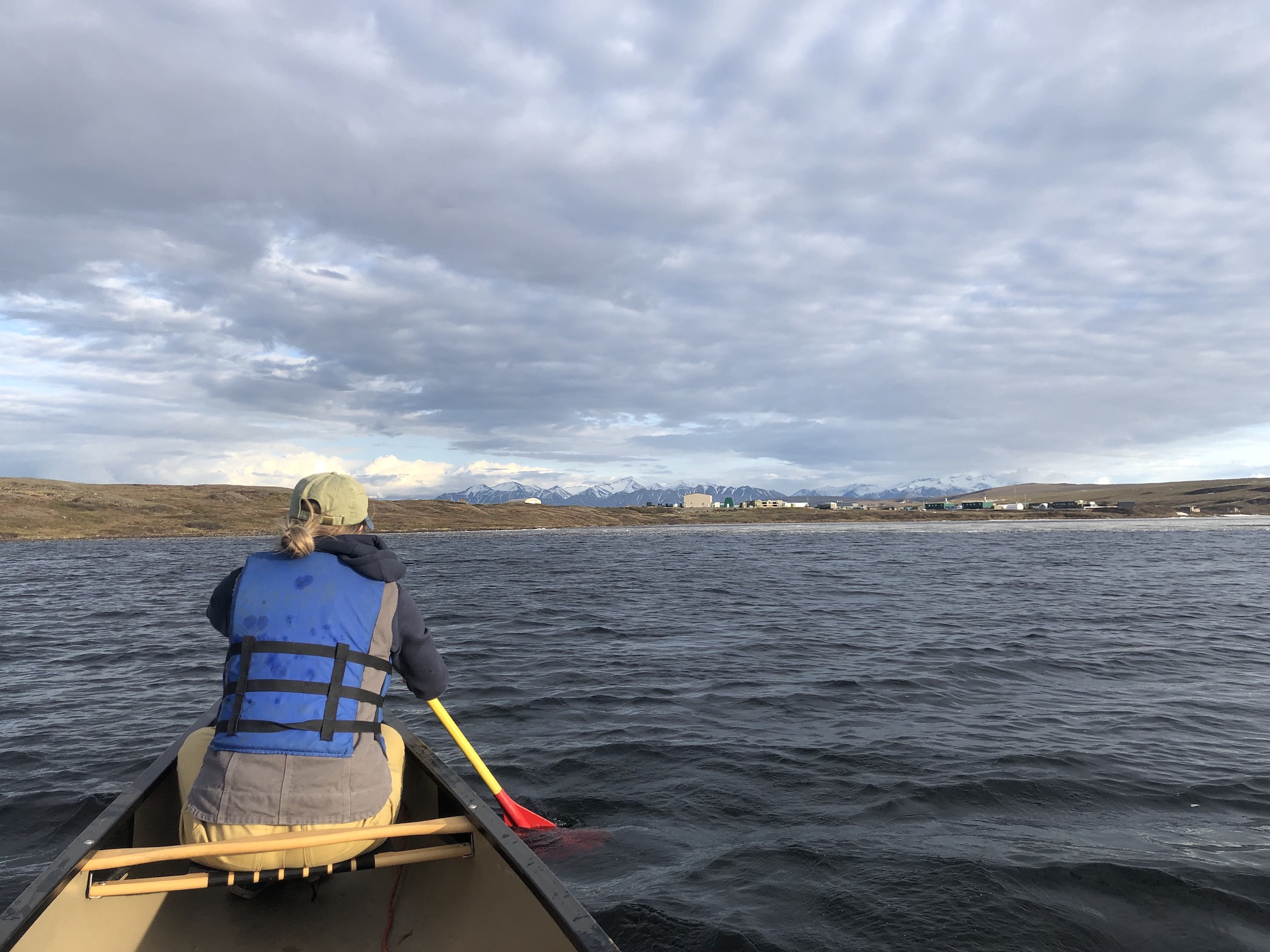
TFS is located at mile 284.5 of the Dalton Highway, 370 miles north of Fairbanks.
Driving to the station takes 9-12 hours (depending on road conditions and time of year) and requires travel on a largely unpaved industrial artery that serves operations at Prudhoe Bay.
There is no cell reception anywhere on the Dalton Highway, so having a satellite phone or InReach GPS tracker is recommended. CB radios are commonly used by truckers to communicate hazards, and are recommended for any vehicles that traverse the highway.
There are sparse to no options for supplies along the way, so food and drinks should be planned out and brought beforehand.
The majority of our visitors - NSF or non-NSF funded researchers and staff - travel to TFS via a fleet of NSF-owned Toolik-managed Science Support Trucks that travel to and from the station on a set schedule that is variable year-round, but there are many other ways to get to the station. Visit our Transportation page for details.
- Outdoor protection:
- Chapstick
- Insect repellent (DEET highly recommended)
- Insect headnet or jacket
- Suncreen
- Bear spray
- Satellite phone or InReach (TFS can loan sat phones for daily field trips depending on inventory available)
- Toiletries:
- Toothbrush
- Toothpaste
- Soap
- Shampoo/Conditionner
- Feminine hygiene products
- Sleeping/showering:
- Sleeping bag - TFS provides bed with mattress, pillows, fitted sheet and pillow cover
- Towel for showering and sauna
- Field gear:
- Day backpack
- Water bottle(s)
- Camera
- Batteries
- Binoculars
- Headlamp (winter only)
- Others:
- Recreation gear: tent, sleeping pad, sleeping bag liner, water filter, etc.
- Reading material, music
- Medications with copies of any prescriptions
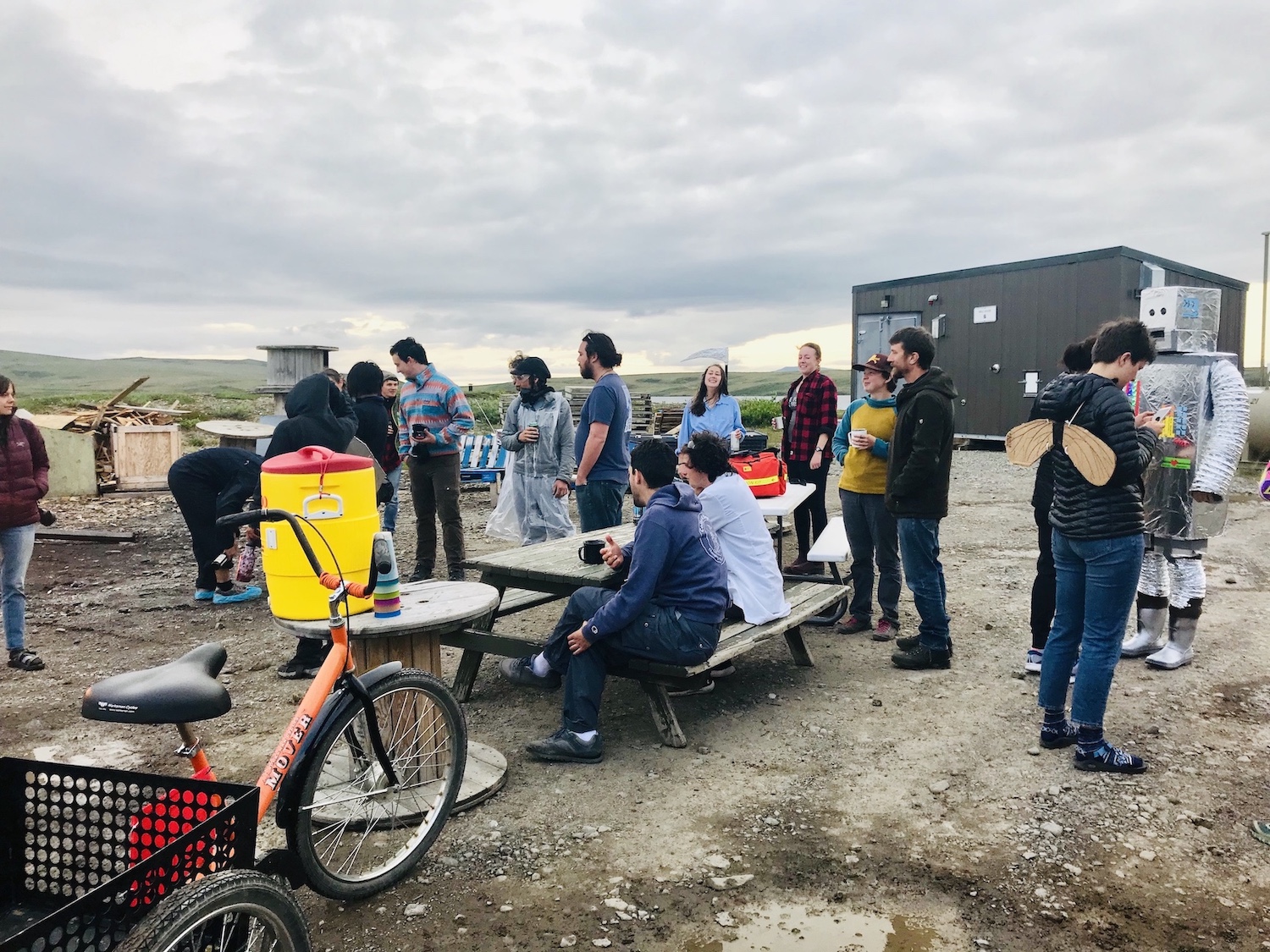
- Costumes (dressing up for a bonfire is a tradition at Toolik)
- Swimsuit (for the sauna or swimming in the cold lake)
We may be located in the Arctic, we have access to many communcation services you usually have commonly access to in an urban setting... with a few exceptions!
- Internet access:
- Toolik Field Station is a remote campus from the University of Alaska Fairbanks, and all internet services are provided through the Office of Information Technology (OIT). This means the internet at the station is really fast and supported efficiently by UAF. While outages are rare, they do happen, but usually we are back online quickly.
- Wireless internet is available reliably almost throughout the entire camp. There are a few dead spots, but you should have access to the wifi in most buildings around camp.
- When available, try to heardwire into an Ethernet cable, especially when working in laboratories.
- Illegal downlaods are prohibited, and will be monitored and tracked by OIT. Multiple offense computers will be banned from the network.
- All computers must have up to date antivirus software.
- While the station has fairly fast internet, please keep in mind that it is shared with many others and it's importnat that everyone keeps downloads and streaming to a minimum.
- Phones:
- Toolik Field Station has a variety of public phones in buildings around camp that
everyone is welcome to use. These phones only allow to call short distance, meaning
Fairbanks numbers. They all are linked to the UAF campus, so if you know the 4-digit
extension of the number you try to call on campus, you can dial that directly.
- Station Manager: x2511
- EMT: X2516
- Maintenance: x2523
- Updated phone lists are posted everywhere in camp.
- For other numbers, dial 9, then 1 and the number with 907 area code.
- Talk to the staff if you need to make a long distance call.
- Toolik Field Station has a variety of public phones in buildings around camp that
everyone is welcome to use. These phones only allow to call short distance, meaning
Fairbanks numbers. They all are linked to the UAF campus, so if you know the 4-digit
extension of the number you try to call on campus, you can dial that directly.
- Cell phones:
- There is no provider that works at Toolik and you won't have reception anywhere close to the station. Most providers work in Prudhoe Bay, which is the closest place you'll be able to use your cell phone. If you have GCI, your phone will work in Coldfoot, and close to Alyeska Pump Station 4.
- There is a work around to use your cell phone while in camp via Wifi! If your provider allows Wifi Calling, make sure to enable the service (free in most cases, check with your provider) before you lose reception on the Dalton, so while you are still in Fairbanks or another city. You won't be able to enable the service once at Toolik, so make sure to do it ahead of time! Once enabled, you will be able to make calls, receive/send text messages, etc. while on Wifi as if you were within cell reception.
- Satellite phones:
- Toolik has a stock of satellite phones available to check out each day to take into the field.
- All Toolik fleet trucks are equipped with a satellite phone in case of an emergency, and the Science trucks shuttling between Fairbanks and Toolik also are equipped with an InReach that track the location of the vehicles.
- Radios:
- Toolik staff carry hand held radios at all times. There is a base station radio in the staff office that anyone is welcome to use if they are trying to reach a staff member.
One of the goals at the Toolik Field Station is to limit our impact on the surrounding environment that we study. Being this far remote has some challenges, and while we can't be 100% sustainable, we can have measures in place that help us be greener and reduce our impact. And all Toolik residents have a role to play. Here is how you can help.
- Power conservation:
- Power loads to supply the station are supported by a series of generators that work on diesel fuel. During the summer season, the station goes through a lot of disel to operate and support a high population. There are a few things residents can do to help conserve power:
- Always turn off lights when leaving a room
- Always turn off power on uneeded equipment. For example, all weatherports and most dorm rooms are heated with individual heaters that use up a lot of energy. These heaters can heat up a room very quickly, so when you leave your room during the day, please make sure to shut down your heater, or at least turn the thermostat way down.
- Close doors behind you.
- Water conservation:
- Water conservation is a high priority at the station. TFS has no water treatment facility, thus all sewage and wastewater must be stored and trucked to Prudhoe Bay for treatment at great expense. For this reason, we limit showers and laundry to minimal.
- Limit showers to 2 a week, and laudry to one load every 2 weeks.
- Use the outhouses "towers" around camp, instead of flushable toilets.
- If you need to use a flushable toilet, don't flush unless it's #2... And never put any toilet paper or anything else in the toilet (same apply to the towers, nothing goes in the bowl!)
- Trash management:
- We separate trash and recycle at best as possible. All the trash bins around camp are labeled for recycling, and "burn" vs "no burn".
- In the summer, when population is high. we do incinerate burnable trash produced in camp - food waste, paper products, other sfely burnt meterials - hence the importance to only throw burnable items into the trash bins labeled "burn". Note that we are hoping to get an industrialized composter in 2021, in which all food and compostable paper products could be turned rapidly into compost, instead of burnt. This will help us considerably decrease the amount of trash we will have to burn; our goal is to stop using the incinerator completely. All non-compostable trash would be brought back to town for proper processing.
- Trash is not sorted in the winter months. All trash is bagged collectively and brought back to Fairbanks for proper processing.
- We do recycle year around though, so make sure to sort recyclable appropriately.
- Recycling:
- Make sure to always pay attention to recyclable items and use the right bins. Note that glass can NOT be recycled in Alaska. We ask that nobody brings disposable glass bottles or containers to camp as a result, with the exception of glassware needed for lab work or field work of course.
- Hazardous waste and other lab waste:
- Please refer to XXXX
The weather at Toolik can be quite dynamic.
During the summer season, daytime high temperatures range from the low 40s to 80 degrees (F). Snow usually sticks to the tundra until early to mid-June, with cold nights. Toolik Lake is typically ice-free by around mid-June. Temperatures rise with green-up during late-June and July. Snow is possible at any time during the summer, though it won’t stick for long. Rain is fairly common. Temperatures begin to decline again in early August, with nights again below freezing. Snow begins to fall and stick by mid-September. Toolik Lake usually freezes over by early to mid-October.
Snow can stick to the ground for the rest of the winter as early as early September, and temperatures drop quickly from there. It can get really cold (-40F or colder) with frequent high winds. That, combined with complete darkness from mid-November to mid-January, make winter outdoor work really challenging and fieldwork should be carefully plan and team members prepared with the adequate gear.
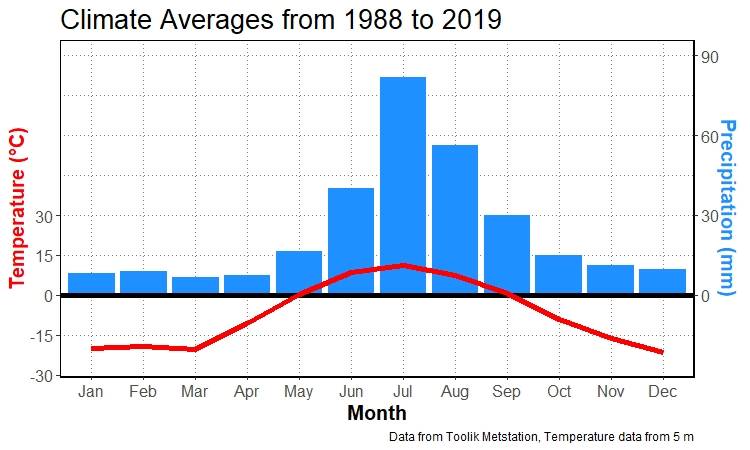
For more information about weather at Toolik, please visit our Weather page.
*Mosquito Warning*
The mosquito population on the North Slope is very abundant in the summer. Mosquitos
begin emerging in early June, become most fierce during the month of July when hatchings
are smaller in body size and much more numerous, and start dropping in early August.
Although annoying, Alaskan mosquitoes do not (yet) carry harmful diseases.
It is recommended that you bring a head net or a bug shirt, which can be found locally in Fairbanks, or online on sites like Amazon. Mosquitoes cannot bite through tightly woven nylon (e.g. quick-dry hiking pants), so outer layers of this material are useful. Also, it’s preferable to wear light colors as mosquitoes are attracted to dark-colored clothing .
Mosquito repellent (natural or DEET) is a must. Re-apply frequently. DEET can melt plastic, so avoid putting too much on your face when you wear glasses.
While TFS operates all year around, summer operations differ greatly from winter operations.
"Summer" season: May-September
TFS is fully operational and staffed with maintenance technicians, cooks, operations staff, a safety coordinator and EMT, Environmental Data Center and GIS experts, and a naturalist and with access to 100% of the buildings in camp. Population capacity is around 150 people.
During the summer season, the user day rate will cover your housing, food, field assistance, transportation, equipment, lab or other building access, and any other type of support that might be needed while doing work at TFS. The kitchen is fully staffed and provides hot meals 3 times a day (except on Sunday), as well as 24/7 self-served food as needed.
"Winter" season: October-April
Only TFS' "essential buildings" remain open and heated: Dining Hall, Garage, Cotton Grass dorm, Winter lab, Winter Quarters, generator modules, and the Well House, and the station is minimally staffed with only 4 members at the lowest, to ensure that there's continuous heat, power and water, and to provide remote access and other support as needed.
While we are still open to visitors during the winter month, food services are reduced, with only a hot dinner served, and self-serving items for other meals. Lab space is limited to the winter lab, and is shared between all projects doing work at Toolik. Accommodations are in one of our winter capable hard sided dorms. Support requests (field assistance, equipment use, etc.) need to be coordinated with the Toolik team ahead of time.
Science project members are responsible to bring for their own field clothing and gear. During the summer months, because weather can turn quickly and actually be cold and humid, we recommend that you plan on bringing cold weather clothing in addition to summer clothing to be ready no matter what the weather might be. Fabrics to consider are Polar Plus Fleece, Polypropylene, Capilene, wool, and silk. Avoid cotton fabrics and jeans for remote field site use. Rain is frequent in the summer, so good rain gear is a must. Don't forget to plan for warm weather as well, as we can see temperatures in the 80s!
Here is a list of recommended clothing to bring to Toolik Field Station (winter-only gear marked with *):
- Head protection: sun hat, warm hat
- Eye protection:
- Sunglasses (preferably polarized)
- Goggles*
- Raingear: rain jacket, rain pants
- Gym clothing
- Outer layers:
- Warm jacket/parka with hood, down or synthetic
- Windbreaker
- Hiking pants (avoid cotton and denim for remote fieldwork)
- Shell pants
- Insulated/waterproof bibs (Carhartt or equivalent)*
- Shorts
- Neck gaiter, balaclava (Buff)
- Gloves:
- Liner gloves
- Insulated gloves
- waterproof gloves
- mittens*
- Footwear:
- Gore Tex hiking boots
- Rubber boots, insulated advised (Muck boots, Xtratufs, Bogs)
- Slip ons (Crocs, flip-flops, scandals) - lodging accommodations and shower module are shoe-less
- Running shoes
- Insulated winter boots (Steger Mukluks, Sorel)*
- Oberboots (Neos)*
- Under Layers:
- Several sets of long underwear, upper and lower body, wicking and insulating
- 4-6 pair wool socks
- Shirts (polypropylene, wool; avoid cotton)
Check out this video from the USFWS "How to get dressed: Arctic Field Style": https://www.facebook.com/watch/?v=172415357007839
Don't know what a "bug jacket" is? www.bugshirt.com sells a quality product or these same shirts can be purchased at Arctic Fire & Safety in Fairbanks.
The TFS kitchen staff serves three meals a day, all week except on Sundays, when there is a continental brunch and full dinner service only.
Our kitchen staff is very familiar and experienced with accommodating special dietary needs, and dishes are stricltly prepared and labeled for people with food allergies. We provide vegetarian and vegan options, as well as gluten-free and other dietery diet options as needed. If applicable, please make sure to indicate your dietary limitations when you complete your profile in the MyToolik system.
We ask staff and users to stick to the meal plan that they sign up for at the beginning of the season to help facilitate planning meals.
There are a few basic diets at Toolik:
- Regular - (Fish/Meat available at each meal)
- Pescitarian - Fish 2-3 times a week, Vegetarian the rest of the time.
- Vegetarian
- Vegan
The regular hot meals are scheduled at 7:30-8:30 for breakfast, 12:00-13:00 for lunch, and dinner is at 18:00-19:00. Outside of those hours, self-served food is available in the dining hall refrigerator chillers. We also provide a variety of bags and wrappers if you need to take food with you into the field.
Self-served food include: Left-over food, sandwich and salad bar, snacks, drinks -soda fountain, wide variety of milks, dairy and non-dairy to choose from, energy drinks, coffee, teas, etc. Self-served food is available 24/7 in the Dining Hall.
Water conservation is a high priority at the station. TFS has no water treatment facility, thus all sewage and wastewater must be stored and trucked to Prudhoe Bay for treatment at great expense. For this reason, we limit showers and laundry to minimal.
Bathing
In the summer months, showers at the station are located in the “shower module,” located in the lab area in camp. There are several individual shower stalls, as well as sinks and mirrors.
All TFS residents should limit their bathing to 2 short showers per week. There are water-saving “pause” valves on all shower heads. There
are cubbies located in the shower module for storage of toiletries. There are two
additional showers in Cottongrass, located in the only bathrooms operational in the
winter months.
TFS has a sauna, which has played a key part of our water conservation efforts. The
wood-fired, lakeside sauna operates several times a week during the summer months.
Re-circulated stove-heated water and pitchers are available for bathing on the sauna
deck, and during the summer there is a dock from which to access the lake. There are
separate men’s, women’s and co-ed sauna hours. Clothing/bathing suits are optional.
You may want to bring your own towel, however, as there is a limited supply of towels
that are available on a first come first served basis.
Laundry
Residents may do one load of laundry every other week. The washing machines at Toolik are high-capacity and high-efficiency. The station provides high-efficiency (HE) laundry detergent. Please make sure loads are full to make the most of a load. Consider combining clothes with another resident in needed.
Toolik Field Station has gasoline and diesel fuel available for vehicles and other equipment. Fuel is not included in the user day rate, and will be charged independently to a project.
If you need fuel, please request some from the Toolik Operations staff during normal business hours (8:30am - 5pm) unless of course if is needed for an emergency. Only Toolik staff members are authorized to pump fuel for residents.
If you plan to acquire fuel for your project vehicle(s) at Toolik Field Station your project must establish a fuel account using this form prior your visit to the station: Toolik Fuel Account Request .
activities
- bikes
- hikes
- trivia
- THC
- Workshops
- Users forum
- lake fun
TFS is located at mile 284.5 of the Dalton Highway, 370 miles north of Fairbanks.
Driving to the station takes 9-12 hours (depending on road conditions and time of year) and requires travel on a largely unpaved industrial artery that serves operations at Prudhoe Bay.
There is no cell reception anywhere on the Dalton Highway, so having a satellite phone or InReach GPS tracker is recommended. CB radios are commonly used by truckers to communicate hazards, and are recommended for any vehicles that traverse the highway.
There are sparse to no options for supplies along the way, so food and drinks should be planned out and brought beforehand.
The majority of our visitors - NSF or non-NSF funded researchers and staff - travel to TFS via a fleet of NSF-owned Toolik-managed Science Support Trucks that travel to and from the station on a set schedule that is variable year-round, but there are many other ways to get to the station. Visit our Transportation page for details.
While TFS operates all year around, summer operations differ greatly from winter operations.
"Summer" season: May-September
TFS is fully operational and staffed with maintenance technicians, cooks, operations staff, a safety coordinator and EMT, Environmental Data Center and GIS experts, and a naturalist and with access to 100% of the buildings in camp. Population capacity is around 150 people.
During the summer season, the user day rate will cover your housing, food, field assistance, transportation, equipment, lab or other building access, and any other type of support that might be needed while doing work at TFS. The kitchen is fully staffed and provides hot meals 3 times a day (except on Sunday), as well as 24/7 self-served food as needed.
"Winter" season: October-April
Only TFS' "essential buildings" remain open and heated: Dining Hall, Garage, Cotton Grass dorm, Winter lab, Winter Quarters, generator modules, and the Well House, and the station is minimally staffed with only 4 members at the lowest, to ensure that there's continuous heat, power and water, and to provide remote access and other support as needed.
While we are still open to visitors during the winter month, food services are reduced, with only a hot dinner served, and self-serving items for other meals. Lab space is limited to the winter lab, and is shared between all projects doing work at Toolik. Accommodations are in one of our winter capable hard sided dorms. Support requests (field assistance, equipment use, etc.) need to be coordinated with the Toolik team ahead of time.
|
Science project members are responsible to bring for their own field clothing and gear. During the summer months, because weather can turn quickly and actually be cold and humid, we recommend that you plan on bringing cold weather clothing in addition to summer clothing to be ready no matter what the weather might be. Fabrics to consider are Polar Plus Fleece, Polypropylene, Capilene, wool, and silk. Avoid cotton fabrics and jeans for remote field site use. Rain is frequent in the summer, so good rain gear is a must. Don't forget to plan for warm weather as well, as we can see temperatures in the 80s! Here is a list of recommended clothing to bring to Toolik Field Station (winter-only gear marked with *):
Check out this video from the USFWS "How to get dressed: Arctic Field Style": https://www.facebook.com/watch/?v=172415357007839 Don't know what a "bug jacket" is? www.bugshirt.com sells a quality product or these same shirts can be purchased at Arctic Fire & Safety in Fairbanks. |
- Outdoor protection:
- Chapstick
- Insect repellent (DEET highly recommended)
- Insect headnet or jacket
- Suncreen
- Bear spray
- Satellite phone or InReach (TFS can loan sat phones for daily field trips depending on inventory available)
- Toiletries:
- Toothbrush
- Toothpaste
- Soap
- Shampoo/Conditionner
- Feminine hygiene products
- Sleeping/showering:
- Sleeping bag - TFS provides bed with mattress, pillows, fitted sheet and pillow cover
- Towel for showering and sauna
- Field gear:
- Day backpack
- Water bottle(s)
- Camera
- Batteries
- Binoculars
- Headlamp (winter only)
- Others:
- Recreation gear: tent, sleeping pad, sleeping bag liner, water filter, etc.
- Reading material, music
- Medications with copies of any prescriptions
- Costumes (dressing up for a bonfire is a tradition at Toolik)
- Swimsuit (for the sauna or swimming in the cold lake)
The TFS kitchen staff serves three meals a day, all week except on Sundays, when there is a continental brunch and full dinner service only.
Our kitchen staff is very familiar and experienced with accommodating special dietary needs, and dishes are stricltly prepared and labeled for people with food allergies. We provide vegetarian and vegan options, as well as gluten-free and other dietery diet options as needed. If applicable, please make sure to indicate your dietary limitations when you complete your profile in the MyToolik system.
We ask staff and users to stick to the meal plan that they sign up for at the beginning of the season to help facilitate planning meals.
There are a few basic diets at Toolik:
- Regular - (Fish/Meat available at each meal)
- Pescitarian - Fish 2-3 times a week, Vegetarian the rest of the time.
- Vegetarian
- Vegan
The regular hot meals are scheduled at 7:30-8:30 for breakfast, 12:00-13:00 for lunch, and dinner is at 18:00-19:00. Outside of those hours, self-served food is available in the dining hall refrigerator chillers. We also provide a variety of bags and wrappers if you need to take food with you into the field.
Self-served food include: Left-over food, sandwich and salad bar, snacks, drinks -soda fountain, wide variety of milks, dairy and non-dairy to choose from, energy drinks, coffee, teas, etc. Self-served food is available 24/7 in the Dining Hall.
We may be located in the Arctic, we have access to many communcation services you usually have commonly access to in an urban setting... with a few exceptions!
- Internet access:
- Toolik Field Station is a remote campus from the University of Alaska Fairbanks, and all internet services are provided through the Office of Information Technology (OIT). This means the internet at the station is really fast and supported efficiently by UAF. While outages are rare, they do happen, but usually we are back online quickly.
- Wireless internet is available reliably almost throughout the entire camp. There are a few dead spots, but you should have access to the wifi in most buildings around camp.
- When available, try to heardwire into an Ethernet cable, especially when working in laboratories.
- Illegal downlaods are prohibited, and will be monitored and tracked by OIT. Multiple offense computers will be banned from the network.
- All computers must have up to date antivirus software.
- While the station has fairly fast internet, please keep in mind that it is shared with many others and it's importnat that everyone keeps downloads and streaming to a minimum.
- Phones:
- Toolik Field Station has a variety of public phones in buildings around camp that
everyone is welcome to use. These phones only allow to call short distance, meaning
Fairbanks numbers. They all are linked to the UAF campus, so if you know the 4-digit
extension of the number you try to call on campus, you can dial that directly.
- Station Manager: x2511
- EMT: X2516
- Maintenance: x2523
- Updated phone lists are posted everywhere in camp.
- For other numbers, dial 9, then 1 and the number with 907 area code.
- Talk to the staff if you need to make a long distance call.
- Toolik Field Station has a variety of public phones in buildings around camp that
everyone is welcome to use. These phones only allow to call short distance, meaning
Fairbanks numbers. They all are linked to the UAF campus, so if you know the 4-digit
extension of the number you try to call on campus, you can dial that directly.
- Cell phones:
- There is no provider that works at Toolik and you won't have reception anywhere close to the station. Most providers work in Prudhoe Bay, which is the closest place you'll be able to use your cell phone. If you have GCI, your phone will work in Coldfoot, and close to Alyeska Pump Station 4.
- There is a work around to use your cell phone while in camp via Wifi! If your provider allows Wifi Calling, make sure to enable the service (free in most cases, check with your provider) before you lose reception on the Dalton, so while you are still in Fairbanks or another city. You won't be able to enable the service once at Toolik, so make sure to do it ahead of time! Once enabled, you will be able to make calls, receive/send text messages, etc. while on Wifi as if you were within cell reception.
- Satellite phones:
- Toolik has a stock of satellite phones available to check out each day to take into the field.
- All Toolik fleet trucks are equipped with a satellite phone in case of an emergency, and the Science trucks shuttling between Fairbanks and Toolik also are equipped with an InReach that track the location of the vehicles.
- Radios:
- Toolik staff carry hand held radios at all times. There is a base station radio in the staff office that anyone is welcome to use if they are trying to reach a staff member.
Water conservation is a high priority at the station. TFS has no water treatment facility, thus all sewage and wastewater must be stored and trucked to Prudhoe Bay for treatment at great expense. For this reason, we limit showers and laundry to minimal.
Bathing
In the summer months, showers at the station are located in the “shower module,” located in the lab area in camp. There are several individual shower stalls, as well as sinks and mirrors.
All TFS residents should limit their bathing to 2 short showers per week. There are water-saving “pause” valves on all shower heads. There
are cubbies located in the shower module for storage of toiletries. There are two
additional showers in Cottongrass, located in the only bathrooms operational in the
winter months.
TFS has a sauna, which has played a key part of our water conservation efforts. The
wood-fired, lakeside sauna operates several times a week during the summer months.
Re-circulated stove-heated water and pitchers are available for bathing on the sauna
deck, and during the summer there is a dock from which to access the lake. There are
separate men’s, women’s and co-ed sauna hours. Clothing/bathing suits are optional.
You may want to bring your own towel, however, as there is a limited supply of towels
that are available on a first come first served basis.
Laundry
Residents may do one load of laundry every other week. The washing machines at Toolik are high-capacity and high-efficiency. The station
provides high-efficiency (HE) laundry detergent. Please make sure loads are full to make the most of a load. Consider combining clothes with another resident
in needed.
One of the goals at the Toolik Field Station is to limit our impact on the surrounding environment that we study. Being this far remote has some challenges, and while we can't be 100% sustainable, we can have measures in place that help us be greener and reduce our impact. And all Toolik residents have a role to play. Here is how you can help.
- Power conservation:
- Power loads to supply the station are supported by a series of generators that work on diesel fuel. During the summer season, the station goes through a lot of disel to operate and support a high population. There are a few things residents can do to help conserve power:
- Always turn off lights when leaving a room
- Always turn off power on uneeded equipment. For example, all weatherports and most dorm rooms are heated with individual heaters that use up a lot of energy. These heaters can heat up a room very quickly, so when you leave your room during the day, please make sure to shut down your heater, or at least turn the thermostat way down.
- Close doors behind you.
- Water conservation:
- Water conservation is a high priority at the station. TFS has no water treatment facility, thus all sewage and wastewater must be stored and trucked to Prudhoe Bay for treatment at great expense. For this reason, we limit showers and laundry to minimal.
- Limit showers to 2 a week, and laudry to one load every 2 weeks.
- Use the outhouses "towers" around camp, instead of flushable toilets.
- If you need to use a flushable toilet, don't flush unless it's #2... And never put any toilet paper or anything else in the toilet (same apply to the towers, nothing goes in the bowl!)
- Trash management:
- We separate trash and recycle at best as possible. All the trash bins around camp are labeled for recycling, and "burn" vs "no burn".
- In the summer, when population is high. we do incinerate burnable trash produced in camp - food waste, paper products, other sfely burnt meterials - hence the importance to only throw burnable items into the trash bins labeled "burn". Note that we are hoping to get an industrialized composter in 2021, in which all food and compostable paper products could be turned rapidly into compost, instead of burnt. This will help us considerably decrease the amount of trash we will have to burn; our goal is to stop using the incinerator completely. All non-compostable trash would be brought back to town for proper processing.
- Trash is not sorted in the winter months. All trash is bagged collectively and brought back to Fairbanks for proper processing.
- We do recycle year around though, so make sure to sort recyclable appropriately.
- Recycling:
- Make sure to always pay attention to recyclable items and use the right bins. Note that glass can NOT be recycled in Alaska. We ask that nobody brings disposable glass bottles or containers to camp as a result, with the exception of glassware needed for lab work or field work of course.
- Hazardous waste and other lab waste:
- Please refer to XXXX
Toolik Field Station has gasoline and diesel fuel available for vehicles and other equipment. Fuel is not included in the user day rate, and will be charged independently to a project.
If you need fuel, please request some from the Toolik Operations staff during normal business hours (8:30am - 5pm) unless of course if is needed for an emergency. Only Toolik staff members are authorized to pump fuel for residents.
If you plan to acquire fuel for your project vehicle(s) at Toolik Field Station your project must establish a fuel account using this form prior your visit to the station: Toolik Fuel Account Request .
- activities
- bikes
- hikes
- trivia
- THC
- Workshops
- Users forum
- lake fun
The weather at Toolik can be quite dynamic.
During the summer season, daytime high temperatures range from the low 40s to 80 degrees (F). Snow usually sticks to the tundra until early to mid-June, with cold nights. Toolik Lake is typically ice-free by around mid-June. Temperatures rise with green-up during late-June and July. Snow is possible at any time during the summer, though it won’t stick for long. Rain is fairly common. Temperatures begin to decline again in early August, with nights again below freezing. Snow begins to fall and stick by mid-September. Toolik Lake usually freezes over by early to mid-October.
Snow can stick to the ground for the rest of the winter as early as early September, and temperatures drop quickly from there. It can get really cold (-40F or colder) with frequent high winds. That, combined with complete darkness from mid-November to mid-January, make winter outdoor work really challenging and fieldwork should be carefully plan and team members prepared with the adequate gear.
For more information about weather at Toolik, please visit our Weather page.
Toolik Field Station is home to an abundance of critters, large and small. If you'd like a sneak-peak at what you'll find or revisit an old friend, check these guides:
*Mosquito Warning*
The mosquito population on the North Slope is very abundant in the summer. Mosquitos
begin emerging in early June, become most fierce during the month of July when hatchings
are smaller in body size and much more numerous, and start dropping in early August.
Although annoying, Alaskan mosquitoes do not (yet) carry harmful diseases.
It is recommended that you bring a head net or a bug shirt, which can be found locally in Fairbanks, or online on sites like Amazon. Mosquitoes cannot bite through tightly woven nylon (e.g. quick-dry hiking pants), so outer layers of this material are useful. Also, it’s preferable to wear light colors as mosquitoes are attracted to dark-colored clothing .
Mosquito repellent (natural or DEET) is a must. Re-apply frequently. DEET can melt plastic, so avoid putting too much on your face when you wear glasses.