

February Focus: Karin Rehnqvist’s Puksånger/Lockrop (1989)
by Dr. Sean Dowgray, CMS Faculty Organizer and Term Assistant Professor of Music
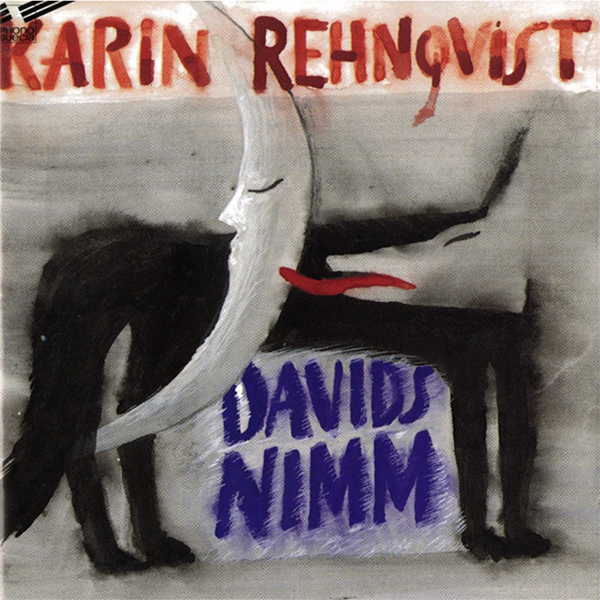
In 2018, I had the opportunity to perform Karin Rehnqvist’s Puksånger/Lockrop with two vocalists in the University of California San Diego’s Kallisti ensemble. I was unfamiliar with Rehnqvist's work at the time and was thoroughly stunned at the first rehearsal when the two vocalists entered at the beginning, singing in the high-pitched, high-amplitude, directed, and non-vibrato style known as kulning. I was fascinated by the timbre and sheer power of their voices and I was unsurprised to quickly learn that kulning - or Nordic herding call - is an approach to singing made for the outdoors. Given this, I suddenly knew why I, a percussionist, was accompanying them on timpani, as opposed to the more gentle piano more commonly expected. We performed this work twice, once in Ensenada, Mexico and later in March 2020 just before the pandemic. It has remained on my mind since that first rehearsal for many reasons, with kulning being central.
In May 2024, Catherine wrote an intriguing post on kulning (see At the Summer Farm), featuring the key characteristics and important singers who sustain the practice today. This month’s post explores a very specific and focused use of that tradition as a central component of Rehnqvist's composition. Puksånger/Lockrop, whose full title translates roughly to Timpanum Songs – Herding Calls, was commissioned by Rikskonserter (Concerts Sweden) for the Falun Folk Music Festival and is one of Rehnqvist’s early and iconic explorations of voice and percussion. The piece was composed for two female singers and percussion (timpani in particular but also xylophone, tambourine, triangles, singing bowls, and crotales) and was created with performers Lena Willemark and Susanne Rosenberg in mind. Both singers have contributed immensely to Swedish traditional music while also being pioneers in the world of trained modern and contemporary music, demonstrating their incredible and individualized abilities.
Puksånger/Lockrop is in five distinct movements, each setting text from a different source. The material includes traditional Swedish folk texts, shamanic poetry, Finnish proverbs, poetry by William Blake (translated into Swedish by Folke Isaksson), and non-semantic vocal sounds. You can view the work’s texts and translation here. Given this, the listening experience is an expressive journey through linguistic, cultural, and symbolic realms. While kulning is a primary technique used throughout the work (particularly at the beginning and end), it is not the only singing style. Rather, it is paired with a diversity of vocal techniques and percussive timbres in order to explore Rehnqvist’s deep interest in the relationship between the seemingly concrete, diurnal level of existence and more intangible, mystical experiences. Given these relationships, we can say that the work doesn’t merely set texts — it reframes them through vocal projection, fragmentation, repetition, and juxtaposition. Sometimes the words remain comprehensible; at other moments they are subsumed into the gesture of utterance itself. This blurring of semantic and phonetic functions of text aligns with Rehnqvist’s interest in exploring voice beyond narrative meaning — as sound, as affect, and as historical echo. Puksånger/Lockrop frequently navigates between intelligible language and pure sound, the delicate and the crude, and indeed the female voice as cultural expression. Rehnqvist’s herself says, “Because kulning through the ages has been a feminine mode of expression (which, unconsciously, was probably one reason why I chose to work with it), this gave me an opportunity of thinking a little more palpably about women and music/musical creativity – questions which, undeniably, one has to ask oneself and which, from time to time, are very much in my thoughts.”
This work is also a notable example of bringing musical traditions not originally intended for the concert hall into that space. Kulning is such a powerful performative display that is both heard and felt. To bring that technique into dialogue with contemporary music performance practice - with its heavy considerations of harmony, melody, sonority, and rhythm - creates striking moments of tension and compatibility throughout this work. Such as in the final movement, “Det hördes över hela jorden” (It was heard all over the Earth), where a haunting straight-tone melody in a minor key, accompanied by timpani, is slowly revealed after an extended kulning section (often notated with quarter-tones) between both singers. The overall emotional trajectory of this work is immense given it can be classified as a trio. The first movement sets traditional Swedish folk verse following with interjections from the timpani, often pedaled (raising and lowering the pitch of the drum) to imitate the melodic contours of the voice. The second movement greatly contrasts the first, with non-semantic invented syllables by Rehnqvist accompanied by singing bowls, crotales. This is followed by Finnish proverbs about women, understood as the most forward and satirical moments of the work, exposing misogynistic folk wisdom through exaggerated delivery. The fourth movement returns to non-semantic sounds - cries, calls, shouts, whispers - before a return and transformation of earlier material in the final movement.
You can find the CD that contains Puksånger/Lockrop on Rehnqvist’s website. It is also available on streaming platforms such as Apple Music and Spotify. An excerpt of the final movement can be viewed here, featuring Lena Willemark and Ulrika Bodén with David Shively on percussion from a performance at the Miller Theater in New York.
If you are looking for something to listen to that stands on its own and is thoughtfully original, Puksånger/Lockrop is my sincere recommendation.
About the Author
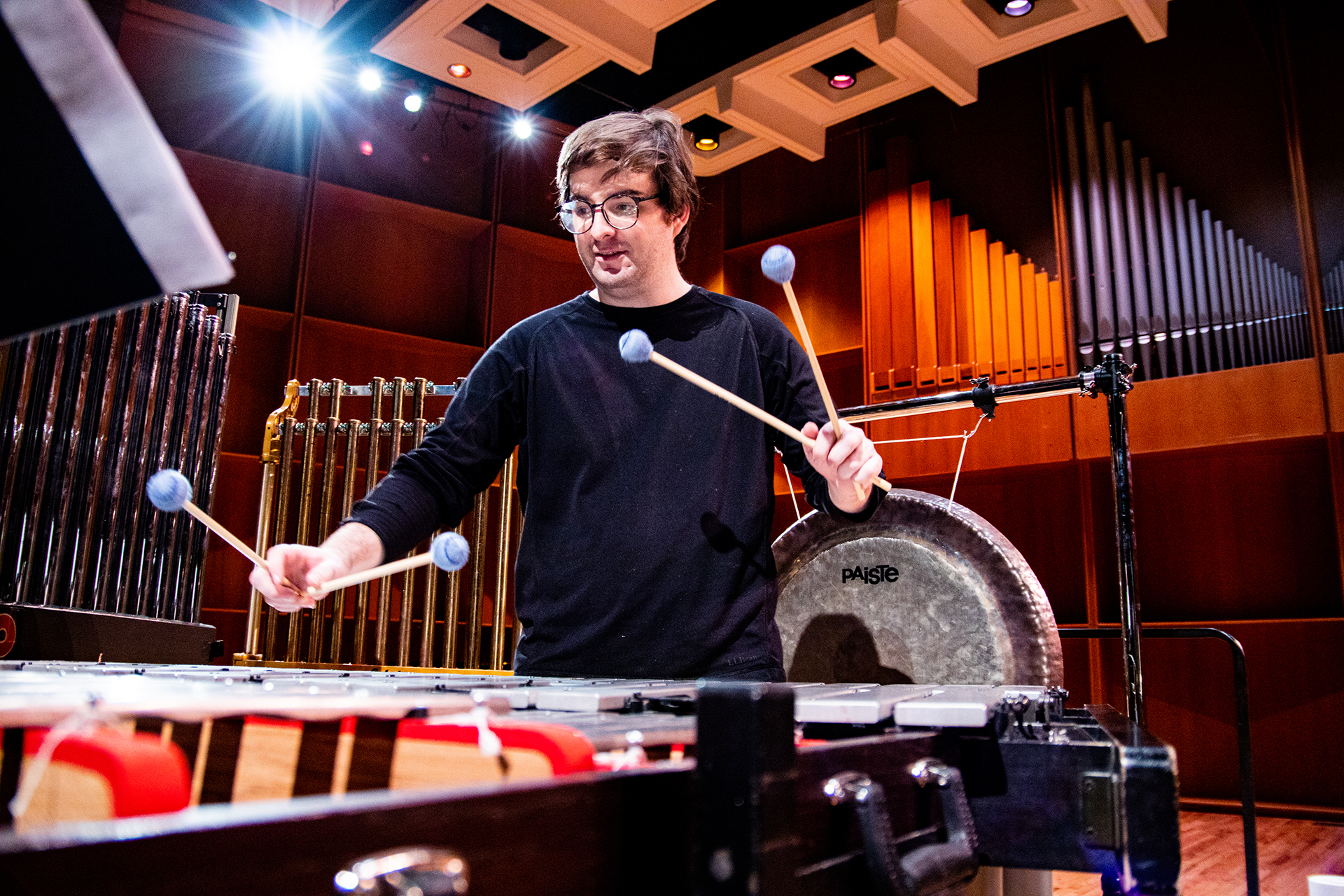
Dr. Sean Dowgray is a classical percussionist specializing in modern and contemporary music. Dowgray is a proponent of creative collaborations which has resulted in recent musical works by Daniel Tacke (Vorrücken and einsamkeit), Josh Levine (Shrinking world/expanding and Les yeux ouverts) as well as new chamber works by Justin Murphy-Mancini (Sic itur ad astra and A Song of Grecis.) and Lydia Winsor Brinadmour (As if, sand). In the recent past, Dowgray has collaborated closely with composers including Jürg Frey (Garden of Transparency), Christopher Adler (Strata), Ioannis Mitsialis (Machine Mode), Lewis Nielson (Where Ashes Make the Flowers Grow and NOVA), and James Wood (Cloud Polyphonies). As a soloist, Dr. Dowgray has focused extensively on works that stretch the technical and expressive capabilities of both instrument and performer. This includes the work of Jason Eckardt, Josh Levine, Daniel Tacke, Salvatore Sciarrino, Lewis Nielson, David Lang, Christopher Adler, Brian Ferneyhough, Luciano Berio, Richard Barrett. Dowgray has been featured as a soloist at the Oberlin Percussion Institute, the Percussive Art Society International Convention (PASIC), the WasteLAnd New Music Series, Harvard’s Institute for Advanced Learning, the University of Arizona, the SoundON New Music Festival, and Eureka! Musical Minds of California. As a creative practitioner, Dowgray has focused recently on his project, WHEN for mixed ensemble set to premiere in 2025. He recently completed the interdisciplinary collaboration, In A Time of Change: Boreal Forest Stories featuring artists and scientists. As part of this collaboration, Dowgray created the work Moving Through the Boreal Forest in partnership with Maïté Agopian (light and shadow work) and Daryl Farmer (poetry), Associate Professor of English at UAF. Dr. Dowgray is a graduate of the Interlochen Arts Academy where he studied with John Alfieri, the Oberlin Conservatory (B.M.) where studied with Michael Rosen, the University of Alaska Fairbanks (M.M.) where he studied with Dr. Morris Palter, and the University of California San Diego (D.M.A) where he studied with Steven Schick. In Dr. Dowgray's dissertation, Time Being: Percussion as a Study of Time, he presents an analyses of new and rarely heard works for and with percussion through theoretical frameworks of time study from authors including Jonathan Kramer, J.T. Fraser, Edward T. Hall, and others. Recent notable performances include John Corigliano's percussion concerto, Conjurer with the Fairbanks Symphony Orchestra and Lewis Nielson's Lengua Encubierto for solo percussion at the Percussive Arts Society International Convention (PASIC).