

A Recorded First: Ḵutulagaaw: The Tlingit-Russian Battles
by Dr. Sean Dowgray, CMS Faculty Organizer and Term Assistant Professor of Music
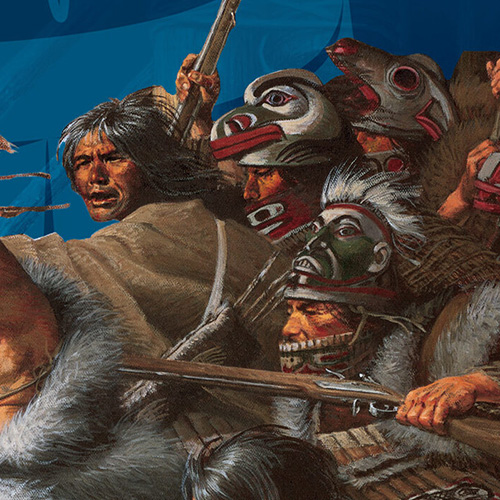
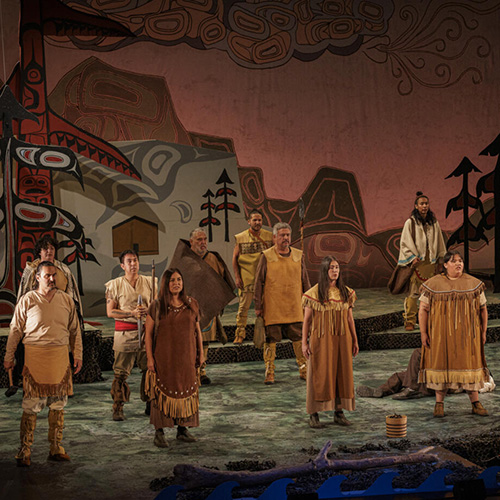
This month, I’m excited to feature a major development in the worlds of arts, culture, and music that took place at the Thunder Mountain Auditorium in Juneau earlier this fall. Thanks to a partnership between the Sealaska Heritage Institute (SHI) and Perseverance Theatre, a decade-long initiative culminated in a first-of-its-kind operatic production: the first Tlingit-language opera in recorded history, based on historical accounts and oral traditions told from the Tlingit perspective. Ḵutulagaaw: The Tlingit-Russian Battles is a two-hour-long work based on recorded oral history collections held at Sitka National Historical Park. These collections consist of stories told by Elders who grew up hearing accounts of the Tlingit-Russian battles of 1802 and 1804 from their parents and grandparents, some of whom witnessed the events firsthand. Dr. Kaaháni Rosita Worl further explained in the playbill:
When the Russians first arrived, the Tlingit and Russians had mutually beneficial trading relations. However, that changed when the Russians began to expropriate Tlingit resources without payment to the Tlingit, who owned Southeast Alaska. Additionally, the Russians also kidnapped and assaulted Tlingit women. These criminal actions led the Tlingit to battle with the Russians.
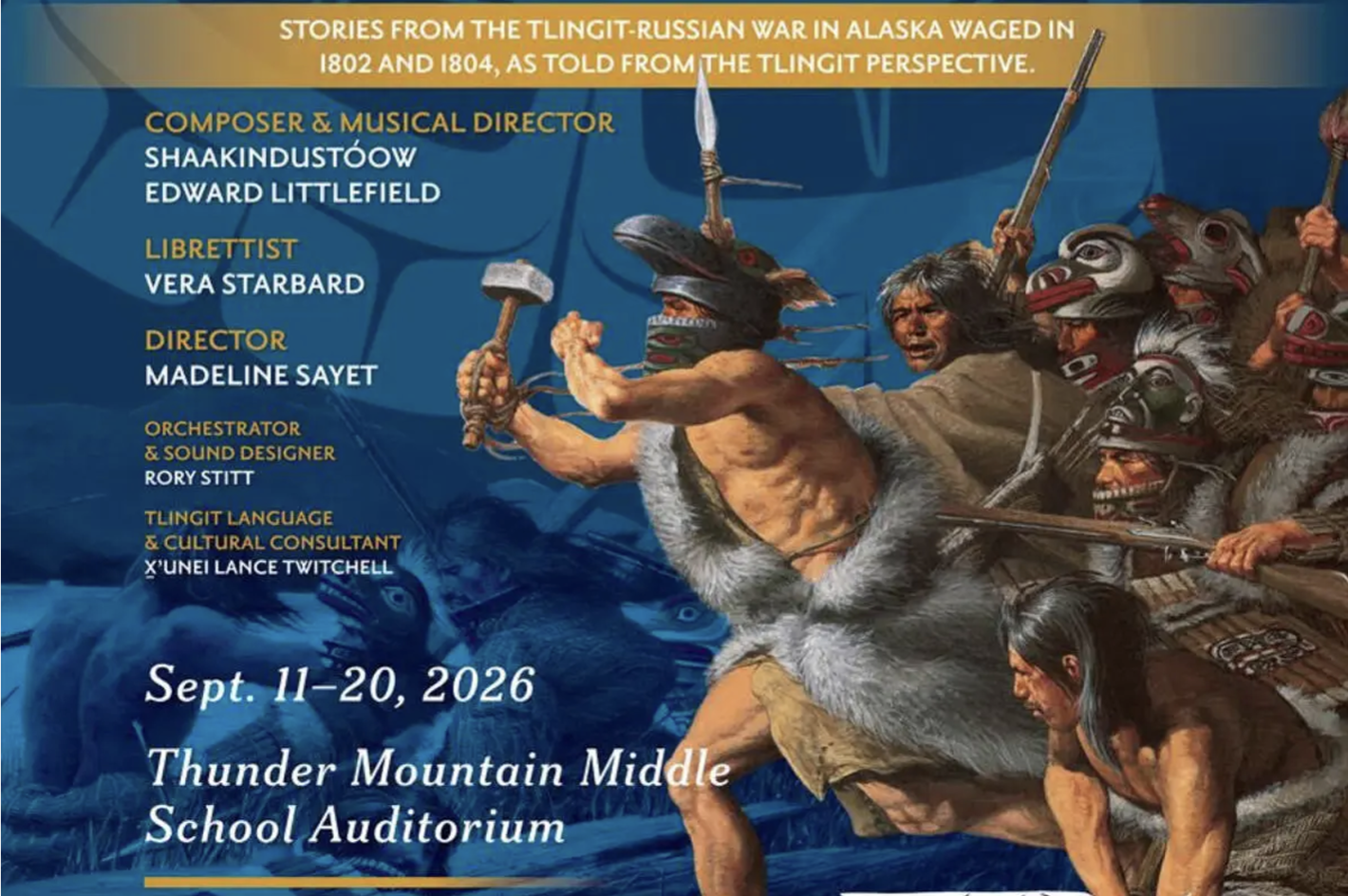
When I learned of this production, I was instantly overwhelmed by the implications of what it means for Alaskan arts and culture. To name a few, this is a powerful example of a large-scale creative undertaking that would not and could not occur anywhere else in the world. It demonstrates the value of dedicated, multifaceted, long-term collaboration among artists, communities, organizations, and initiatives. This immense undertaking also means a great deal for the Tlingit language and its revitalization efforts. This goes beyond language preservation, as audiences witnessed the expressive power of Tlingit to tell a story alongside music and staging in real time. It is transformative for the operatic art form itself. We are living in a time when the European operatic tradition is largely open to new ideas, collaborations, and dialogue. So what better way for this centuries-old institution to serve as a contemporary vehicle for a language and culture with roots thousands of years old?
This also leads us to consider what we really mean when we call something a first. This is not the beginning of Tlingit performance, storytelling, or musical traditions, which are already rich and longstanding. Worl explained that opera is nothing new to Tlingit culture, “We would perform them in natural amphitheaters. You know, located adjacent to our villages, our actors, actresses would be dressed in their — I wouldn’t say costume, but maybe regalia — and they would perform songs and they would tell stories, ancient stories.” However, Ḵutulagaaw represents a recorded first that brings together the work of some incredibly talented artists.
You can hear from librettist Vera Starbard and cast member Madeline Soboleff Levy in WBUR’s brief feature by Peter O’Dowd and Emiko Tamagawa. Soboleff Levy sings the opening of one of the songs live in the studio. You can also get a sense of what the performance sounded like through a few brief excerpts from the premiere. In the first excerpt, we hear multiple voices singing in harmony, accompanied by a drum. In the second, strings and marimba accompany a group of singers telling Elders that the Russians have returned.
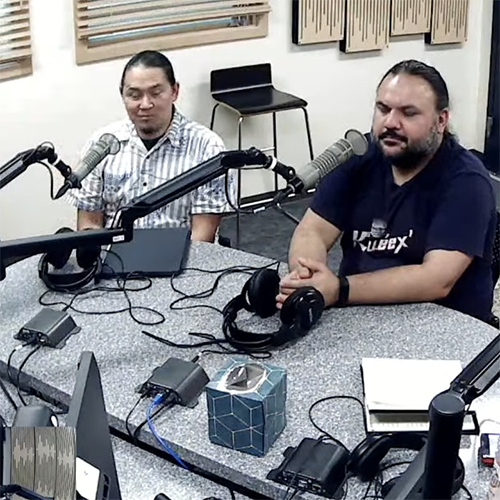
You can listen to or view more of KTOO’s hour-long feature on the production here. SHI Director Dr. Rosita Worl, librettist Vera Starbard, and Perseverance Theatre Artistic Director Leslie Ishii discuss the early development of the project. Translator Dr. X’unei Lance Twitchell, composer Ed Littlefield, and orchestrator Rory Stitt then take over to outline how the production came to life. This second segment features an extended excerpt of some of the purely instrumental music. Littlefield discusses his vision for the music, beginning with his own musical upbringing in Western classical music environments, where he played violin at a young age, as well as his experience performing with multiple Alaska Native dance groups. For Littlefield, melody was the most important focus in developing the musical material, particularly melody that works with the Tlingit language. Twitchell and Littlefield discuss some of the nuances of setting Tlingit to music. Tlingit is a tone language, meaning that pitch can be an essential component of a word’s meaning. Consequently, setting Tlingit words to melodies requires careful consideration of their lexical tones, as musical pitches can potentially interfere with these tonal distinctions. They also discuss the orchestration, which includes a small string ensemble (two violins, cello, and bass), clarinet, horn, and three percussionists. The percussion includes traditional hand drums, a box drum, and rattles, as well as Western percussion instruments such as tenor drum and snare drum. Littlefield notes that percussion was central to navigating the stylistic differences between Tlingit and Western traditions, with the instruments used in each section helping to distinguish between them. In the final segment, Associate Director Xáalnook Erin Tripp, conductor Ed Littlefield, and cast member Sovereign Bill discuss various performative aspects of the production.
I was not able to attend this production myself, and I have learned about it through discussions with those who attended in September, as well as through various advertisements and interviews. Following its sold-out premiere run in Juneau from September 11–20, no performances outside Juneau have been officially announced at this time. However, Sealaska Heritage Institute is discussing the possibility of future performances. Large-scale productions come with significant logistical challenges and costs. While I’m hopeful that future opportunities to experience this performance will emerge, I know that good things take time…
Resources
About the Author
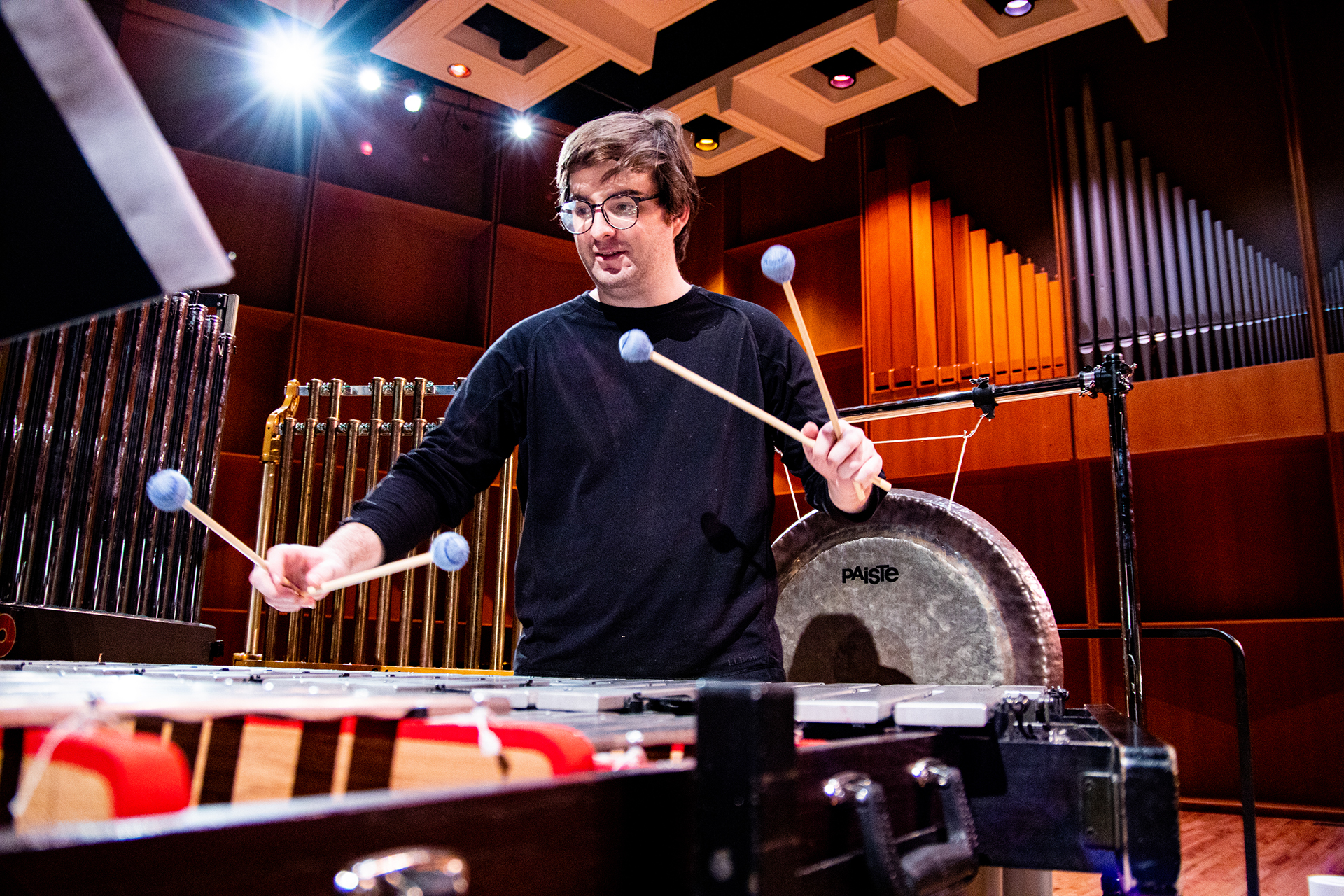
Dr. Sean Dowgray is a classical percussionist specializing in modern and contemporary music. Dowgray is a proponent of creative collaborations which has resulted in recent musical works by Daniel Tacke (Vorrücken and einsamkeit), Josh Levine (Shrinking world/expanding and Les yeux ouverts) as well as new chamber works by Justin Murphy-Mancini (Sic itur ad astra and A Song of Grecis.) and Lydia Winsor Brinadmour (As if, sand). In the recent past, Dowgray has collaborated closely with composers including Jürg Frey (Garden of Transparency), Christopher Adler (Strata), Ioannis Mitsialis (Machine Mode), Lewis Nielson (Where Ashes Make the Flowers Grow and NOVA), and James Wood (Cloud Polyphonies). As a soloist, Dr. Dowgray has focused extensively on works that stretch the technical and expressive capabilities of both instrument and performer. This includes the work of Jason Eckardt, Josh Levine, Daniel Tacke, Salvatore Sciarrino, Lewis Nielson, David Lang, Christopher Adler, Brian Ferneyhough, Luciano Berio, Richard Barrett. Dowgray has been featured as a soloist at the Oberlin Percussion Institute, the Percussive Art Society International Convention (PASIC), the WasteLAnd New Music Series, Harvard’s Institute for Advanced Learning, the University of Arizona, the SoundON New Music Festival, and Eureka! Musical Minds of California. As a creative practitioner, Dowgray has focused recently on his project, WHEN for mixed ensemble set to premiere in 2025. He recently completed the interdisciplinary collaboration, In A Time of Change: Boreal Forest Stories featuring artists and scientists. As part of this collaboration, Dowgray created the work Moving Through the Boreal Forest in partnership with Maïté Agopian (light and shadow work) and Daryl Farmer (poetry), Associate Professor of English at UAF. Dr. Dowgray is a graduate of the Interlochen Arts Academy where he studied with John Alfieri, the Oberlin Conservatory (B.M.) where he studied with Michael Rosen, the University of Alaska Fairbanks (M.M.) where he studied with Dr. Morris Palter, and the University of California San Diego (D.M.A) where he studied with Steven Schick. In Dr. Dowgray's dissertation, Time Being: Percussion as a Study of Time, he presents an analyses of new and rarely heard works for and with percussion through theoretical frameworks of time study from authors including Jonathan Kramer, J.T. Fraser, Edward T. Hall, and others. Recent notable performances include John Corigliano's percussion concerto, Conjurer with the Fairbanks Symphony Orchestra and Lewis Nielson's Lengua Encubierto for solo percussion at the Percussive Arts Society International Convention (PASIC).