


New guide helps Alaskans shape data center conversations
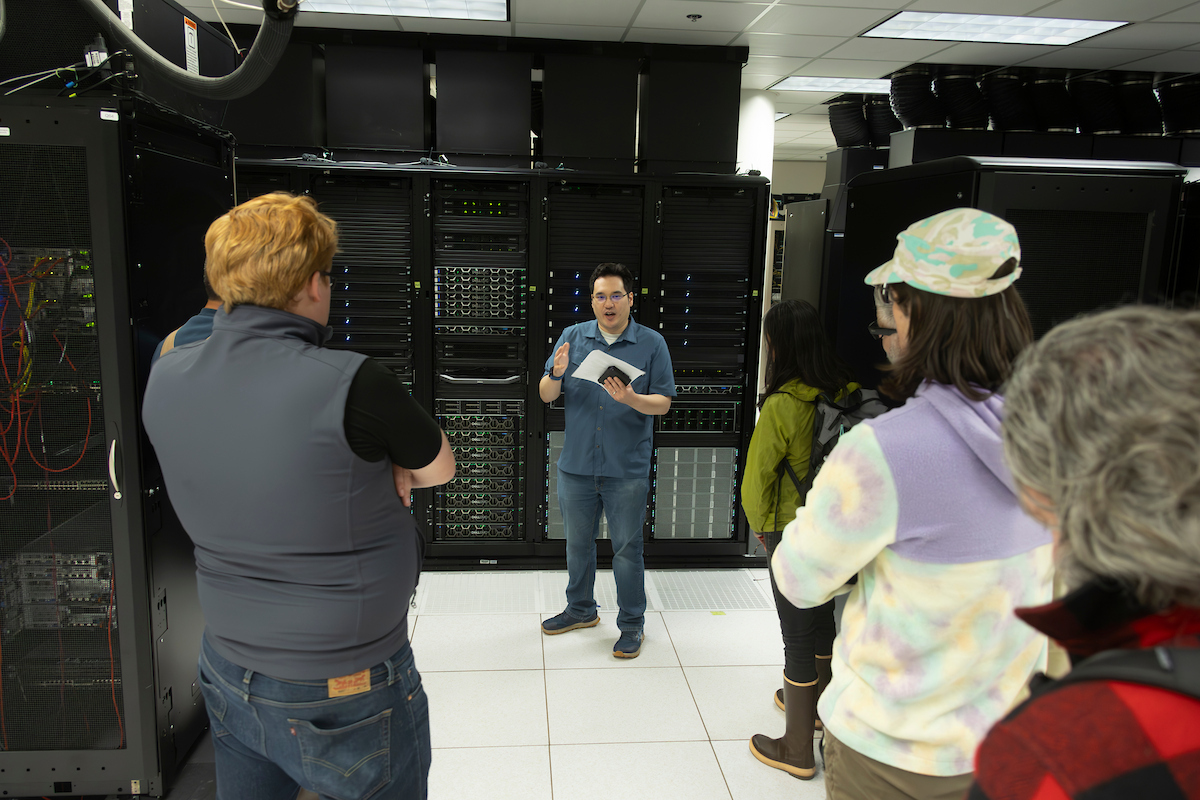
Kevin Galloway of the Geophysical Institute gives a tour of the data center on the University of Alaska Fairbanks Troth Yeddha’ campus in August 2024.
October 11, 2026
By Yuri Bult-Ito
As data centers and artificial intelligence raise new questions about energy, water, land, infrastructure, jobs and community priorities across Alaska, a new report offers a different way to approach the conversation.
“Computing in Place: A Conversation Guide on Data Centers for Alaskans, by Alaskans” was developed by the Alaska Center for Energy and Power to help Alaskans think about the role data centers could, or should, play in their communities and in the state’s future.
Rather than focusing on a single proposed project or asking simply whether Alaska should attract more data centers, the guide starts with a broader set of questions.
The main queries include: What computing does Alaska need? What resources should support it? Who should control it? Who benefits and who pays? What, if anything, does Alaska want to provide to the rest of the world?
The guide was informed by a two-day discussion led by ACEP in June 2026 that brought together representatives from Alaska’s energy, telecommunications, computing, research, government, economic development and community sectors. The discussion was focused on the broader conditions and choices surrounding the idea of building data centers in Alaska, rather than evaluating a particular project or location.
The guide is for anyone helping the future of communities in Alaska, including community leaders, tribal governments, policymakers, utilities, planners, researchers, businesses and residents. It is designed to be useful whether a community is just learning about data centers, considering a project or preparing for a broader community conversation.
The guide uses a place-based approach. It recognizes that data centers are not all alike and that Alaska communities have different energy systems, infrastructure, economies, resources and aspirations. A small facility supporting a hospital or tribal government, for example, raises different questions from a hyperscale facility serving global customers. The guide encourages communities to consider data centers in relation to the systems and priorities that already shape local life — from energy and water to housing, education, subsistence, public safety, transportation and economic development.
“Computing in Place” is not intended to tell communities what decision to make. It is a tool for asking better questions, bringing the right people into the conversation and connecting infrastructure decisions to the future that communities want to build.