


How electric vehicles are doing during Alaska’s cold snaps
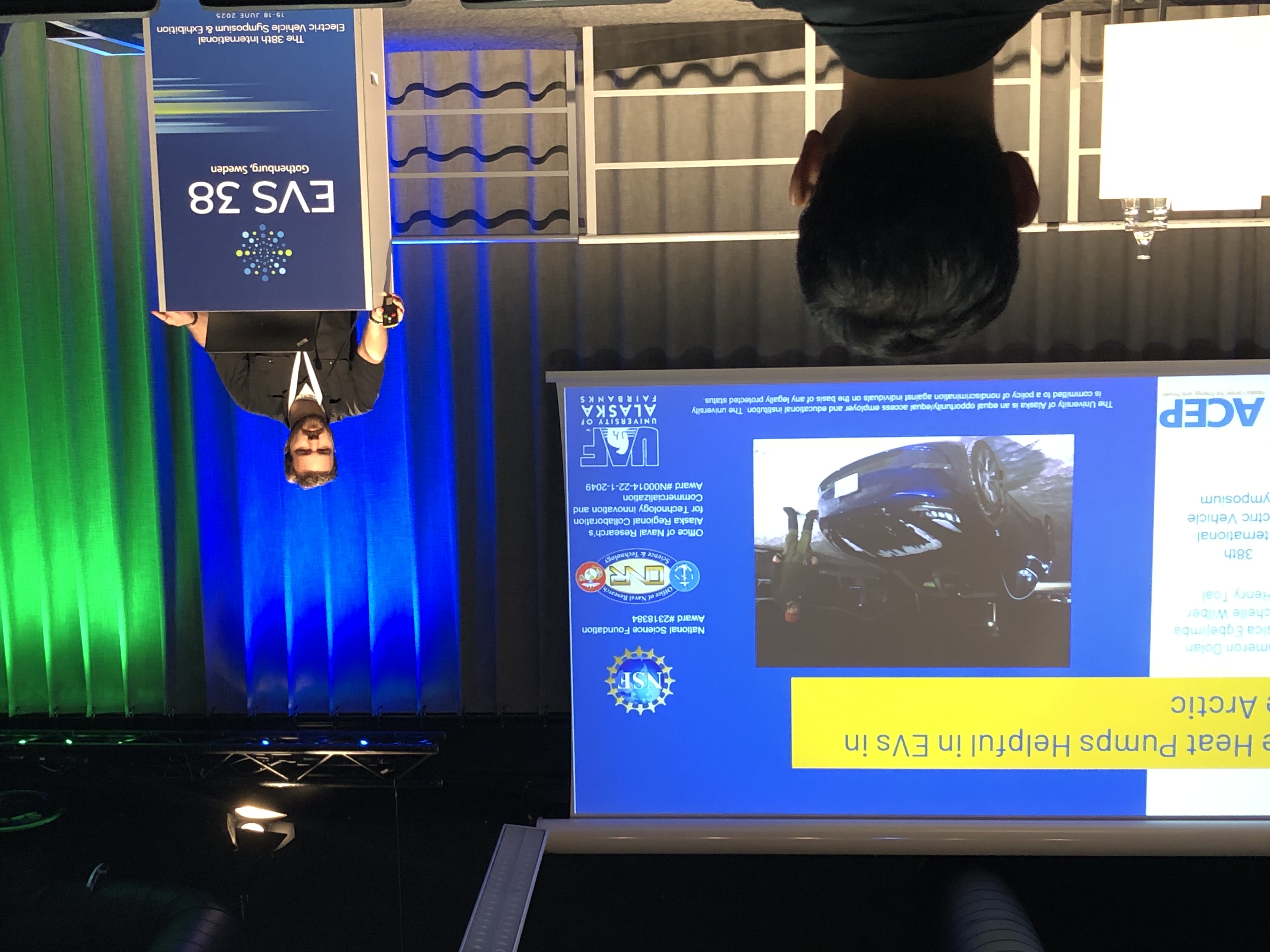
Cam Dolan gives a presentation on ACEP's electric vehicle research findings at the 38th International Electric Vehicle Symposium and Exhibition in Sweden in June 2025.
January 28, 2026
With Alaskans facing a harsh winter this year, including stretches of subzero temperatures, wind and heavy snowfall, many are wondering how electric vehicles, or EVs, are faring in these extreme conditions.
Surprisingly, EVs have been performing better than expected, with reports suggesting that they are holding up well in the cold. Local anecdotes, including comments from the Fairbanks, Alaska, Facebook group, show that EVs are starting up smoothly and warming the vehicles’ interiors faster than traditional gas vehicles even in subzero temperatures.
While drivers have noticed a decrease in range during this cold snap, the affordability and convenience of at-home charging have helped offset the need for more frequent charging.
Researchers with the U.S. National Science Foundation-funded research project Electric Vehicles in the Arctic, known as EVITA, are studying crowdsourced EV data to better understand the relationship between outside temperatures and energy use.
ACEP’s Cameron Dolan, an EVITA research engineer, has been analyzing this data to create a graph visualizing the relationship between energy use per mile and the outside temperature for six EVs in Fairbanks.
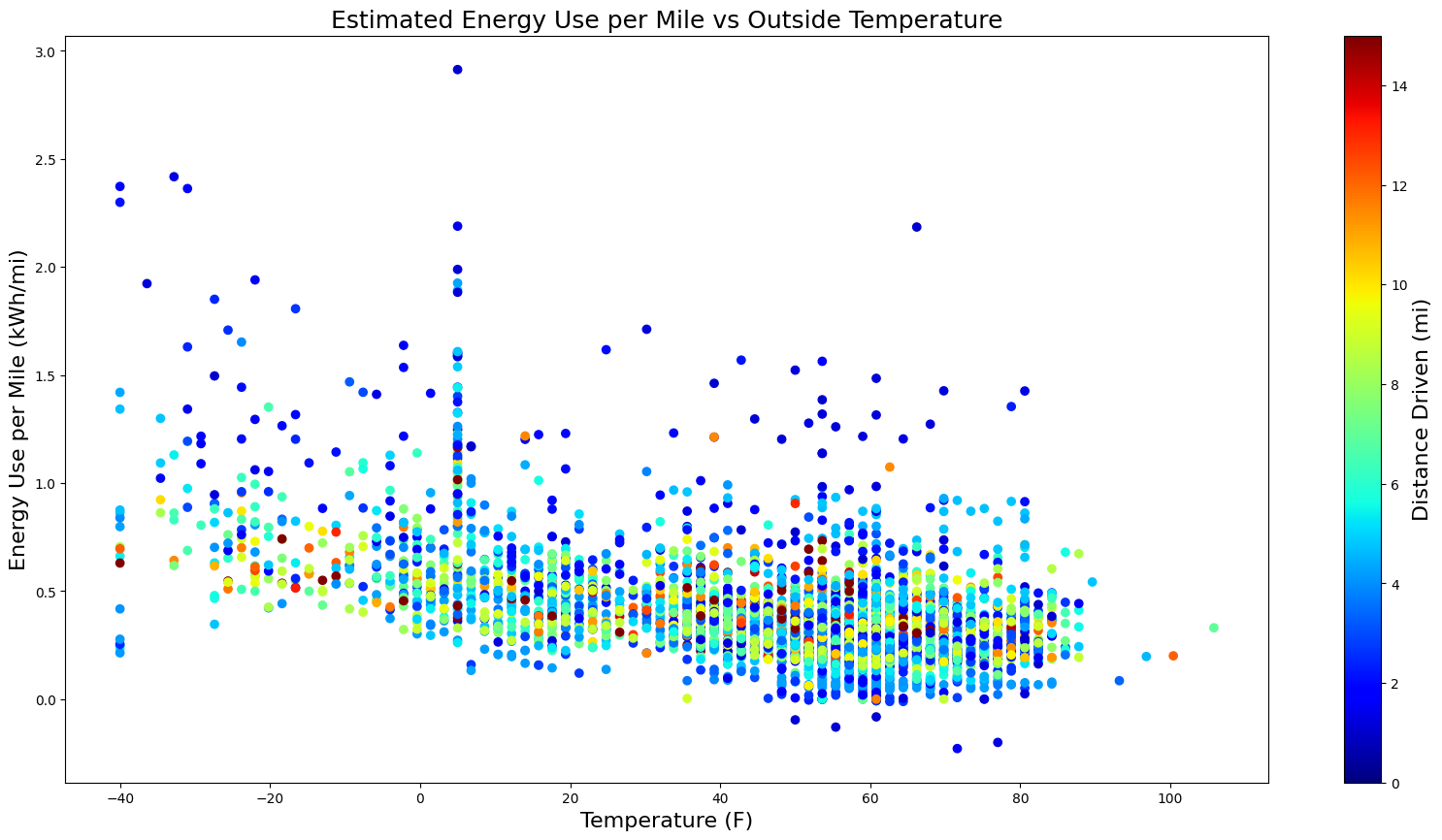
Graph created by ACEP’s Cameron Dolan visualizes the relationship between energy use per mile and outside temperature for six electric vehicles in Fairbanks.
The graph shows that while the EVs become less efficient, as expected, at colder temperatures, they continue to perform well even at minus 40. As a previous analysis indicates, the energy use can be 2-3 times more in extreme cold than in summer. But for many drivers in Alaska, this still leaves ample range for daily trips.
Additionally, the data indicate that longer driving trips tend to be more efficient than shorter ones, especially in colder conditions. Overall, both the EVITA analysis and anecdotal reports suggest that EVs are proving reliable during this cold snap, helping Alaskans get where they need to go.
If you are an EV driver and would like to volunteer your vehicle’s energy data to contribute to EVITA’s research, please email Cameron Dolan at crdolan@alaska.edu.