


Hands-on STEM workshop sparks Alaska’s future energy leaders
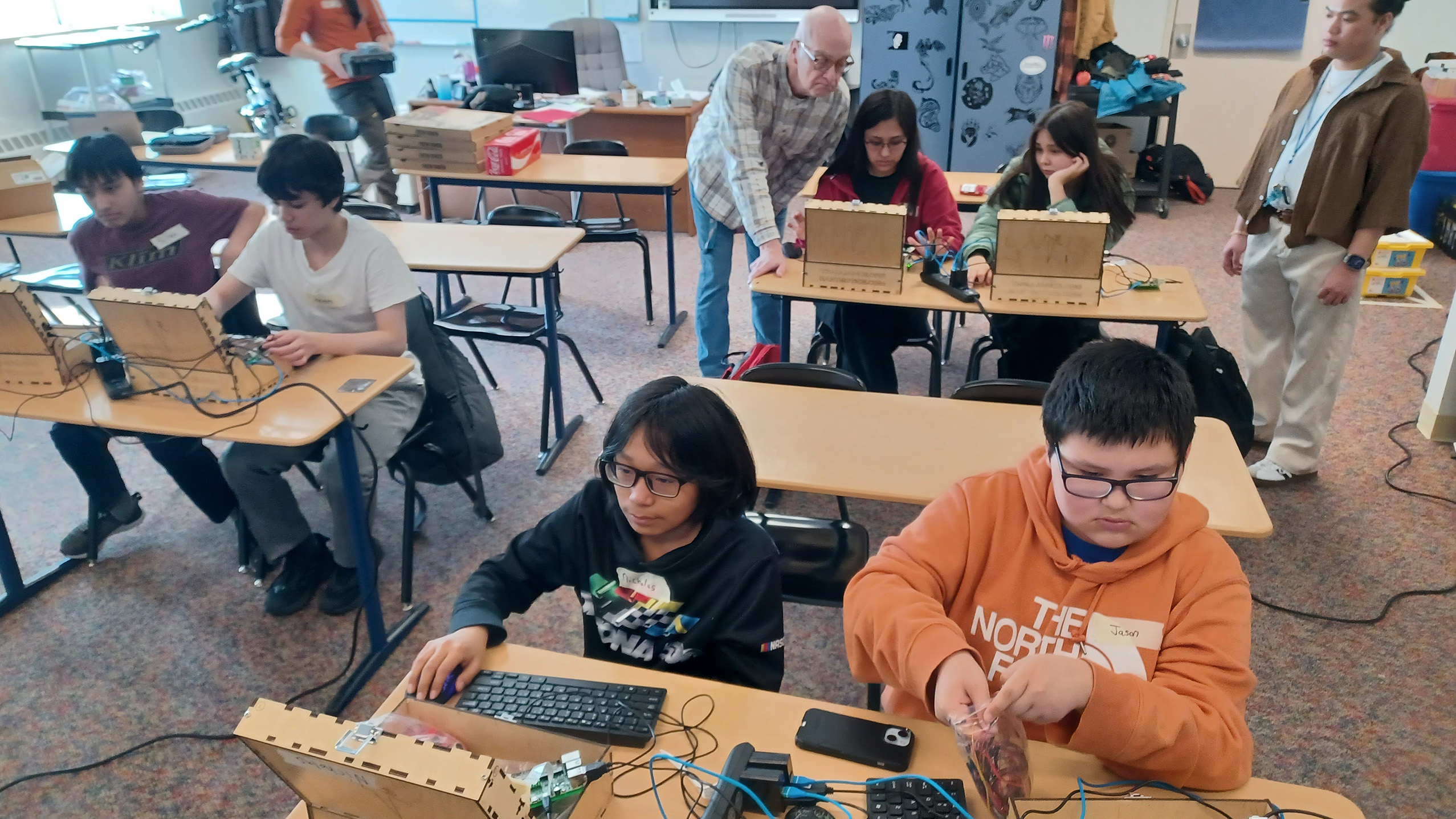
T3 students program Raspberry Pi computers to pass data packets to other computers during a workshop in Kotzebue.
May 15, 2026
Alaska and the Northwest Arctic face growing energy challenges, from remote infrastructure demands to global supply disruptions. Recent events in the Middle East have compounded these pressures, emphasizing the need for local solutions and a workforce ready to step into leadership roles. Students in Kotzebue are rising to meet that challenge.
“Kotzebue is a community innovation hub,” explained George Reising, who is a lead curriculum developer at the Alaska Center for Energy and Power. “Our job is to connect the residents, leaders and utility partners with ACEP’s energy research, preparing them for the challenges ahead.”
Reising recently traveled to Kotzebue for a hands-on learning day with middle and high school students. The day combined learning about topics such as critical energy infrastructure and ongoing research with the development of practical skills, culminating in students earning Growth Mindset and Raspberry Pi Level One badges — symbols to recognize learning accomplishments. Kenneth Vildosola and Merle Green, coaches for Teaching Through Technology Alaska, or T3 Alaska, helped organize the workshop, and it kept students engaged from start to finish.
The day began with a growth mindset activity focused on problem-solving and perseverance. Students collaborated on a team challenge, thinking creatively, learning from mistakes and practicing the “power of yet” — the understanding that skills grow through effort and persistence. Laughter and support filled the room, and students gained confidence by tackling challenges together.
With that foundation, the students moved on to Raspberry Pi computing. Like many real-world projects, the workshop involved a few starts and stops, but students adapted quickly. Before long, cameras were rolling and buzzers were buzzing as they learned about sensors and triggers.
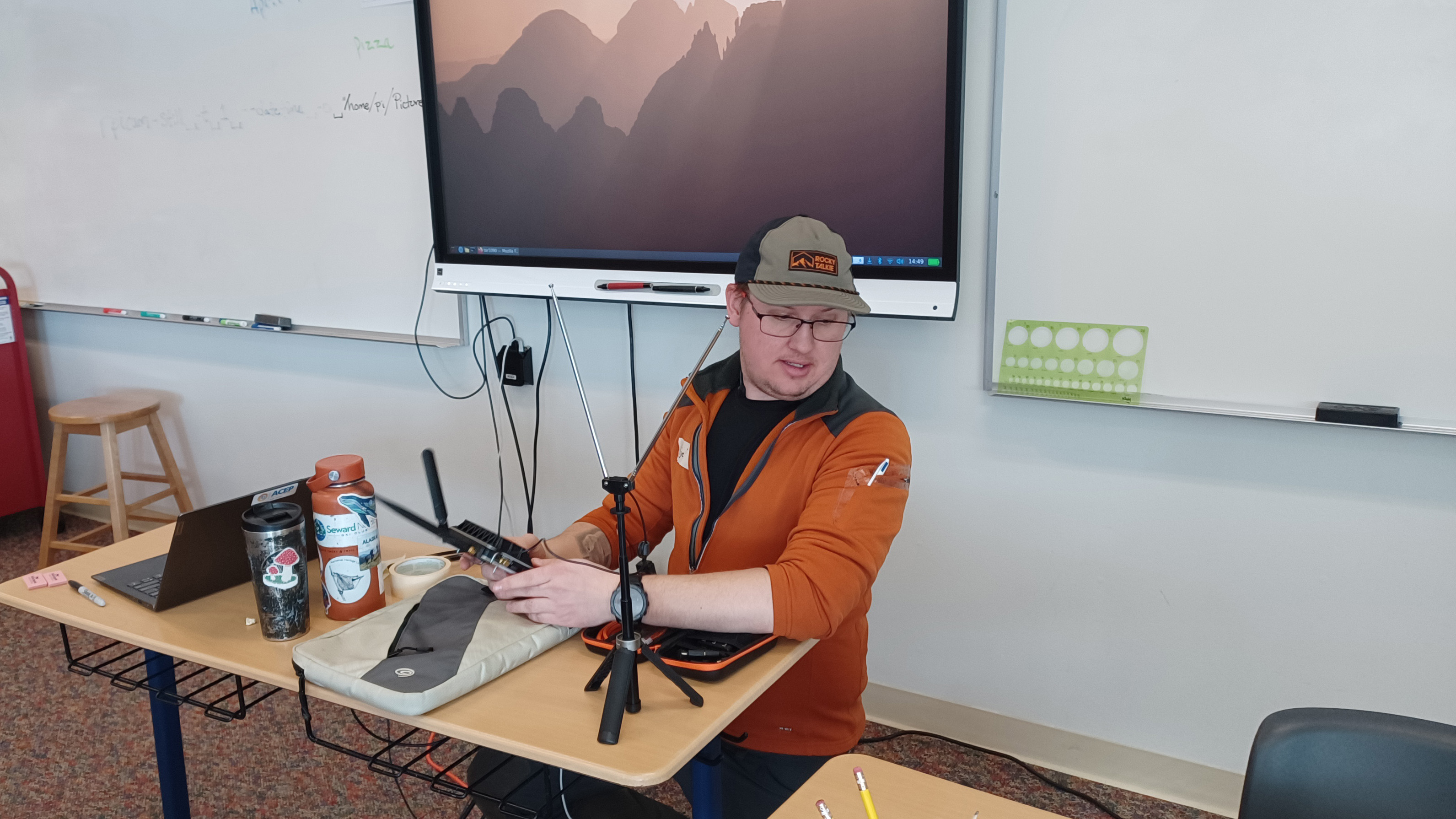
Kjell Olson demonstrates how to listen to radio signals with a Raspberry Pi computer.
A highlight of the day was a session with Kjell Olson, a technical expert from ACEP through the Department of Defense SkillBridge program, connecting classroom learning to real-world cybersecurity. Students learned how a Raspberry Pi can be used with a software-defined radio — a system where traditional analog radio is implemented via software on a computer system — to listen to air traffic, radio and TV signals. This hands-on activity sparked discussions about intercepting signals, sending misinformation and encrypting signals — key cybersecurity concepts and a formal introduction to this field for all of the students.
By the end of the day, students had earned badges and gained practical science, technology, engineering and mathematics experience, stronger problem-solving skills and greater confidence. They also received the opportunity to participate in a two-week intensive workshop this summer focused on microgrids, critical infrastructure and cybersecurity, which will start in Anchorage and move to Fairbanks.
“Working with students who are residents and future leaders is a key part of workforce development,” Reising said. “It takes scaffolding, guidance and hands-on experience.”
Through workshops like this, Kotzebue students are taking meaningful steps toward tackling the energy challenges facing Alaska and the Northwest Arctic and building a future-ready workforce along the way.
This work is supported by the U.S. Department of the Navy and the Office of Naval Research.