


Extensive progress with tethered turbine technology at TRTS
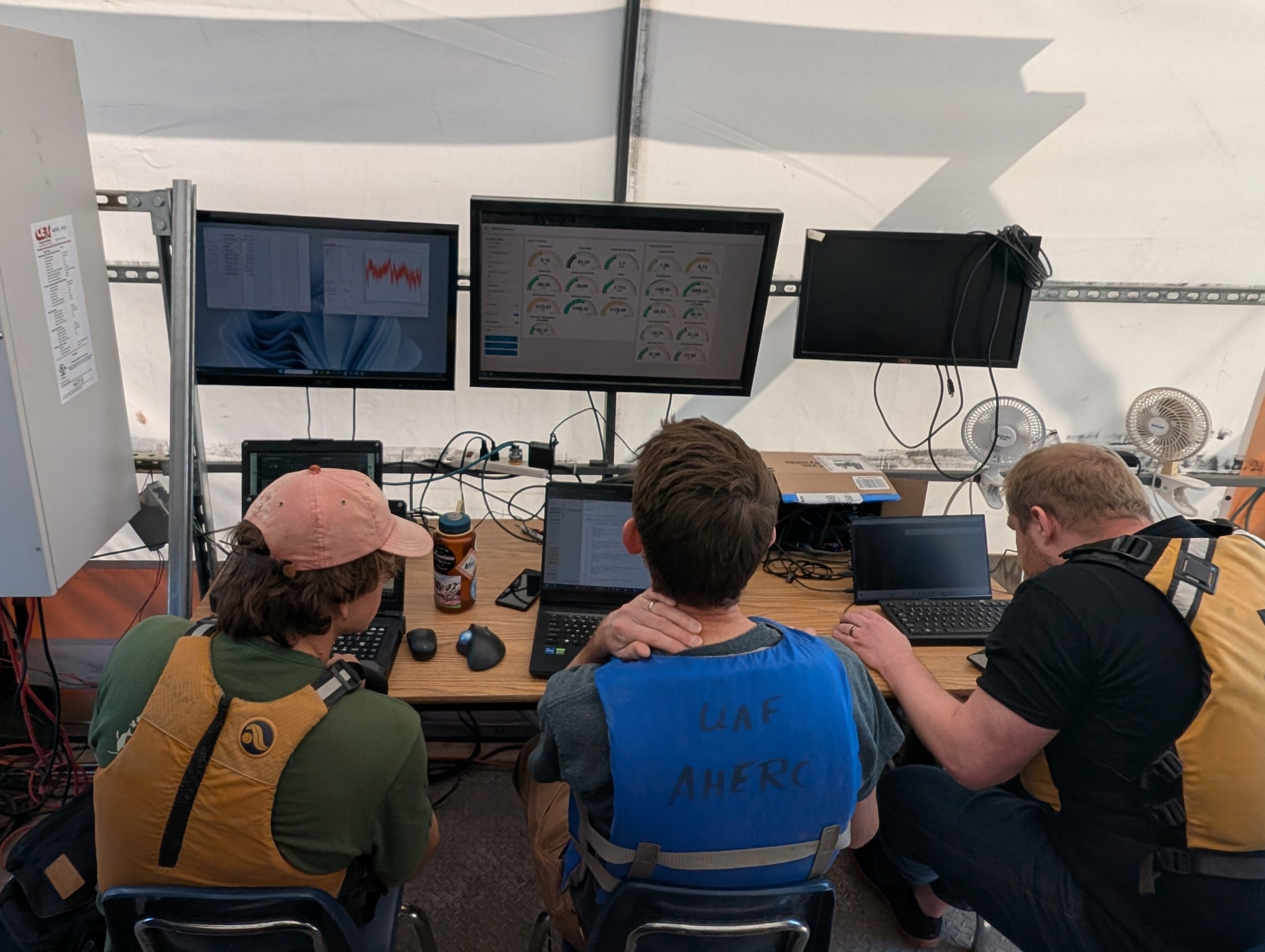
Researchers work on control and instrumentation systems on the Tanana River Hydrokinetic Test Site barge.
January 30, 2026
This past summer, ACEP’s marine energy team and BladeRunner Energy completed their most extensive field-testing season yet at the Tanana River Hydrokinetic Test Site, or TRTS.
This effort is a result of two projects, ACEP’s “Material and Cost Efficient Modular Riverine Hydrokinetic Energy System” and “Microgrid Control/Coordination Co-Design,” or MicroC3, by North Carolina State University.
Following months of collaboration, the team performed two week-long “shakedown” tests at TRTS in June and July, which incorporated the latest iteration of BladeRunner’s tethered turbine technology, NCSU’s MicroC3 grid controller on a 480 VAC electrical bus, a heavy-duty power distribution system, and ACEP’s data monitoring systems. They fine-tuned control systems for rotor depth and generator speed setpoints and brought online real-time video and data streaming.
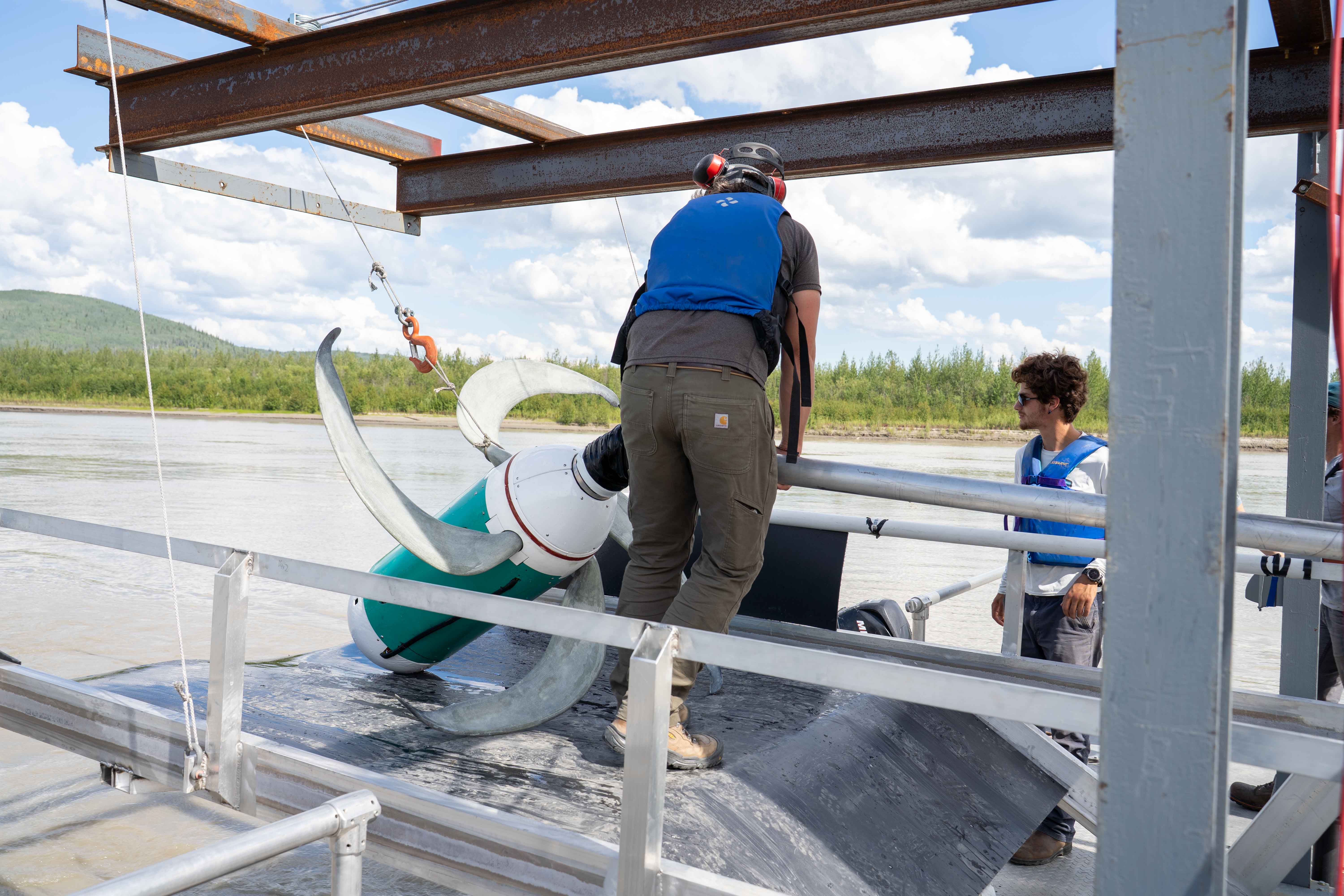
BladeRunner Energy’s Moriel Arango positions the rotor for deployment.
Upgrades to the TRTS barge were completed in August to make the site autonomous for long-duration testing. On Aug. 19 the BladeRunner turbine was deployed for the test site’s first-ever unattended long duration test. For 11 days, the team monitored the system remotely via cameras and data streams. Using MicroC3 and BladeRunner’s control system, researchers performed setpoint changes to collect data on system performance across a range of operating conditions.
On Aug. 31, amid minor flooding conditions, the testing was discontinued after 264 hours of continuous operation. The system sustained damage from debris interactions that will inform future design improvements and move the system closer to commercial readiness.
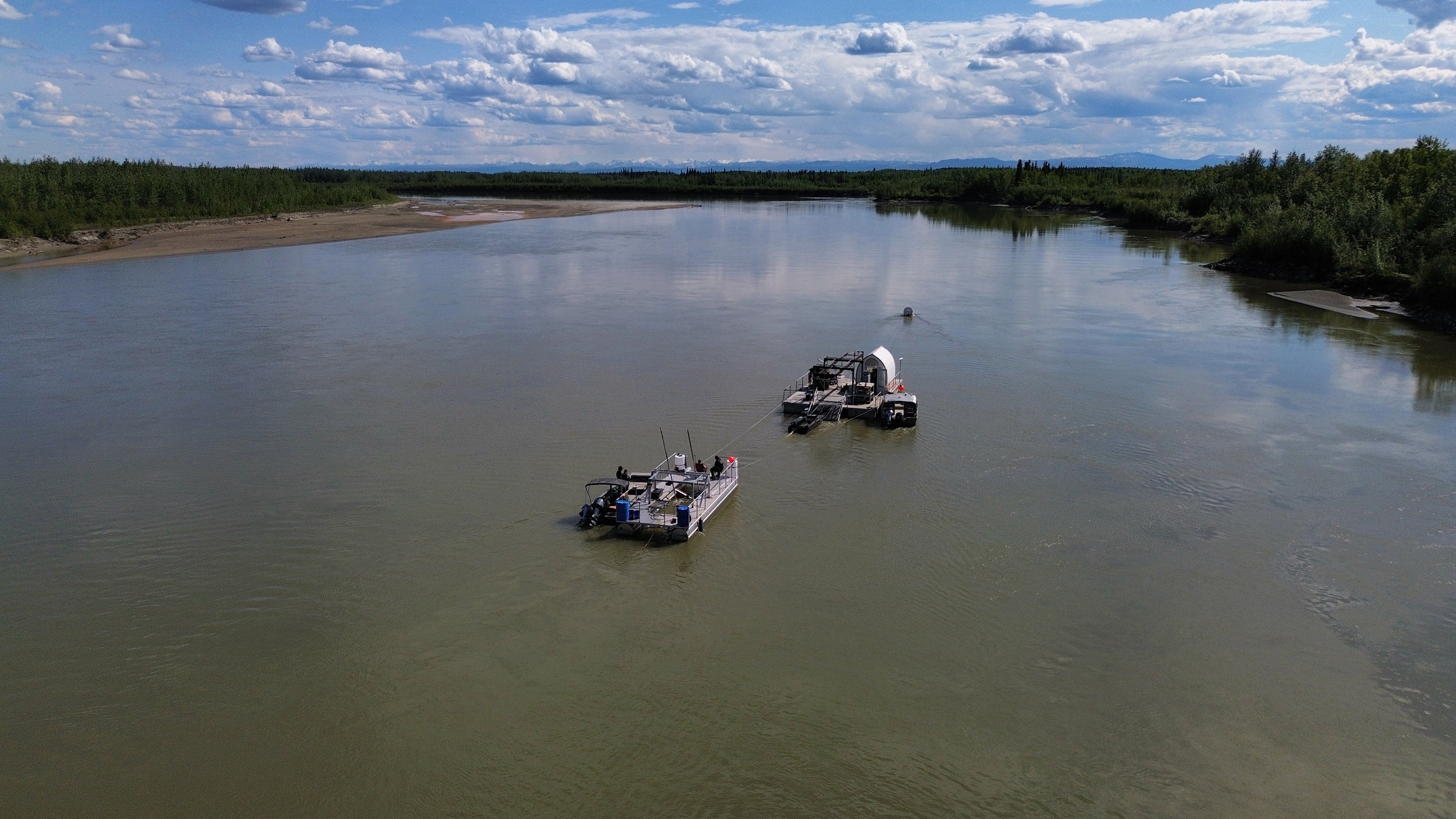
Drone view of testing at the Tanana River Hydrokinetic Test Site in June 2025.
In parallel with these field tests, site preparations were made in Napaimute, Alaska to prepare for a pilot deployment of the same integrated hydrokinetic energy system in the summer of 2026. The project team will spend the winter reviewing data, upgrading systems and preparing for the first deployment of this system outside of the TRTS.
Both ACEP and NCSU projects are funded by the U.S. Department of Energy’s Advanced Research Projects Agency-Energy.
The information, data, or work presented herein was funded in part by the Advanced Research Projects Agency-Energy (ARPA-E), U.S. Department of Energy, under Award Number DE-AR0001444.