

De Witt strengthens Arctic cooperation in South Korea
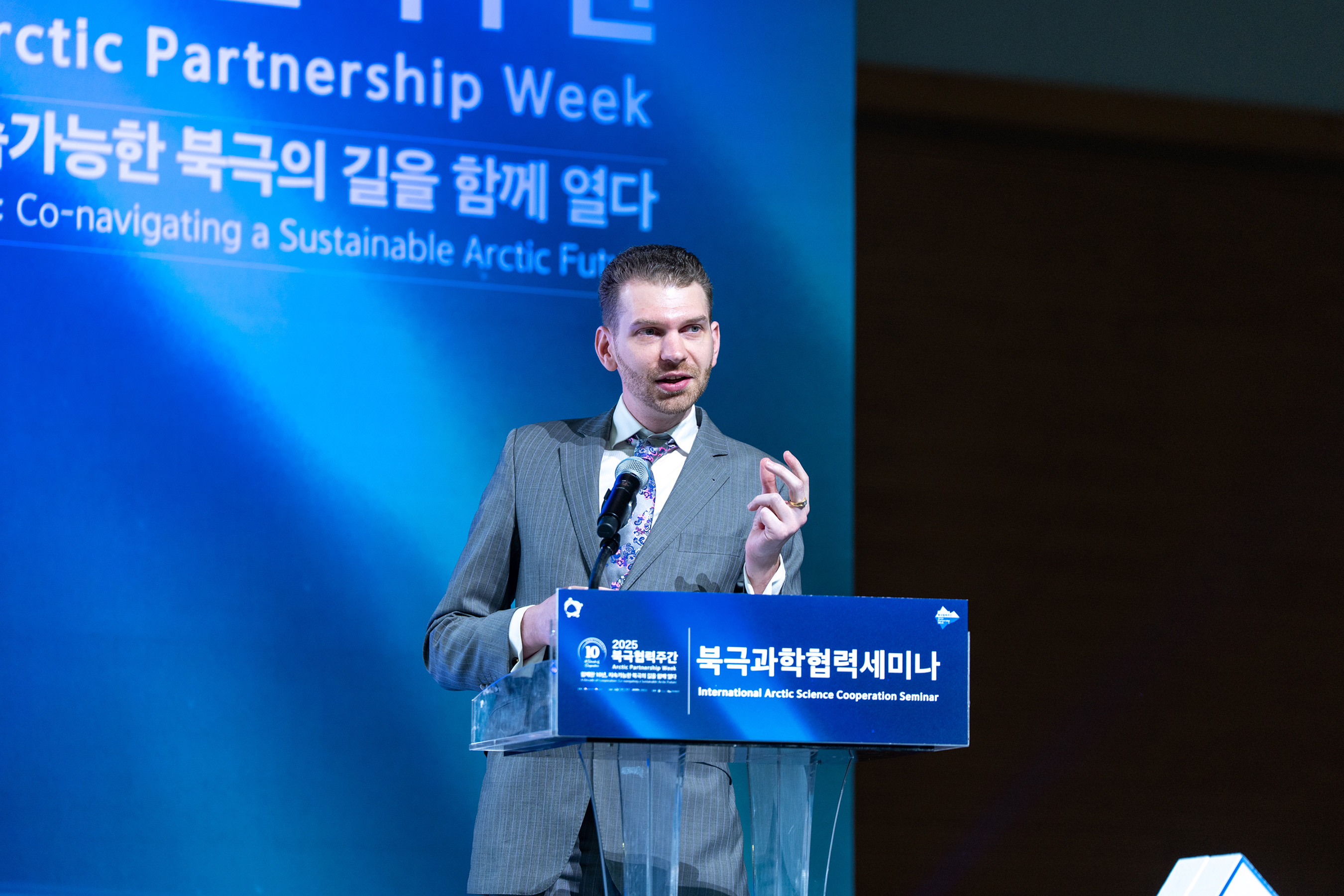
ACEP’s Magnus de Witt gives a presentation at a breakout session at the 10th Arctic Partnership Week in Busan, the Republic of Korea.
January 29, 2026
ACEP’s Magnus de Witt delivered a keynote address at the opening ceremony of the 10th Arctic Partnership Week in Busan, the Republic of Korea in December.
In his speech, titled “Polar cooperation: A young scientist’s perspective,” de Witt emphasized the crucial role of international research networks for early career scientists. He pointed out how mentorship, support and collaboration from senior researchers and policymakers can have a profound impact on the careers of young scientists.
“Every expert was once a young scientist with limited experience and opportunities,” he said.
De Witt also discussed future research priorities, highlighting Arctic energy systems as a key area of focus. He identified promising opportunities for joint research on sustainable Arctic shipping, particularly noting South Korea’s world-leading shipbuilding expertise as a strong foundation for future collaboration.
Co-organized by the Korea Polar Research Institute, or KOPRI, and the Korea Maritime Institute, the Arctic Partnership Week has been hosted annually by the Republic of Korea since 2016. It brings together stakeholders from government, academia and industry to foster international cooperation and address sustainability issues in the Arctic.
De Witt’s collaboration with KOPRI dates to 2022, when he received the KOPRI Arctic Fellowship during his doctoral studies. This partnership deepened in early 2024 with the signing of a memorandum of understanding between ACEP and KOPRI, reinforcing their shared commitment to polar science and international collaboration.
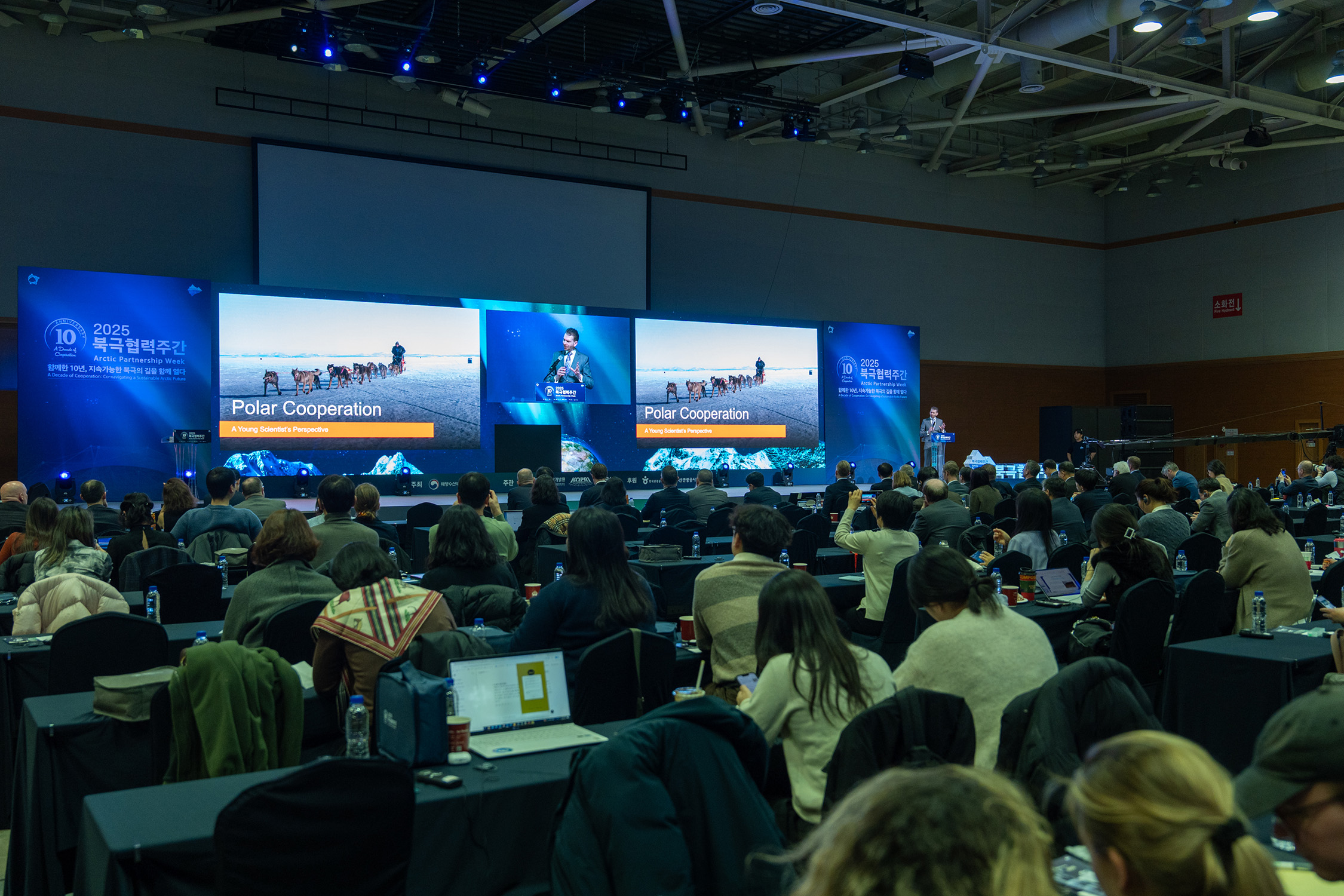
ACEP’s Magnus de Witt gives a keynote speech to a packed audience at the 10th Arctic Partnership Week in Busan, the Republic of Korea.
In addition to his keynote address, de Witt presented at a breakout session titled “International Arctic science cooperation seminar,” which was opened by the Royal Norwegian Embassy and the Embassy of Denmark in Seoul. His presentation, “Polar cooperation: A young scientist’s journey through the Arctic,” offered insights into the role of mobility, cooperation and international experience in shaping the careers of Arctic researchers.
The session concluded with a panel discussion on “The next 10 years of Arctic science from young scientists’ perspectives.” De Witt joined other early career researchers to discuss emerging challenges, interdisciplinary cooperation and the future of Arctic science in an increasingly dynamic and changing environment.
For de Witt and other participants, the APW was a truly inspirational experience.
“These events underscored the value of long-term international partnerships and highlighted the essential role of young scientists in shaping the future of Arctic research and cooperation,” he said.