


Connecting ideas and building partnerships at Alaska Rural Energy Conference
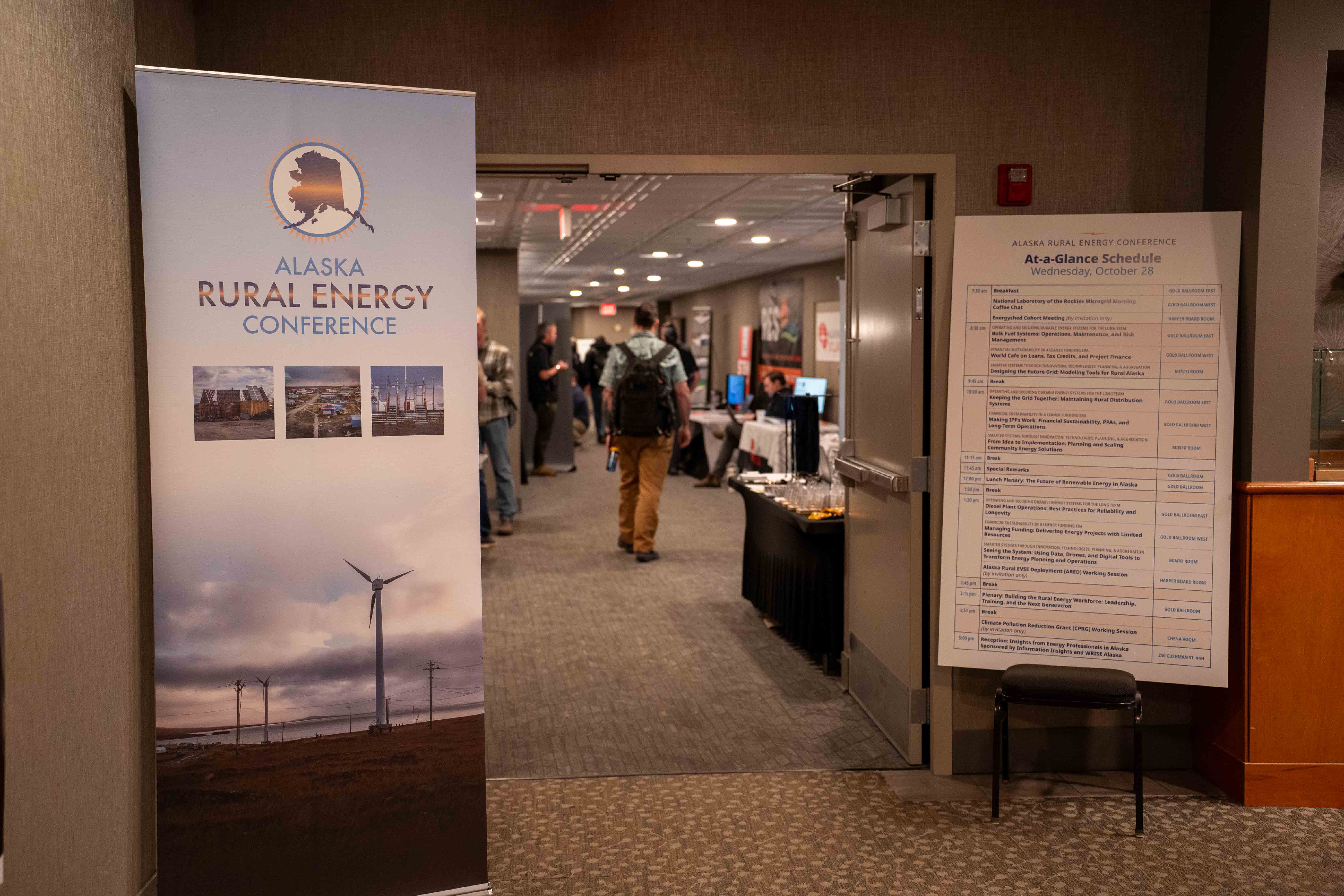
More than 450 people attended the Alaska Rural Energy Conference in Fairbanks in October.
November 20, 2026
This year’s Alaska Rural Energy Conference brought more than 450 attendees to Fairbanks in October, drawing community leaders, researchers, industry partners, policymakers and other energy stakeholders from across Alaska.
Hosted by the Alaska Municipal League and co-sponsored by the Alaska Center for Energy and Power, the conference provided an opportunity for attendees to share knowledge, research and ideas, discuss the challenges and opportunities facing Alaska’s energy future, and strengthen partnerships. Participants also had a chance to reconnect with colleagues and exchange experiences with others working on energy issues throughout the state.
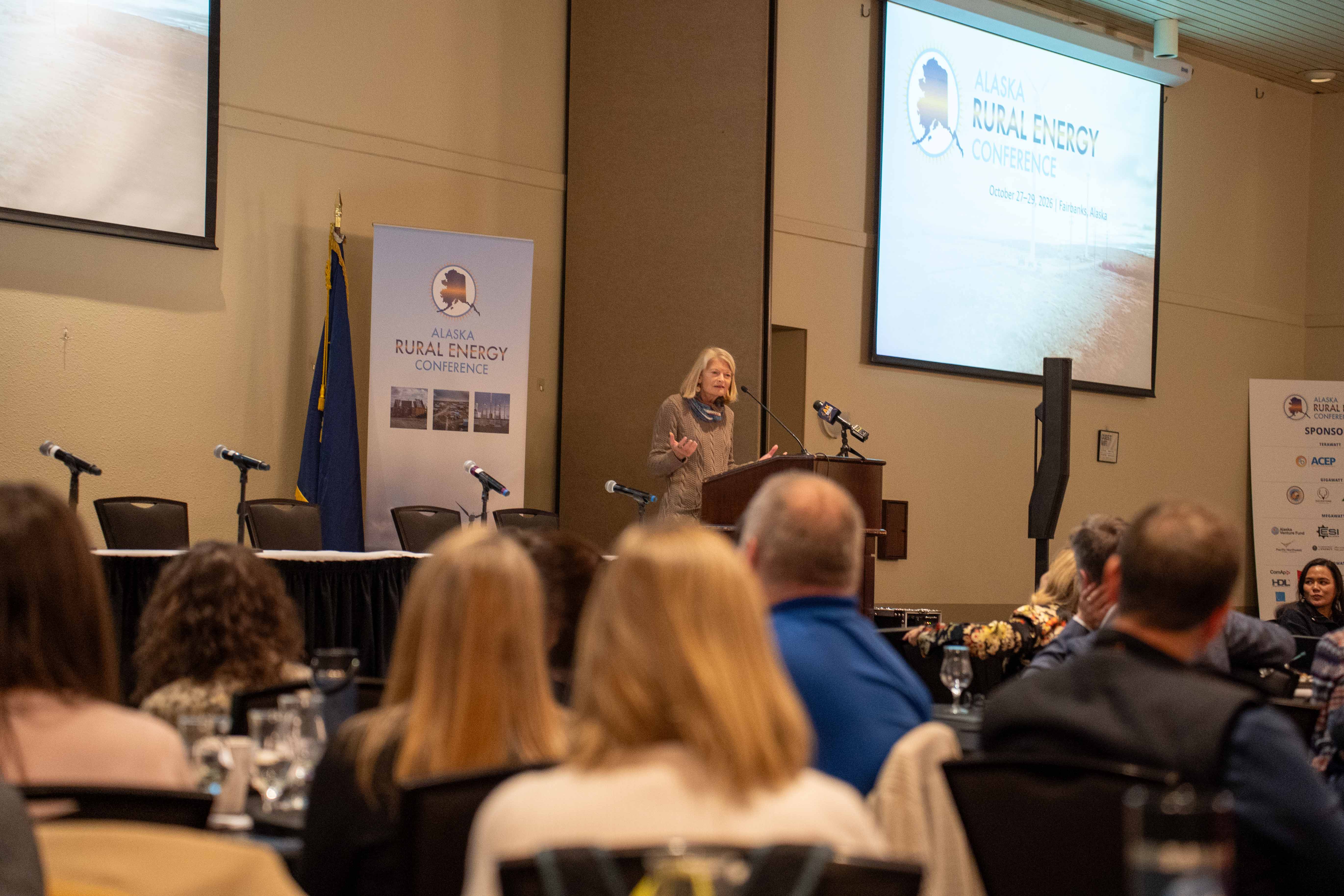
Sen. Lisa Murkowski addresses a packed audience at the Alaska Rural Energy Conference in Fairbanks in October.
The conference also featured a special plenary with Sen. Lisa Murkowski and Eric Mahroum, director of the U.S. Department of Energy’s Office of Indian Energy Policy and Programs, who each addressed the packed audience.
ACEP was well represented throughout the conference, with members serving as panelists, moderators and presenters.
The plenary panel discussions that included Leasi Vanessa Lee Raymond, Gwen Holdmann, Annalise Klein Gerlach and Jeremy Kasper enlightened a packed audience about several topics.
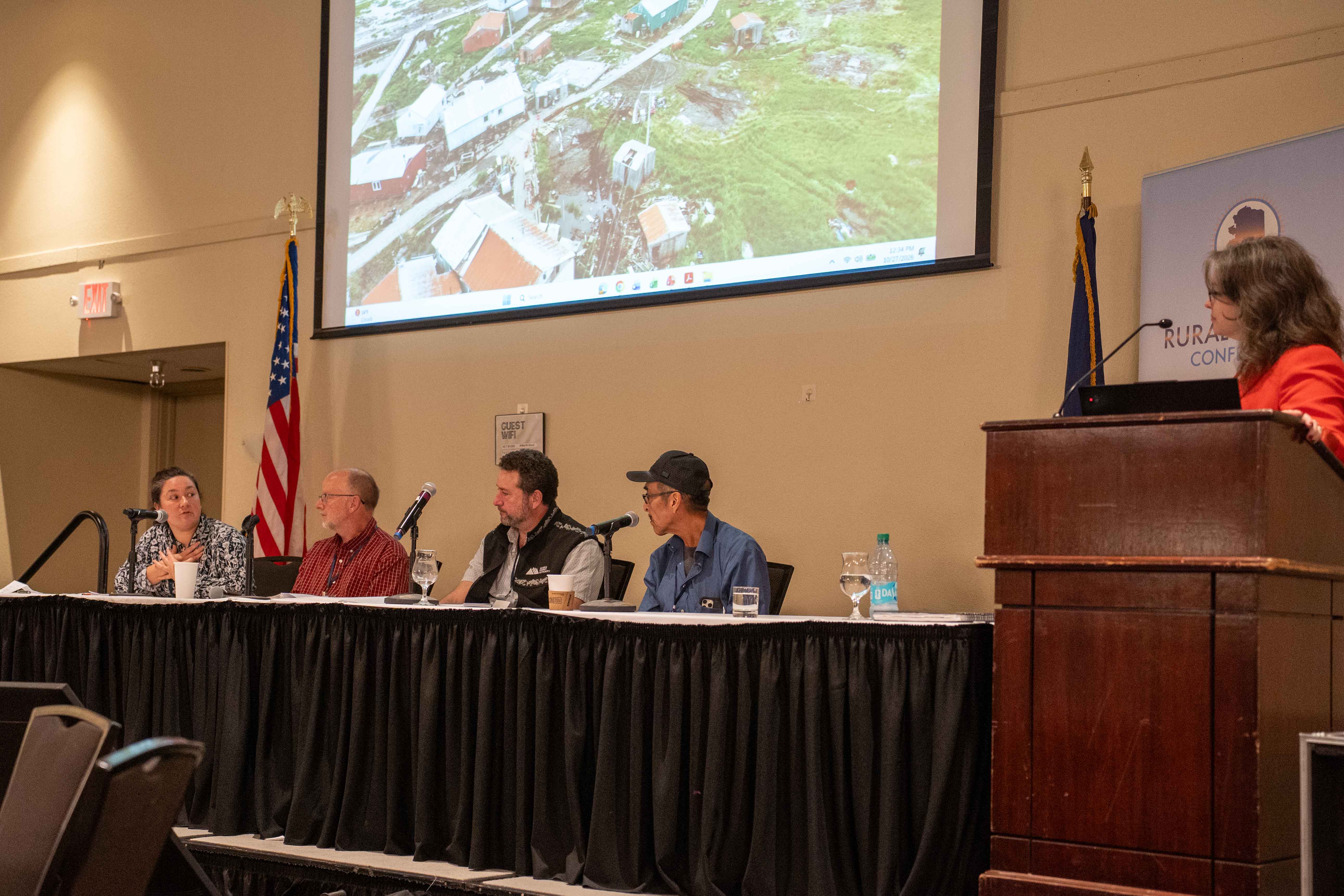
Leasi Vanessa Lee Raymond, far left, and other panelists share lessons learned from the impacts of ex-typhoon Halong at the Alaska Rural Energy Conference in Fairbanks in October. The slide above the panelists shows the aftermath of the typhoon.
Raymond and other panelists on “After Halong: Lessons Learned About Building Resilient Energy Systems” shared lessons learned from the impacts of the ex-typhoon and discussed practical approaches to designing, operating and preparing energy systems to better withstand future disruptions. The slides showing the aftermath of the typhoon gave the audience a glimpse of the devastation and underscored the importance of building resilient energy systems, particularly for remote communities where disruptions can have far-reaching consequences.
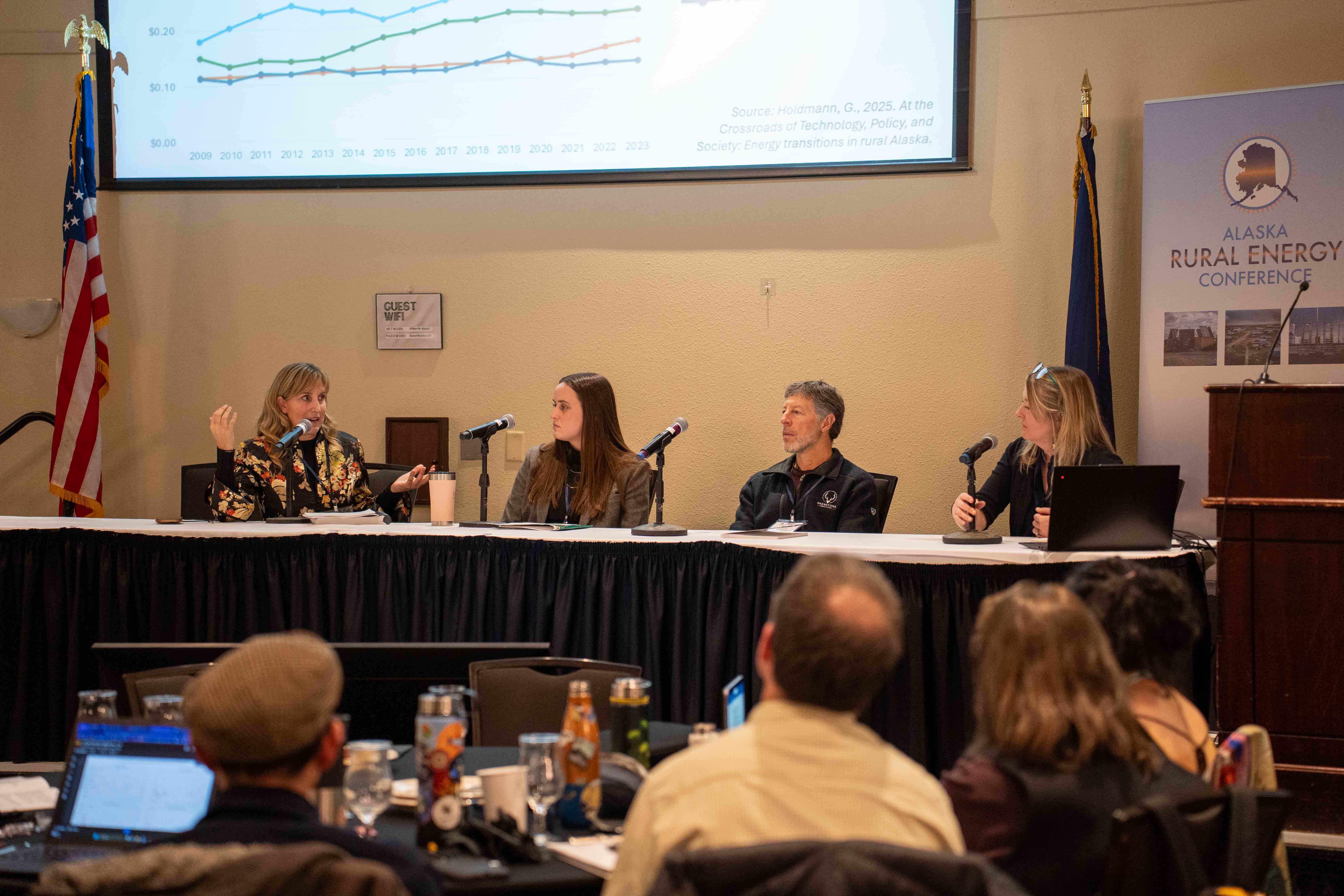
Gwen Holdmann, far left, and other panelists explore the current state and future opportunities of renewable energy in Alaska at the Alaska Rural Energy Conference in Fairbanks in October.
On the panel “The Future of Renewable Energy in Alaska,” panelists explored the current state of renewable energy in Alaska, emerging opportunities, successful projects and innovative technologies. They also discussed how communities could take advantage of future opportunities. Holdmann offered a broader perspective, suggesting that Alaska consider energy costs at a statewide level and develop projects that work together as a system to benefit communities across the state.
The panel “Building the Rural Energy Workforce: Leadership, Training and the Next Generation” was moderated by Klein Gerlach. Panelists explored workforce challenges and opportunities facing communities and utilities across Alaska, sharing perspectives on leadership, training and developing the next generation of energy professionals. Their discussion highlighted the importance of building local capacity to operate and sustain rural energy systems over the long term.
Kasper moderated “Regional Energy Planning in Action: What’s Working and What’s Next,” featuring leaders from regional initiatives. Panelists shared their approaches, successes and challenges in regional energy planning, highlighting how collaboration across communities and organizations can help identify shared priorities, coordinate resources and advance energy solutions.
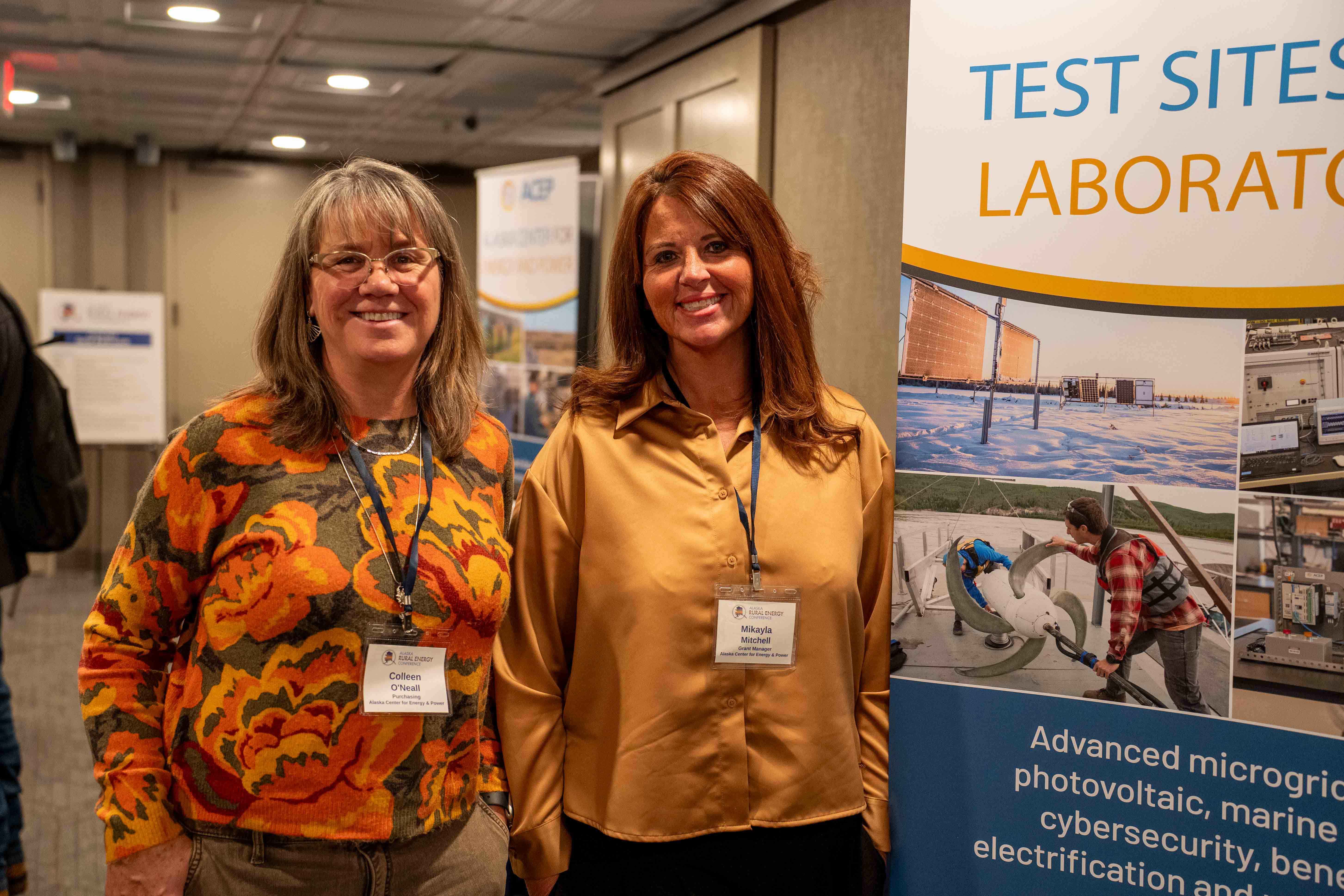
Colleen O’Neill, left, and Mikayla Mitchell staff ACEP’s booth at the Alaska Rural Energy Conference in Fairbanks in October.
Other ACEP members delivered the following presentations (the names are those of the presenters unless otherwise noted):
- Scaling Efficiency: Weatherization, Efficient Buildings and the Future of Housing in Rural Alaska – Dominique Pride, moderator; Kaarle Strailey
- Putting Extra Power to Work: Managing and Monetizing Surplus Renewable Energy – Cameron Dolan
- Heat Pumps in Alaska: From Pilot to Practice – Tom Marsik, moderator
- Designing the Future Grid: Modeling Tools for Rural Alaska – Mariko Shirazi
- Making IPPs work: Financial Sustainability, PPAs and Long-Term Operations – Dominique Pride, moderator
- From Idea to Implementation: Planning and Scaling Community Energy Solutions – Tim Kalke
- Seeing the System: Using Data, Drones and Digital Tools to Transform Energy Planning and Operations – Dayne Broderson, moderator
- Getting Rates Right: Cost-of-Service Rate Design and Optimizing PCE – Steve Colt
- Wood Energy in Alaska: Practical Pathways, Real Projects and Where it Works – Tim Kalke
- Smart systems: SCADA, Remote Monitoring and Cybersecurity – Dayne Broderson, moderator
- Engaging the Demand Side: Partnering with Communities to Shape Energy Use – Michelle Wilber, moderator
Addressing Alaska’s rural energy challenges requires collaboration, long-term planning and solutions tailored to the needs of individual communities. The conference provided an opportunity to share experiences, learn from one another and explore ways to strengthen energy systems across the state.
The conference is held every two years; the next conference is scheduled for October 2028.
If you missed this year’s conference or want to revisit topics, the presentation slides are available here.