


Where west is almost east: Small community, big energy questions
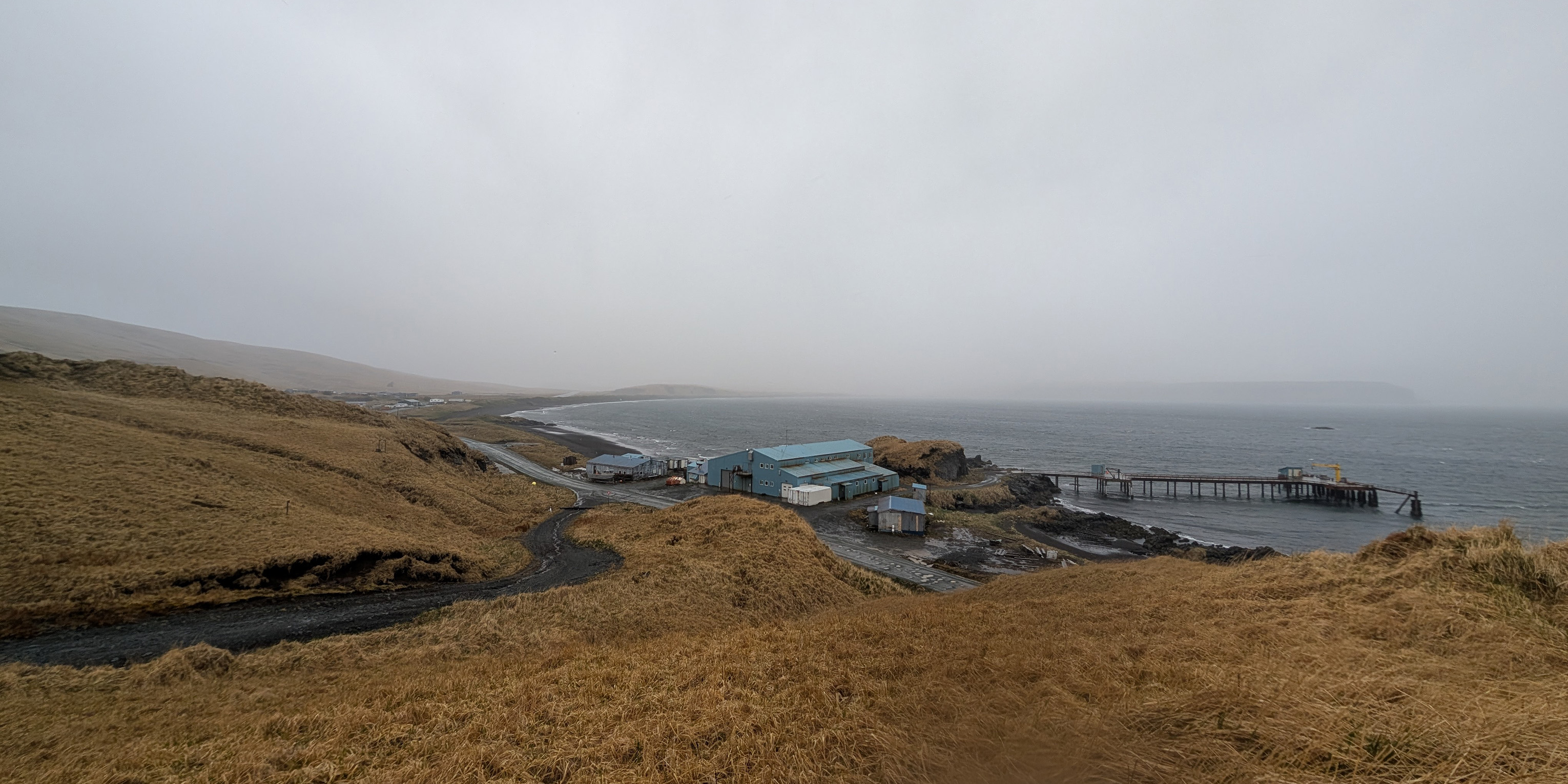
The view of Nazan Bay and Atka during a storm in May 2026. The fishing plant and workshop are in the foreground, and the community is partially obscured to the left.
By Bax Bond
October 7, 2026
Twenty-eight thousand feet above the Aleutian Islands, the whine of two engines fills the seven-seat cabin of a Super King Air.
At this altitude, I’m used to flying in 737s that carry dozens, if not hundreds, of passengers. But on this flight from the hub community of Unalaska to the small community of Atka in May, I take a deep breath and think, “These pilots are something else.”
And I would soon learn, so are the people who call Atka home.
Atka is home to roughly 60 people, nestled between the hills and waters of Nazan Bay in the central Aleutian Islands. Getting there from my home in Fairbanks took nearly 30 hours one way, with this final flight aboard the Super King Air serving as the last leg.
The long trip gave me a chance to think about the very practical questions that come with keeping the lights on in a place like this.
Energy has long played a central role in Atka’s community planning. At the end of 2012, the community commissioned the only hydroelectric power plant in the Aleutians. More recently, rising fuel costs have renewed interest in energy efficiency and ways to reduce diesel consumption.
Several potential upgrades are now being explored. One would centralize food storage in the community store using walk-in freezers, which can be more efficient than operating multiple smaller chest freezers. Another would replace diesel-fired boilers in homes with electric heat pumps.
As an energy modeler, these projects immediately caught my attention.
I was particularly interested in two aspects of electricity use: the heat required to keep homes warm and the electricity used for everything else that keeps a household running.
On my visit, I had the opportunity to talk with residents about how much fuel a typical home uses over the course of a year. Datasets such as the Alaska Energy Data Gateway can provide valuable information, but there’s something you can’t get from a spreadsheet — the experience of the people who actually live within the system every day.
Those conversations helped me see that the proposed changes aren’t simply a matter of replacing one technology with another.
The changes could reduce fuel consumption over time but they could also introduce new challenges. Walk-in freezers, for example, would create larger electrical loads that could put additional demand on existing infrastructure. Replacing fuel-fired heating with electric heat pumps would shift more of the community’s energy needs onto the electrical system and make those needs more dependent on the availability of renewable generation and other factors affecting the microgrid.
That is where the engineering gets interesting.
I also spoke with Kolt Garvey, owner and electrical administrator of Sunstone Electric, who visited Atka in April to help evaluate some of these questions. His perspective brought another dimension to the discussion: before adding new technology, communities need to understand whether the existing system can support it.
Kolt shared several considerations that can affect the long-term success of a microgrid project. Systems need to be engineered for the specific community. Operators need access to spare parts, training and ongoing technical support. And before investing in new equipment, it’s important to understand the condition of the existing microgrid, including necessary upgrades or repairs and how the utility currently operates the system.
He raised questions that are easy to overlook when focusing on a new piece of technology.
For example, what power distribution upgrades are necessary? Are the current controls functioning properly, or do they need repair or replacement? Are there trained operators and sufficient redundancy? How can future systems remain resilient to changing costs or obsolete components?
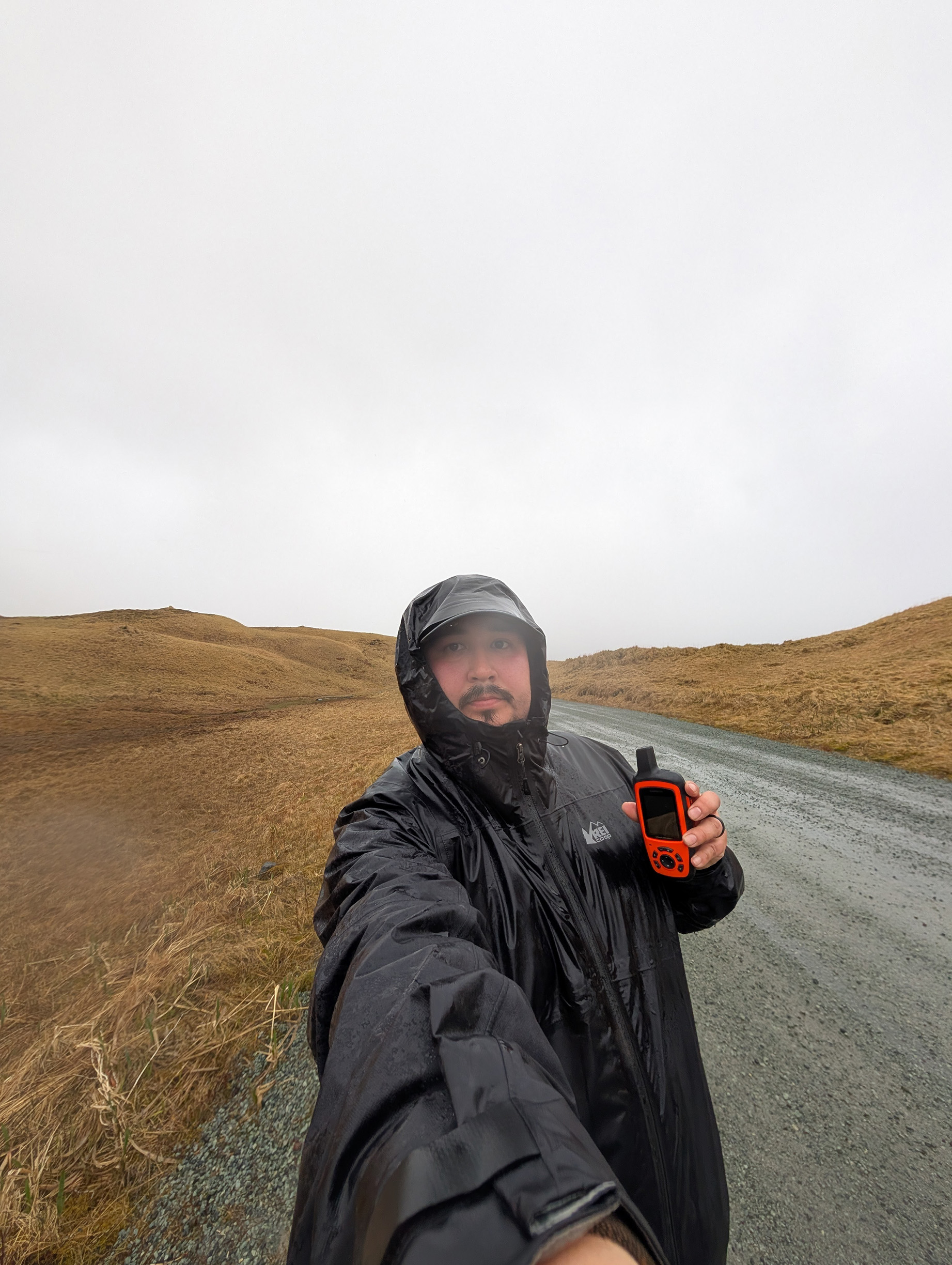
Bax Bond takes a selfie while recording transformer locations with a GPS in Atka, Alaska in May 2026
His analysis reinforces my own: an energy transition isn’t simply about installing newer equipment. It’s about making sure the entire system — infrastructure, controls, people, training, maintenance and logistics — can support that equipment for years to come.
It’s a little like putting a larger engine in a vehicle. The engine itself may be more powerful or efficient, but if the transmission and other supporting components can’t handle it, the upgrade doesn’t accomplish much.
The same is true for energy systems in remote communities.
A change that looks straightforward on paper can have consequences throughout the system. A new freezer changes the electrical load. Electric heating changes when and how much power homes need. New controls may require different skills to operate and maintain. And in a community that is a long way from the nearest global shipping hub, namely Anchorage, getting a replacement part or technical support can be a very different proposition than it is in a city or in the Lower 48.
That’s what stayed with me after leaving Atka.
The energy questions facing the community aren’t unique. Across Alaska, communities are looking for ways to reduce fuel use and costs while making their energy systems more resilient. But there is no single solution that works everywhere. Each community has its own resources, infrastructure, geography and priorities.
What Atka reminded me is that the path forward starts with understanding the existing system and listening to the people who know it best.
On my way home, I found myself thinking back to that first flight — seven seats, two engines and an airplane carrying me across a vast stretch of the Aleutians.
Living in a place like Atka requires hardiness, ingenuity and a willingness to adapt.
It also requires the tools, knowledge and partnerships to turn that ingenuity into a reliable energy future.
This work relates to the Department of Navy award N00014-22-1-2049 issued by the Office of Naval Research. Any opinions, findings, and conclusions or recommendations expressed in this material are those of the author(s) and do not necessarily reflect the views of the Office of Naval Research.
--
Bax Bond is a research professional at the Alaska Center for Energy and Power.