


From internship to publication: Undergraduate interns publish first-author papers

2025 ACEP summer interns Emily Cook and Sidney Hackett celebrate their first-authored publications as undergrads, a testament to the dedication of the students and support of the mentor.
By Magnus de Witt
February 18, 2026
What began as a summer internship for Emily Cook and Sidney Hackett grew into a semester-long research collaboration culminating in professional science journal publications.
In 2025, Emily and Sid, both undergraduate students, participated in the 10-week ACEP Summer Internship program. By the end of the year, they were celebrating their first peer-reviewed publications as first authors, an achievement that highlights both their dedication and the strength of the internship program.
From summer projects to peer-reviewed publications
During the summer program, Emily and Sid worked with me on complementary projects related to geothermal energy. Emily explored the potential of geothermal energy as maritime fuel, while Sid’s project focused on greenhouse gas emissions from geothermal energy. By the end of the internship, both students had completed detailed technical reports that met and exceeded my expectations.
Recognizing the scientific merit of their work, I invited them to continue their projects beyond the summer and prepare their findings for a broader scientific audience. What followed was a new phase of the journey — transforming student reports into full academic manuscripts.
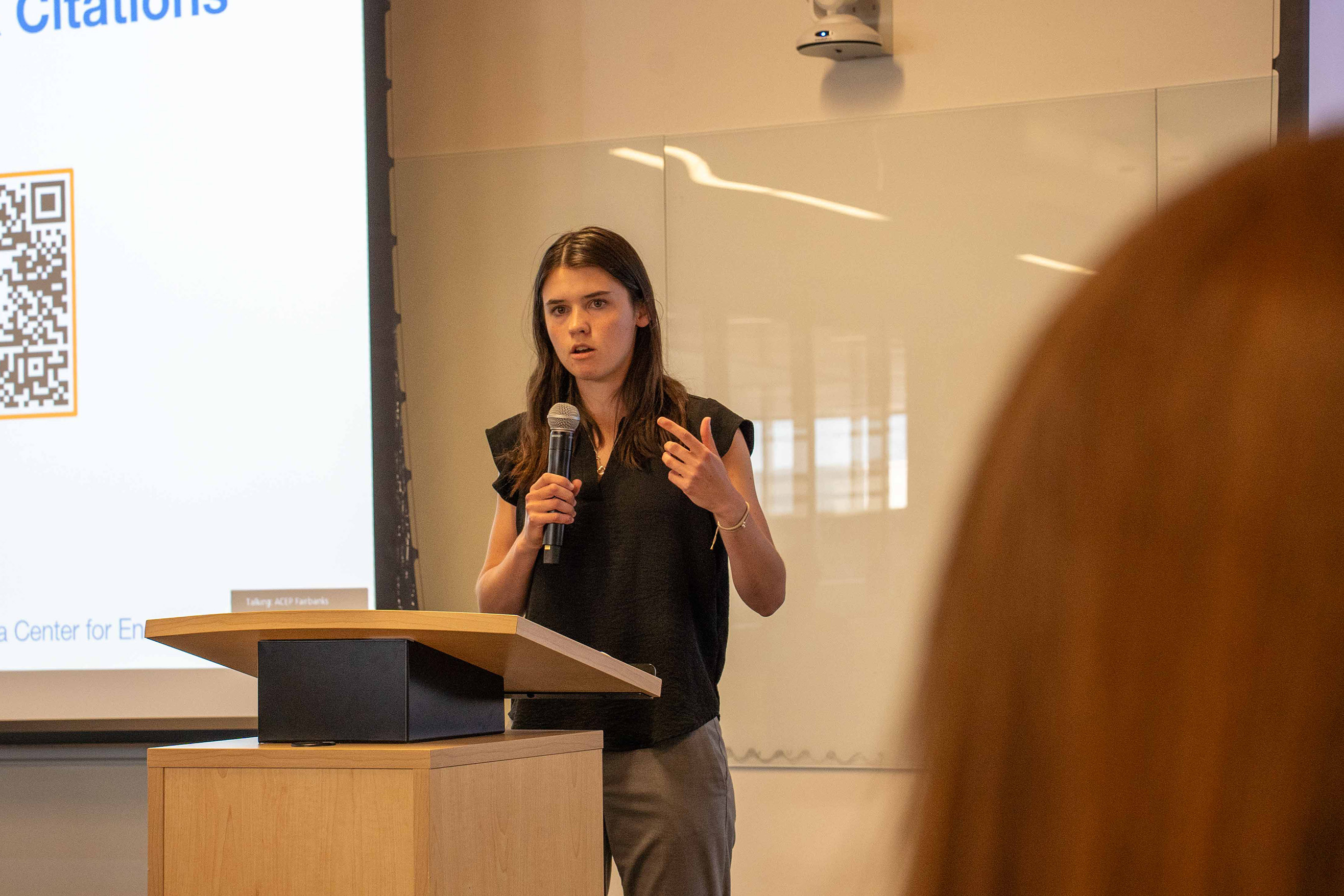
ACEP summer intern Emily Cook presents her project on geothermal energy feasibility of the Aleutian Islands.
Emily and Sid were introduced to the peer-review process, learned how to respond to reviewer comments and revised their manuscripts multiple times to meet publication standards. Through perseverance and collaboration, the papers ultimately reached final acceptance, marking their first peer-reviewed publications as first authors.
Impacts on students and beyond
On a personal level, working toward peer-reviewed publications proved transformative for both Emily and Sid. They strengthened key skills in scientific research and writing, including critical thinking, tenacity and collaboration. Navigating the peer-review process gave them confidence and valuable insight into potential future paths, whether pursuing graduate studies or careers in industry.
For the program and the institution, their success underscores the value of investing in high-quality internship experiences. Meaningful mentorship, access to real research questions and continued support beyond the summer can turn short-term projects into lasting academic contributions.
These successful publications are not only a milestone for the students involved but also an indicator of the quality of student-led research emerging from the program.
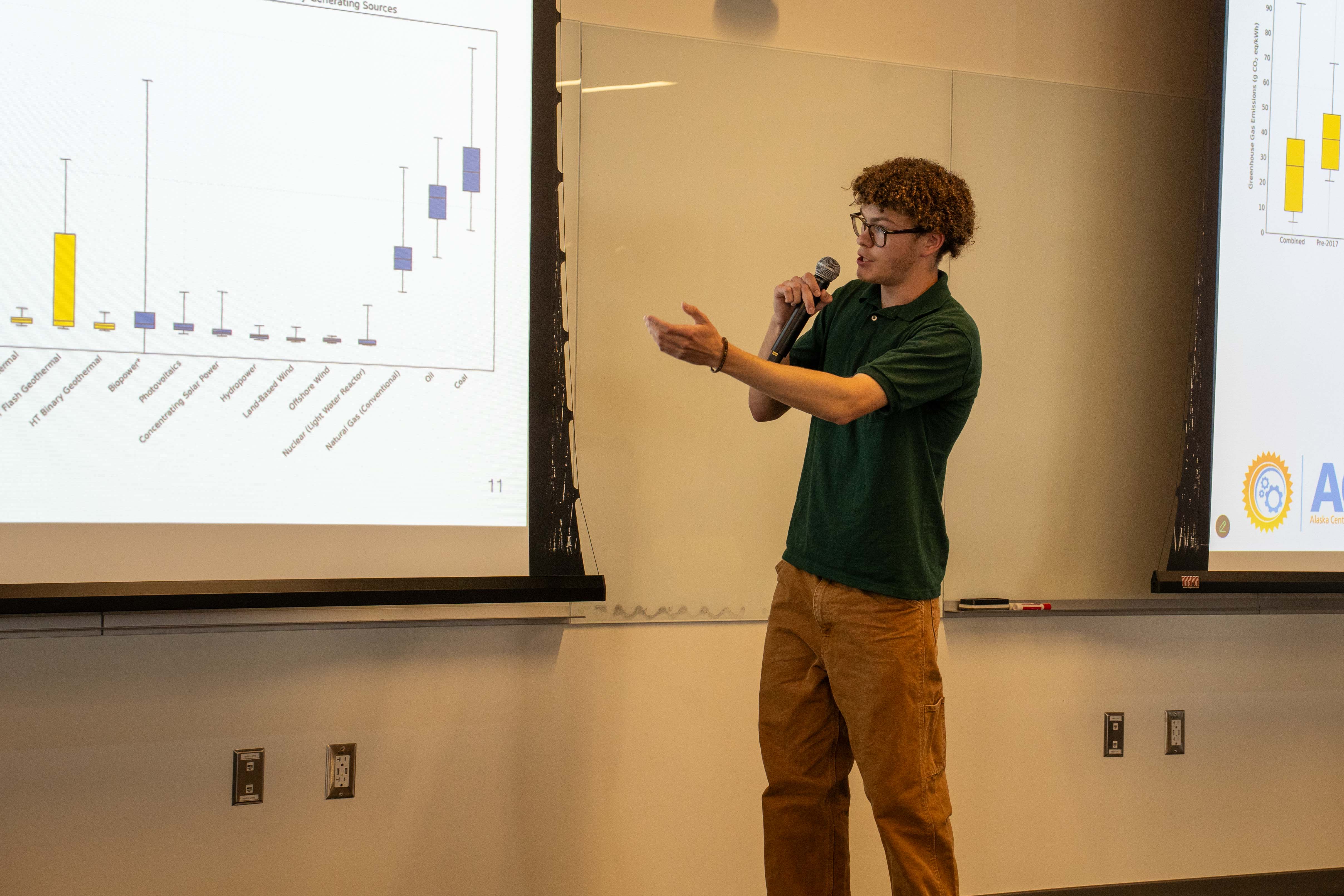
ACEP summer intern Sidney Hackett gives a presentation on his project about geothermal technologies.
Future opportunities for interns
ACEP’s summer program offers undergraduate students an entry point into academic research. Each year, a small cohort is selected from a large applicant pool to engage in hands-on research projects, participate in professional development lectures and learn from one another. Students are encouraged to think critically about the broader implications of their work and its potential contribution to the research community and produce a final report at the end of the summer.
Building on Emily and Sid’s success, I hope to see more opportunities for future interns to continue promising projects into the academic year.
I look forward to welcoming the next group of students eager to explore research, ask big questions and discover just how far a summer internship can take them.
Emily and Sid’s papers:
Emily’s first-authored paper titled, “Assessing the Feasibility of Geothermal-to-X for Sustainable Maritime Refueling in Alaska,” was published in Clean Technologies.
Sid’s first-authored paper titled, “Geothermal Energy and Greenhouse Gas Emissions: A Systematic Review,” was published in Sustainability & Circularity NOW.
Magnus de Witt is a research assistant professor with ACEP. His research includes energy security, energy policy and energy implementation methods with a focus on the energy transition in Alaska, the Railbelt and remote communities.