

Highlights from Footnotes
Welcome
... to the archive of Highlights from our Footnotes newsletter. Our highlights include alumni, current students, and faculty of the Department of English. We also will share exceptional department news in this section. Read the stories that makes our department thrive!
Subscribe to FootnotesFeatured
Shelly Norris, M.F.A Creative Writing
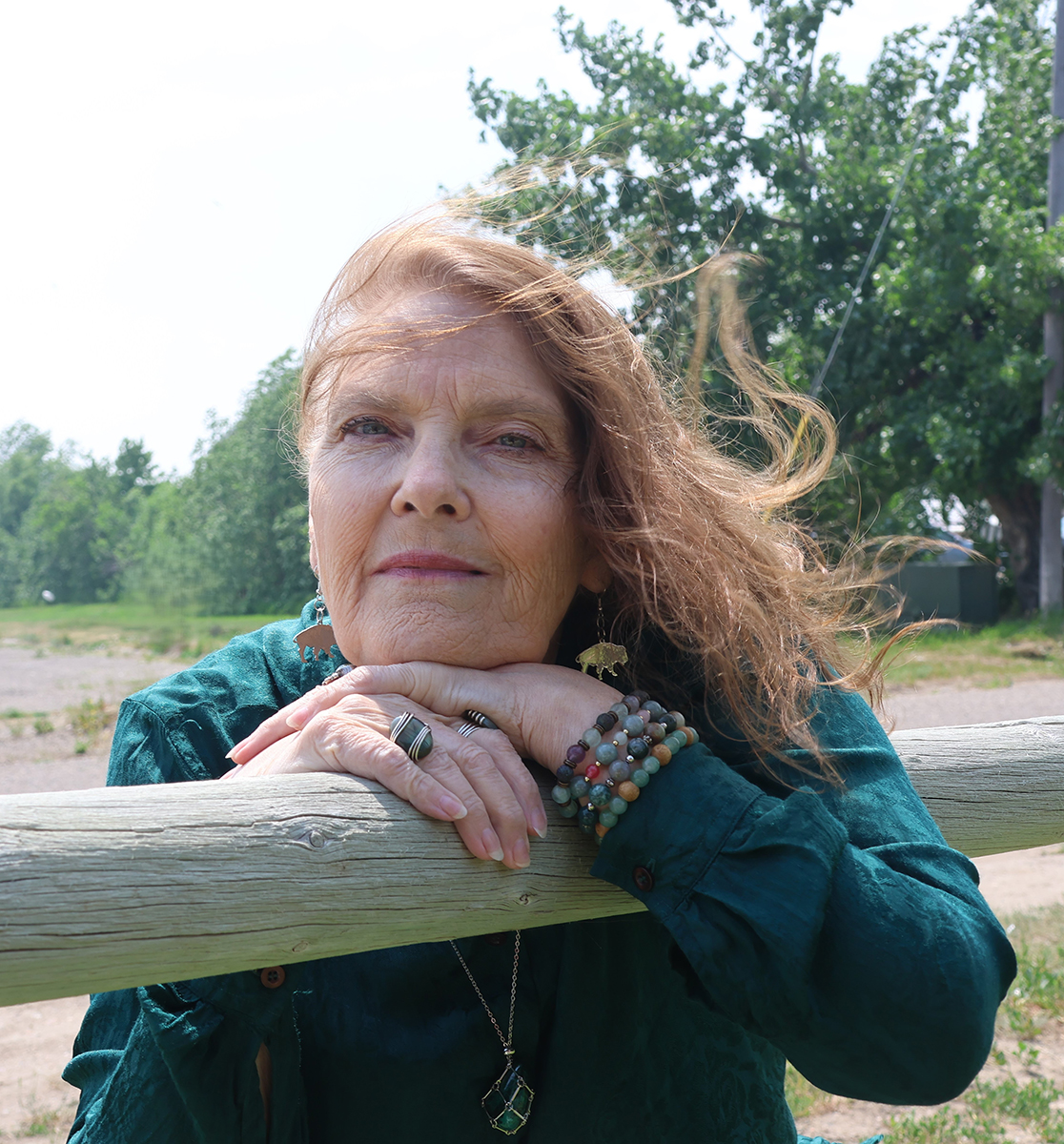
Nearing the end of my career (which began in middle age), I wonder what inspiration I can provide to English majors and creative writers in this economic climate. I am not and never was a traditional academic. I grew up on a farm in Wyoming, the first person in my family to earn a college degree. Honestly, I feel like a goblin girl who stole her higher education from off-limit filing cabinet drawers.
I was also a very poor student all through my public schooling. My teachers and parents labeled my inability to pay attention laziness. The truth is, all through my schooling, my brain was drafting a very long novel with my thinly veiled alter ego as the heroine. The teachers interrupted my robust internal narrative with their nonsense. When my mind quieted, I doodled and scribbled poems in my notebooks.
Only when I attended university as a non-traditional adult student did I figure out that I am ADD. Though my verbal linguistic capabilities always ranked high for my age, when it came to achieving higher education, I had to devise strategies to teach myself to focus and comprehend. At the same time, I encountered professors who saw in me capabilities that I did not see or believe.
I ended up at UAF because of a premonition that dawned on six-year-old me. I stood next to my grandmother’s chair as she watched some Sunday evening program regaling the marvels of Alaska. From a distant trance-like place I said, “I’m going to live there one day.” Of course, she laughed. About thirty years later, when it was time to decide what to do after earning a BA in English, Alaska once again popped onto my radar. My sons and I often reminisce about our years in Fairbanks. They were challenging, rough, spare, magical years, the best memories of their childhood, they tell me.
Over the next decades applying for jobs and maneuvering for positions, employers expressed awe that I hauled three children to Fairbanks, Alaska, and lived there for three years. As did I, my colleagues in my MFA cohort moved out into the wide world to pursue many avenues of work and creativity. Most teach at some level, some have been your teachers at UAF, some have become administrators, and many have published. Some work in fields unrelated to English or creative writing, but their degrees allowed them to get their foot in a door somewhere.
That’s been the bottom line, the one consistent factor over the years: we earned a degree. Called to an adventure from our ordinary worlds, we arrived from the four corners, met our mentors, and passed their tests. Through the ordeal, we discovered new parts of ourselves to carry home; reborn as scholars, teachers, artists, we returned to share our gifts, what wisdom we gathered. And naturally, we continued to grow.
I can tell you that not once has an employer looked at the grades on my transcripts or asked what I learned in 18th century lit class. What matters to them is the evidence that I set my intention and carried through with it. Though after graduating UAF, I worked a short stint as a youth advocate for a mental health agency (hired because I had report writing skills and teaching experience), as a substitute teacher, and as a night desk clerk at a motel, I had the currency to throw my hat in the ring. For months that first year after graduation, I prowled The Chronicle for job openings and mailed out ten applications every Monday morning. Some around me remarked that my degree turned out to be a waste. I told them, no; it is my ticket.
Oddly, I responded to an ad in the Billings Gazette that led to my first full-time teaching position at Fort Belknap College in north central Montana. After a few truly patchwork decades of teaching at a few community colleges and an HBCU, I have come full circle to what is now Aaniiih Nakoda College on the Fort Belknap Reservation. The college has grown. The campus has grown. The programs have grown. I have grown, as a teacher and a writer. It is easy from here to reflect on the journey, to understand that I have always been led by a deep intuition toward this calling.
I’ve been called to teach students who do not learn easily, students who are undereducated, students who fell through the cracks in their local schools. The world is full of students who need good teachers. The world is full of students who need good writing teachers. Institutions need some administration, and it’s easy to get pulled into those tracks. I’m not remotely administrative in nature, and they tried to track me that direction. I had my run at a tenure track. I always return to the fire in my gut: institutions need teachers committed to finding strategies for teaching each student.
I am an effective teacher precisely because I was a poor student. I was a poor student because I could not learn in traditional ways. Though I was a strong reader, I realize now I often read aloud. I was always first and foremost an auditory learner. Once my father asked, “How many times do I need to tell you?” I answered, “Three! I need to hear it, see it, and do it three times.” That was an amazingly intuitive early insight into my own learning needs. And now I pace my classrooms moving between students repeating, repeating, repeating what I just said, what is on the page in front of them what is projected with a corresponding image on the screen, what I ask them to repeat back to me. Eventually, what they need to learn will wire in and stick.
***
Born and raised in the Big Horn Basin in Park County, Wyoming, Norris graduated from the University of Wyoming with a BA in English in 1992. From there, she journeyed to Fairbanks, Alaska with her three young sons, where she earned an MFA in Creative Writing from the University of Alaska Fairbanks. Upon returning to the lower 48, Norris began her teaching career at what was then Fort Belknap Tribal College on the Fort Belknap reservation in northern Montana. In 1998, Norris returned to Laramie where she taught at UW until 2010. After a short reprieve residing in her home area, she moved to Missouri where she taught at various colleges, in person and online, most notably Lincoln University of Jefferson City. Homesick for the landscape of her soul, in spring of 2024, Norris returned to the Montana Hi Line and to the position of Liberal Arts and Communications instructor at Aaniiih Nakoda College.
Shelly Norris announced the recent publication of two poetry collections: Hyperbola, her first collection, debuted February 2024 from Impspired Press based in Lincoln, UK. Her second collection, titled Dry Lake, released November of 2025, is available from Powder River Publishing based in Thermopolis, Wyoming.
Of Hyperbola, poet Agnes Vojta writes, “Norris presents an honest and unapologetic collage of life. A thought-provoking, multi-layered book.” Poet Diane LeBlanc adds, “But these poems don’t despair. Each poem sprouts from a space between wanting and joy, shadow and light, or duty and magic ritual to conjure empathy and hope.”
Of Dry Lake, writer Lauren Scharhag states, “Shelly Norris speaks in the language of geology, landscapes, and nature. This collection is not merely a conceit or even a poetic memoir. Rather, Norris creates a poetic alchemy, matching the interior with the exterior, the soul with its worldly environs.” Memoirist Julianne Couch adds, “Norris’s storytelling voice, her sequencing of the concrete and the evocative, leads us to think about our personal narratives. Through her lyricism, we experience how the framework of language shapes ideas as clearly as landscape does.”
Early poems appeared in UW’s own Owen Wister Review, as well as Open Window Review, and Blood, Water, Wind, and Stone: An Anthology of Wyoming Writers. More recently, individual poems have appeared in Gyroscope Review, Verse-Virtual, Silver Birch Press, Uppagus, Piker Press Review, Rye Whiskey Review, Spillwords, Broad Shoulder Press, Amethyst Review, The Drabble, vox poetica, and The Cabinet of Heed. Norris is currently compiling a collection tentatively titled Migrations.
The Highlight Reel
Welcome the archive of highlights from the Footnotes e-newsletter.
Shelly Norris, M.F.A Creative Writing
Nearing the end of my career (which began in middle age), I wonder what inspiration I can provide to English majors and creative writers in this economic climate. I am not and never was a traditional academic. I grew up on a farm in Wyoming, the first person in my family to earn a college degree. Honestly, I feel like a goblin girl who stole her higher education from off-limit filing cabinet drawers.
I was also a very poor student all through my public schooling. My teachers and parents labeled my inability to pay attention laziness. The truth is, all through my schooling, my brain was drafting a very long novel with my thinly veiled alter ego as the heroine. The teachers interrupted my robust internal narrative with their nonsense. When my mind quieted, I doodled and scribbled poems in my notebooks.
Only when I attended university as a non-traditional adult student did I figure out that I am ADD. Though my verbal linguistic capabilities always ranked high for my age, when it came to achieving higher education, I had to devise strategies to teach myself to focus and comprehend. At the same time, I encountered professors who saw in me capabilities that I did not see or believe.
I ended up at UAF because of a premonition that dawned on six-year-old me. I stood next to my grandmother’s chair as she watched some Sunday evening program regaling the marvels of Alaska. From a distant trance-like place I said, “I’m going to live there one day.” Of course, she laughed. About thirty years later, when it was time to decide what to do after earning a BA in English, Alaska once again popped onto my radar. My sons and I often reminisce about our years in Fairbanks. They were challenging, rough, spare, magical years, the best memories of their childhood, they tell me.
Over the next decades applying for jobs and maneuvering for positions, employers expressed awe that I hauled three children to Fairbanks, Alaska, and lived there for three years. As did I, my colleagues in my MFA cohort moved out into the wide world to pursue many avenues of work and creativity. Most teach at some level, some have been your teachers at UAF, some have become administrators, and many have published. Some work in fields unrelated to English or creative writing, but their degrees allowed them to get their foot in a door somewhere.
That’s been the bottom line, the one consistent factor over the years: we earned a degree. Called to an adventure from our ordinary worlds, we arrived from the four corners, met our mentors, and passed their tests. Through the ordeal, we discovered new parts of ourselves to carry home; reborn as scholars, teachers, artists, we returned to share our gifts, what wisdom we gathered. And naturally, we continued to grow.
I can tell you that not once has an employer looked at the grades on my transcripts or asked what I learned in 18th century lit class. What matters to them is the evidence that I set my intention and carried through with it. Though after graduating UAF, I worked a short stint as a youth advocate for a mental health agency (hired because I had report writing skills and teaching experience), as a substitute teacher, and as a night desk clerk at a motel, I had the currency to throw my hat in the ring. For months that first year after graduation, I prowled The Chronicle for job openings and mailed out ten applications every Monday morning. Some around me remarked that my degree turned out to be a waste. I told them, no; it is my ticket.
Oddly, I responded to an ad in the Billings Gazette that led to my first full-time teaching position at Fort Belknap College in north central Montana. After a few truly patchwork decades of teaching at a few community colleges and an HBCU, I have come full circle to what is now Aaniiih Nakoda College on the Fort Belknap Reservation. The college has grown. The campus has grown. The programs have grown. I have grown, as a teacher and a writer. It is easy from here to reflect on the journey, to understand that I have always been led by a deep intuition toward this calling.
I’ve been called to teach students who do not learn easily, students who are undereducated, students who fell through the cracks in their local schools. The world is full of students who need good teachers. The world is full of students who need good writing teachers. Institutions need some administration, and it’s easy to get pulled into those tracks. I’m not remotely administrative in nature, and they tried to track me that direction. I had my run at a tenure track. I always return to the fire in my gut: institutions need teachers committed to finding strategies for teaching each student.
I am an effective teacher precisely because I was a poor student. I was a poor student because I could not learn in traditional ways. Though I was a strong reader, I realize now I often read aloud. I was always first and foremost an auditory learner. Once my father asked, “How many times do I need to tell you?” I answered, “Three! I need to hear it, see it, and do it three times.” That was an amazingly intuitive early insight into my own learning needs. And now I pace my classrooms moving between students repeating, repeating, repeating what I just said, what is on the page in front of them what is projected with a corresponding image on the screen, what I ask them to repeat back to me. Eventually, what they need to learn will wire in and stick.
***
Born and raised in the Big Horn Basin in Park County, Wyoming, Norris graduated from the University of Wyoming with a BA in English in 1992. From there, she journeyed to Fairbanks, Alaska with her three young sons, where she earned an MFA in Creative Writing from the University of Alaska Fairbanks. Upon returning to the lower 48, Norris began her teaching career at what was then Fort Belknap Tribal College on the Fort Belknap reservation in northern Montana. In 1998, Norris returned to Laramie where she taught at UW until 2010. After a short reprieve residing in her home area, she moved to Missouri where she taught at various colleges, in person and online, most notably Lincoln University of Jefferson City. Homesick for the landscape of her soul, in spring of 2024, Norris returned to the Montana Hi Line and to the position of Liberal Arts and Communications instructor at Aaniiih Nakoda College.
Shelly Norris announced the recent publication of two poetry collections: Hyperbola, her first collection, debuted February 2024 from Impspired Press based in Lincoln, UK. Her second collection, titled Dry Lake, released November of 2025, is available from Powder River Publishing based in Thermopolis, Wyoming.
Of Hyperbola, poet Agnes Vojta writes, “Norris presents an honest and unapologetic collage of life. A thought-provoking, multi-layered book.” Poet Diane LeBlanc adds, “But these poems don’t despair. Each poem sprouts from a space between wanting and joy, shadow and light, or duty and magic ritual to conjure empathy and hope.”
Of Dry Lake, writer Lauren Scharhag states, “Shelly Norris speaks in the language of geology, landscapes, and nature. This collection is not merely a conceit or even a poetic memoir. Rather, Norris creates a poetic alchemy, matching the interior with the exterior, the soul with its worldly environs.” Memoirist Julianne Couch adds, “Norris’s storytelling voice, her sequencing of the concrete and the evocative, leads us to think about our personal narratives. Through her lyricism, we experience how the framework of language shapes ideas as clearly as landscape does.”
Early poems appeared in UW’s own Owen Wister Review, as well as Open Window Review, and Blood, Water, Wind, and Stone: An Anthology of Wyoming Writers. More recently, individual poems have appeared in Gyroscope Review, Verse-Virtual, Silver Birch Press, Uppagus, Piker Press Review, Rye Whiskey Review, Spillwords, Broad Shoulder Press, Amethyst Review, The Drabble, vox poetica, and The Cabinet of Heed. Norris is currently compiling a collection tentatively titled Migrations.
Sigma Tau Delta
by Jamie Simpher
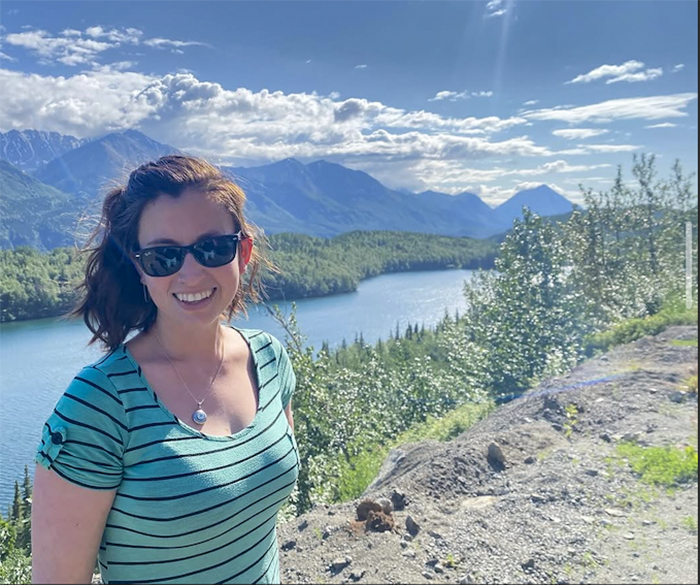
Sigma Tau Delta is the international English Honors Society. In our UAF chapter, our mission is to bring together undergraduate and graduate students who are passionate about English. We believe in critical thinking and literature as a means of expression, connection, and empathy, and we seek to increase the interest in and study of English by ensuring that members have access to resources and opportunities that will benefit their professional, academic, and creative development.
Members, prospective members, and people with no interest in becoming members are all equally welcome at our meetings and events, though there are some valuable opportunities that come with being an official member. One of those is attending the annual convention in the spring—all the presenters are students, which is an unusual and impressive thing to put on a resume this early in our academic careers. Another is the available scholarships, one of which—the graduate student scholarship—I was lucky enough to receive this year! The award was enough to cover my summer studies in Ireland.
To learn more about Sigma Tau Delta and find out if you are eligible to become a member, talk to our president, Kaylee Fulmer (krfulmer@alaska.edu), or our faculty advisor, Dr. Eileen Harney (eharney@alaska.edu).
Contest Announcement
New Year, Same Goal!
What better way to connect with fellow students from around the globe than through writing? To hear thousands of voices in all their glorious diversity and to give your creativity the platform it deserves?
Starting September 28th, Short Édition invites students from all participating universities to submit their short stories of 7,500 characters or less for our annual inter-university contest, the Long Story Short Award 2026.
To participate, students are invited to imagine a story based on the theme: Trading places
Step into another life!
Trade places, swap identities, cross boundaries of time, space, or circumstance. Wake up in a different body, a different era, or a different destiny. Whether you exchange fortunes, perspectives, or entire worlds, explore what unfolds when everything shifts.
What might you discover if you lived someone else’s life—even for a moment?
Let your imagination lead the way. The story is yours to shape.
By participating in this contest, your work will be published online alongside submissions from students across the globe, creating a vibrant bridge between voices and cultures. In addition, all entries will be considered by Short Édition for potential international publication in their network of over 500 Short Story Dispensers worldwide.
Contest timeline
Submissions open on September 28th at 09:00 a.m. EST and close on November 1st at 11:59 p.m. EST.
All submitted works will be published on the contest webpage on November 2nd. The public will be invited to participate in the selection of the public winner by voting for their favorite story from November 2nd through November 22nd. During this time, the editorial team will select one jury’s winner and one jury’s coup de cœur (jury's favorite).
The winners will be announced on December 2nd!
Winners & Prizes
The jury’s winner and the public winner will be awarded $550 each.
The jury’s coup de cœur (jury's favorite) will be awarded $400.
In addition, Short Édition will be considering all submissions for international publication in their 500+ Dispensers worldwide.
Recap
- Submit your short story of a maximum of 7,500 characters (spaces included)
- November 2nd: Publication of all submitted works on the contest webpage
- Public to vote for their favorite story
- December 2nd: Announcement of winners
- One jury's winner and one jury's coup de cœur (jury's favorite) selected by the editorial team
- One public winner selected based on the highest number of votes from the online community
The following information is from Solstice Books' Facebook page. If you have any questions, contact Solstice Books at 907-251-1652 or yourfriend@solsticebookshop.com.
We're very excited to share a new program at Solstice Books: the Alaska-Kentucky Pen Pal Project!
Welcome to our attempt to get back to the analog.
Through the magic of friends and community connections, Solstice Books in Fairbanks, Alaska is teaming up with Foxing Books in Louisville, Kentucky to bring you an opportunity to connect through pen and paper.
Here's how it works:
- Fill out the form linked here. We ask just a few questions to help connect you with your future pen pal.
- Come into your local bookstore! We'll have a board with potential pen pals that you can choose from starting August 1. We'll use this linked form to fill out the cards.
- Write a letter! Join one of our letter writing events or write in your own time. Address the envelope to the bookstore in the other community (address will be on your pen pal card) and pop it in the mail! Or, bring it back to us and we'll mail it for you.
- Receive a letter! When we get a letter for you, we'll send out a message. Swing by the bookstore, pick up your letter, and browse for your next read.
So far 75 people from Kentucky have signed up to have a Fairbanks pen pal. 40 people have signed up in Fairbanks. We're hoping that more people in Fairbanks sign up!!

Alaska-Kentucky Pen Pal Project
Congratulations to the winners of this year's writing contests!
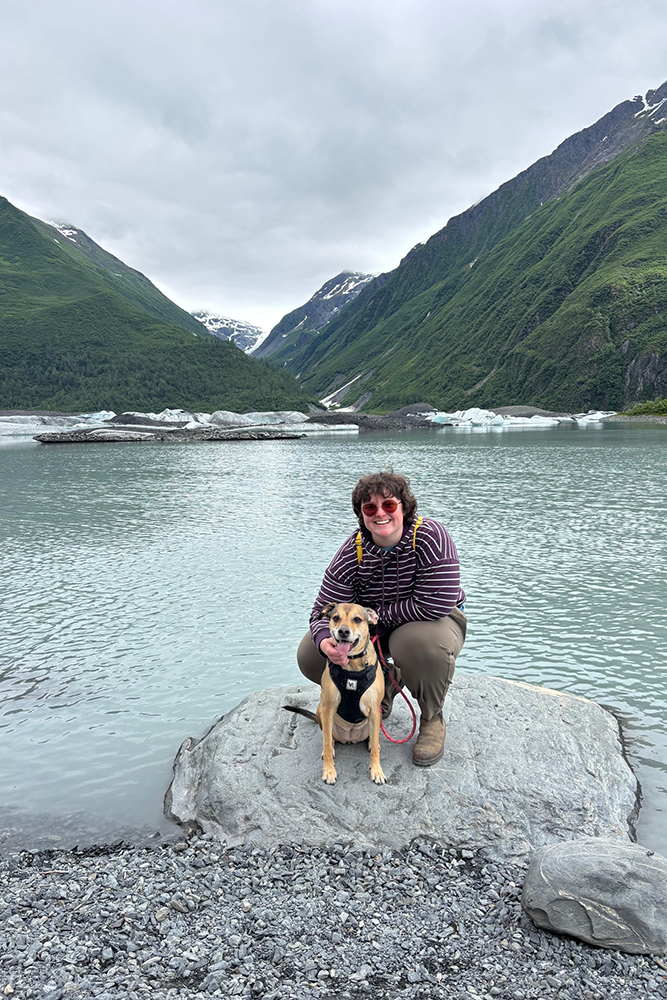
E.L. Bartlett Contest Winner
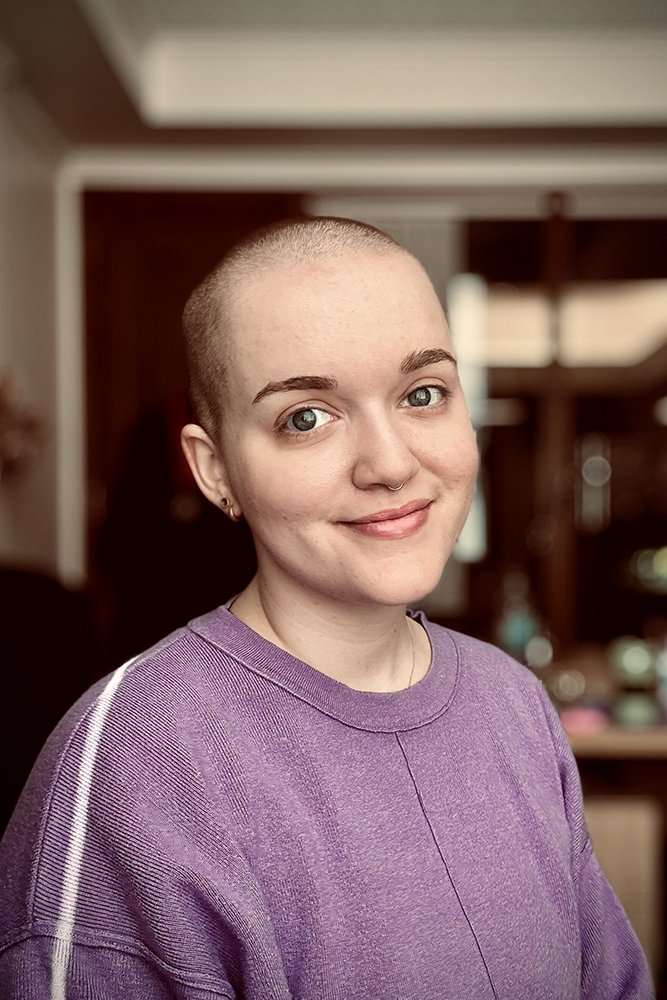
Maggie May
2nd year graduate student in the Creative Writing and Literature MFA/MA program
Messages for The Forever King: Dreams and Visions as Bridges Between Past, Present,
and Future in Medieval and Contemporary Arthurian Literature
Minnie E. Wells Contest Winner
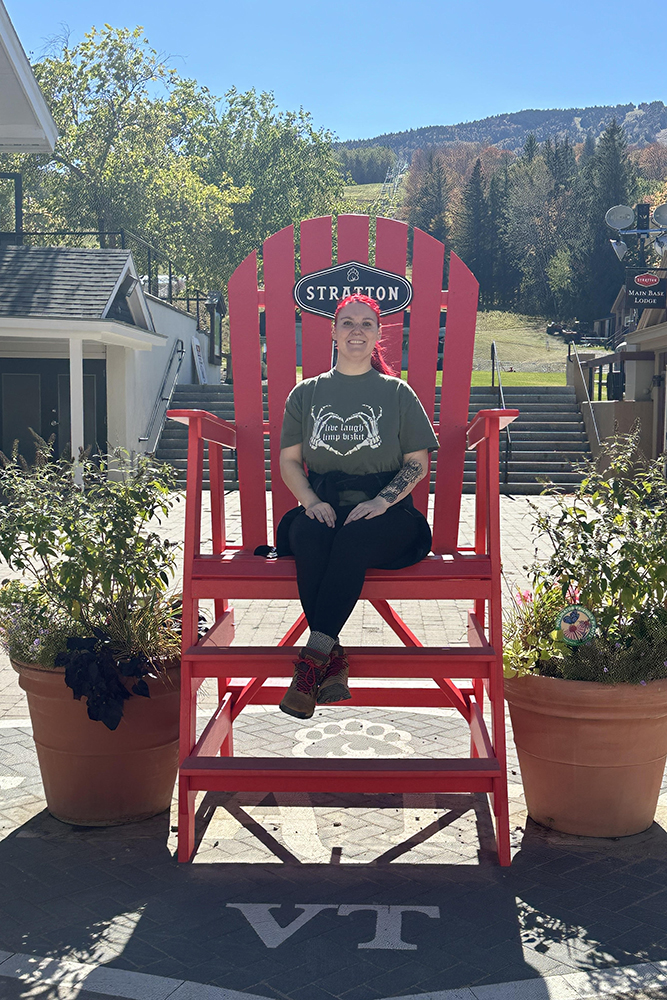
Margaret Thomas
Senior
Bread, Berries, and the Body Politics: Class, Power, and Gender in The Hunger Games
Farthest North Fiction Contest Winner
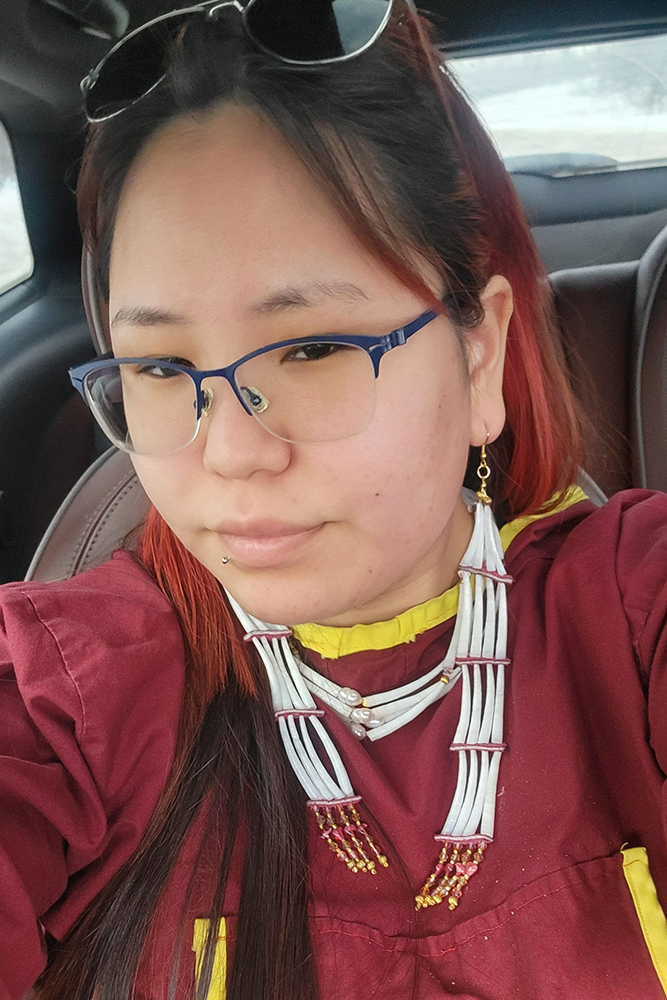
Kaci Collins
Junior
The Hollow Man
Derick Burleson Poetry Contest Winner
Mercedes Otten
Junior
Knowing My Parents / Do the Birds Know? / My Job is Not My Identity

Harold McCracken Award for Outstanding Writing About Alaska and the North Country Contest WinnerColin Warren The Fight for the Last Wild Salmon |
A Different Pathway
By David Snyderman, UAF English Alum
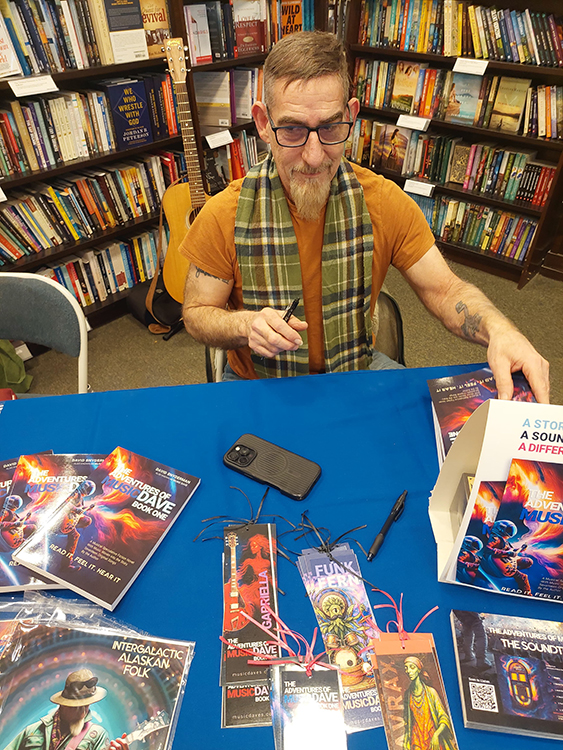
I didn’t begin my college education until my forties. At the time, I was using military education benefits that were about to expire. I didn’t fully understand what I was stepping into—I just knew I didn’t want to waste the opportunity. What I found at the University of Alaska Fairbanks, especially through the English department, was something much deeper than a degree. I learned how to finish things. I learned how I learn. That turned out to be one of the most valuable lessons I could have received, because it prepared me to keep teaching myself long after graduation.
After I graduated, I struggled to find direction. I took on a variety of jobs—janitorial work, deli shifts, driving for a vehicle testing company—honest work, but far from the creative life I had imagined. Over time, I drifted further away from writing and music, which had always been central to who I was. That distance took a toll.
A turning point came when my daughter suggested I start journaling again. What began as a simple practice quickly reopened something in me. I found myself surrounded by years of unfinished songs, partial stories, and scattered ideas. Slowly, those fragments began to take shape. Writing became not just an outlet, but a way of understanding my world—and being honest within it.
Over the past year and a half, I’ve been focused on building a larger narrative project, The Adventures of Music Dave. Through it, I’ve been able to explore themes of identity, purpose, imagination, and resilience. The story has given me a place to bring together my writing and my music, including new work on electric guitar. It may not look like a traditional book, but it serves a deeply traditional purpose: to express something real, and to invite others into that experience.
At the same time, I’ve had to face practical realities. Physical work that once felt sustainable has become more difficult, and that challenge has pushed me to lean more fully into my creative work—writing, publishing, and performing. On April 3, I’ll be performing live at the UAF Pub for the first time in many years, sharing new songs and introducing this evolving project.
Looking back, my path hasn’t been linear. But my time at UAF gave me the tools to return to what matters, to organize my thoughts, and to commit to finishing what I start. I may have come to higher education later than most, but it arrived exactly when I needed it—and it continues to shape the work I’m doing today.
Liz Bolton '24, M.F.A., Creative Writing
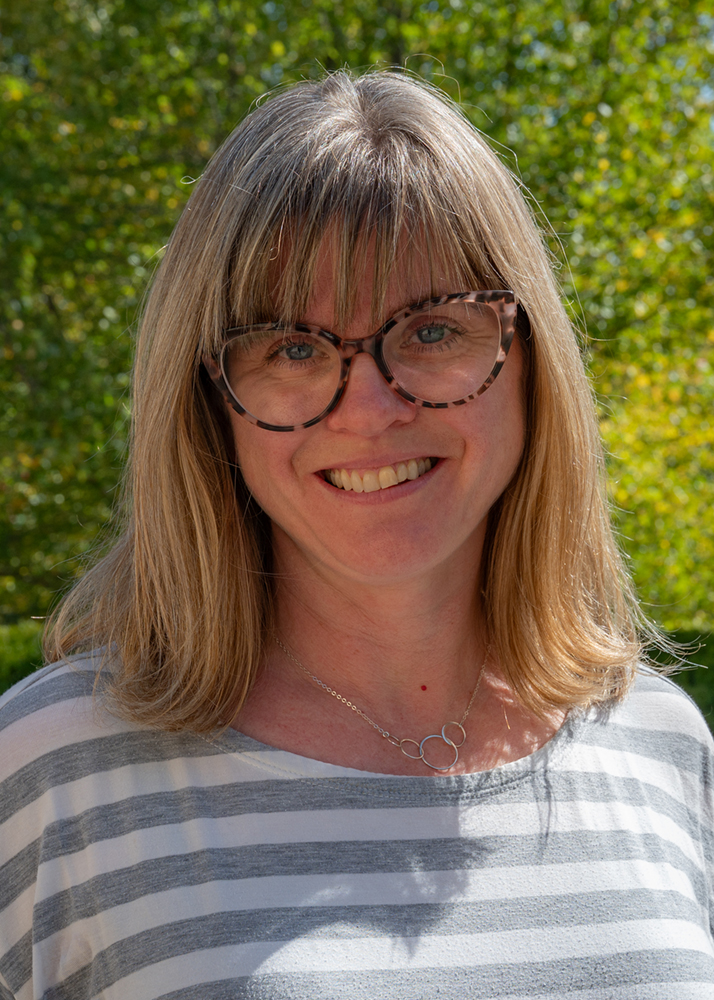
When I went back to school, I was in my forties with a whole other career behind me (and a few young kids at home). I was thoroughly versed in what I would consider “the art of rejection,” because in my previous career as an actress in Los Angeles, it’s fairly typical to audition for five or ten roles before landing one. This happens week in and week out for actors: get dressed up, do your makeup, go to the audition, do your best, and then… wait.
Why do I bring this up? Because understanding the art of rejection helped me—a lot—when I began submitting my work to literary journals. I say it’s an art and not a science, because I can’t offer a ten-point bulleted list about how to navigate rejection that will work seamlessly for everyone all the time. Understanding the process can help, but understanding ourselves is equally important, and that’s the art.
I can share what has worked for me, as I go on three decades of routinely being told “no” across multiple careers. I hope that it offers something that will work for others as well.
First, I do my best. I wouldn’t have shown up at auditions without preparing, both for that particular role and by having taken years of acting and improv classes to work on my craft. Likewise, I don’t write something in the notes app on my phone and immediately submit it to The Paris Review. If we do our best work, workshop it, share it with a trusted friend, listen to the notes, consider changes, edit carefully, take some time away, revise, etc etc etc, our chances are better of having the work accepted. This is not to say that we’ll always make major changes: sometimes we might end up submitting what is fairly close to that first draft on our phones, but it has been vetted and carefully considered, so we can be confident that it is as good as we can make it.
Next, I submit strategically. When I told Daryl Farmer, my very excellent thesis advisor, mentor, and friend, that I wasn’t sure how to start submitting to lit magazines, he suggested that I submit one essay to five lit journals at a time. It was great advice, and I tried it out. Over time, I realized that what worked better for me was to spend a lot of time researching which journals would be most likely to publish that particular essay—because of a particular focus of the journal, for example—and to submit to them one or two at a time. That way, if a piece was accepted (glory glory hallelujah) I didn’t have to let four other journals know I was pulling it from consideration. If I was rejected by those first few places, or if several months went by and I hadn’t heard anything, I would submit elsewhere, again doing more research to see what might be a good fit. This also buffered me from hearing five rejections in a row, which can be demoralizing. A slow rollout won’t work for everyone, but it has worked well for me.
In general, I try to adhere to the adage that you don’t get 100% of the jobs you don’t apply for. (Is receiving a polite rejection letter worse than receiving no letter at all, never having that hope of a “yes?” I don’t think so.) In spite of everything else I could be doing instead of submitting my writing (like writing itself, for one thing), I make a point to carve out time to submit. I don’t do this every day, or even every week: it goes in waves. If having a specific schedule works well for you, then go for it. You may find that you have certain seasons when you’re writing a ton, and other seasons when you have a bunch of completed writing; it’s easier to submit during those latter times, partly because you’ve got writing that’s ready to go, and partly because you may not feel the same burning desire to write. Submitting is a form of cheating on writing. It’s writing adjacent.
Always, I push down any nagging fears of success. A rejection is a disappointment, of course, but it’s also a relief: now no one will read this. Phew. Because if they read it, they might hate it. They might judge me. They might think I’m a terrible person—or worse, a terrible writer. If my writing never reaches anyone, I can sit here quietly by myself and engage in an enjoyable hobby. To circle back to my acting career, I once made the mistake of reading online comments in which someone wrote of me, “her voice sounds like broken glass.” If I’d never auditioned, I never would have gotten that particular job, and no one would ever have written a nasty comment about my voice on a random online forum. People telling me they don’t like my work is a rejection of sorts too. But over time, I’ve come to realize that it comes with the territory. Putting our work out into the world is, to crib Jerry Maguire, a pride-swallowing siege. We’re not doing it for the haters, though. We’re doing it for the people who have been waiting for something they connect to, and who will know it when they see it. We publish so that those middle of the night thoughts can find a home in the world, and when we publish it can make those late nights feel worthwhile.
If you haven’t submitted your writing yet, there’s no better time than the present. Ask for guidance, trust the process, and remember that rejection is proof that you’re moving forward, perhaps still imperfectly, but ever in the right direction.
Spotlight
MFC Feeley: Willa Cather Resident Writer
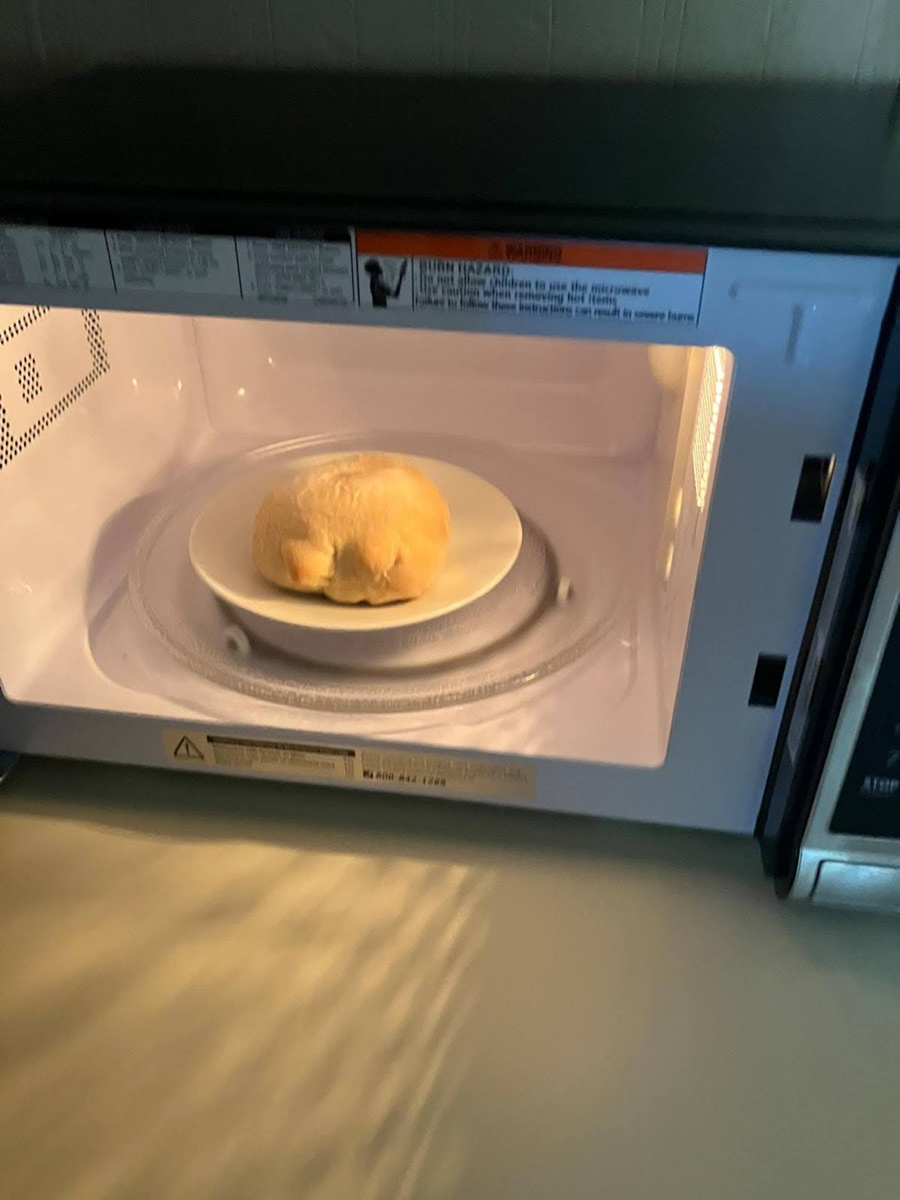
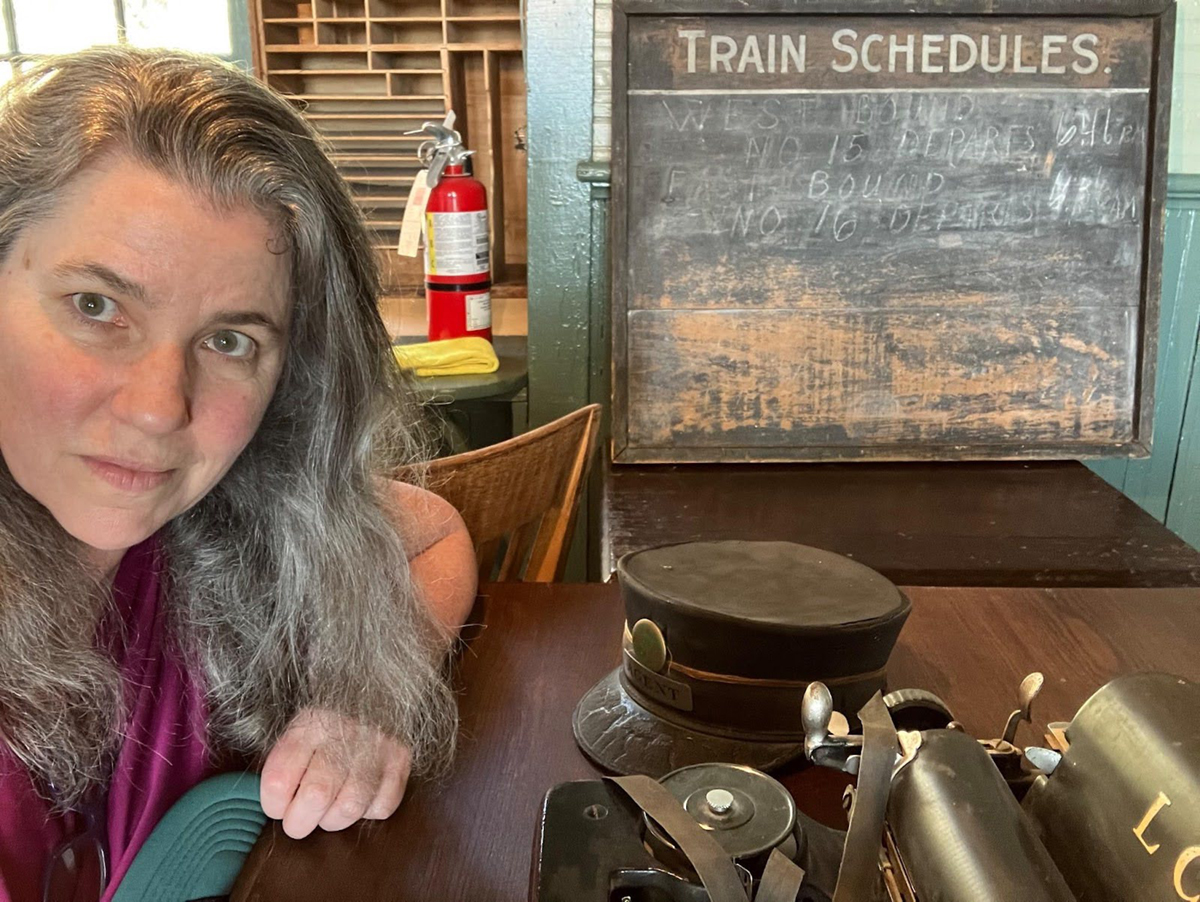
Last October, I spent two weeks in Willa Cather’s beautifully restored home (a) as a resident writer along with another novelist, a poet, a memorist, and a historian (b). We shared wine, jigsaw puzzles, and writing while devouring Willa’s racier stories, such as Coming, Aphrodite!, and a freezer full of runzas—a local dish midway between pierogi and calzone (c). As if that wasn’t enough, the Willa Cather Center gave us keys to several writing spaces, my favorite was the historic train station (d).
Last spring, I was about to graduate from UAF’s MFA program and had begun outlining a novel that traverses the United States. I was applying for residencies to bolster my sense of place, but I didn’t know about The Willa Cather Residency until my cohort member Rachel McKinley suggested I apply. That way, I could visit her when she began her new job in Nebraska! It started as a lark, but the more I looked into it, the more I wanted to go.
I love place-based writing, and bristle when authors get settings wrong. As a grad student, I read Tom Comitta’s bizarrely fascinating The Nature Book (Coffee House Press, 2023), a plotless collage of landscapes culled from various authors. While it was fun to recognise Willa Cather’s prairie or a familiar mountain just by the description, the hackneyed portrayal of a beach enraged me. In protest, I wrote a real beach. The resulting story, “Overcast,” opened my writing sample for the Willa Cather Residency and appears in this year’s San Francisco Writers Conference Anthology. Having little experience with the Midwest, I promised the judges that if selected I’d study their prairie, roll in its grass, and taste its dirt. Happily, they invited me to do so!
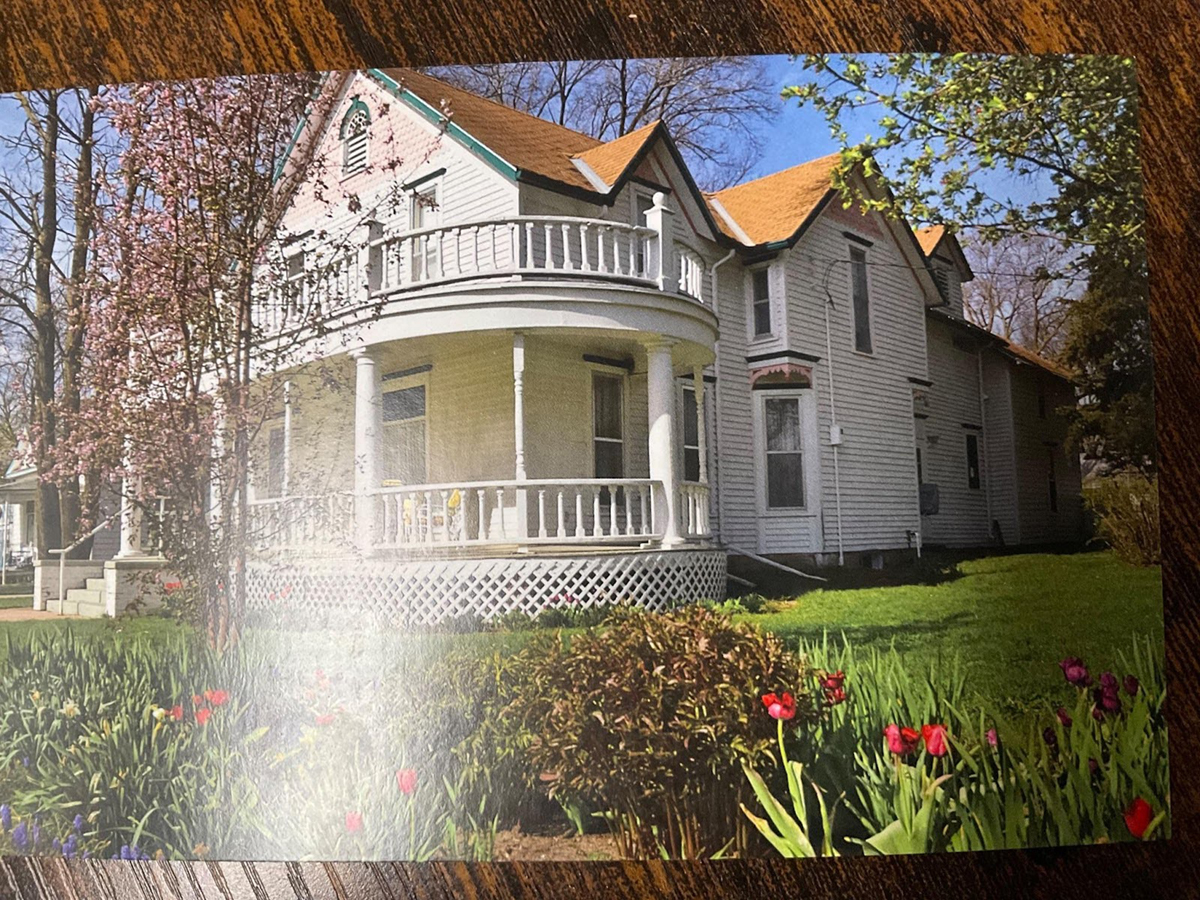
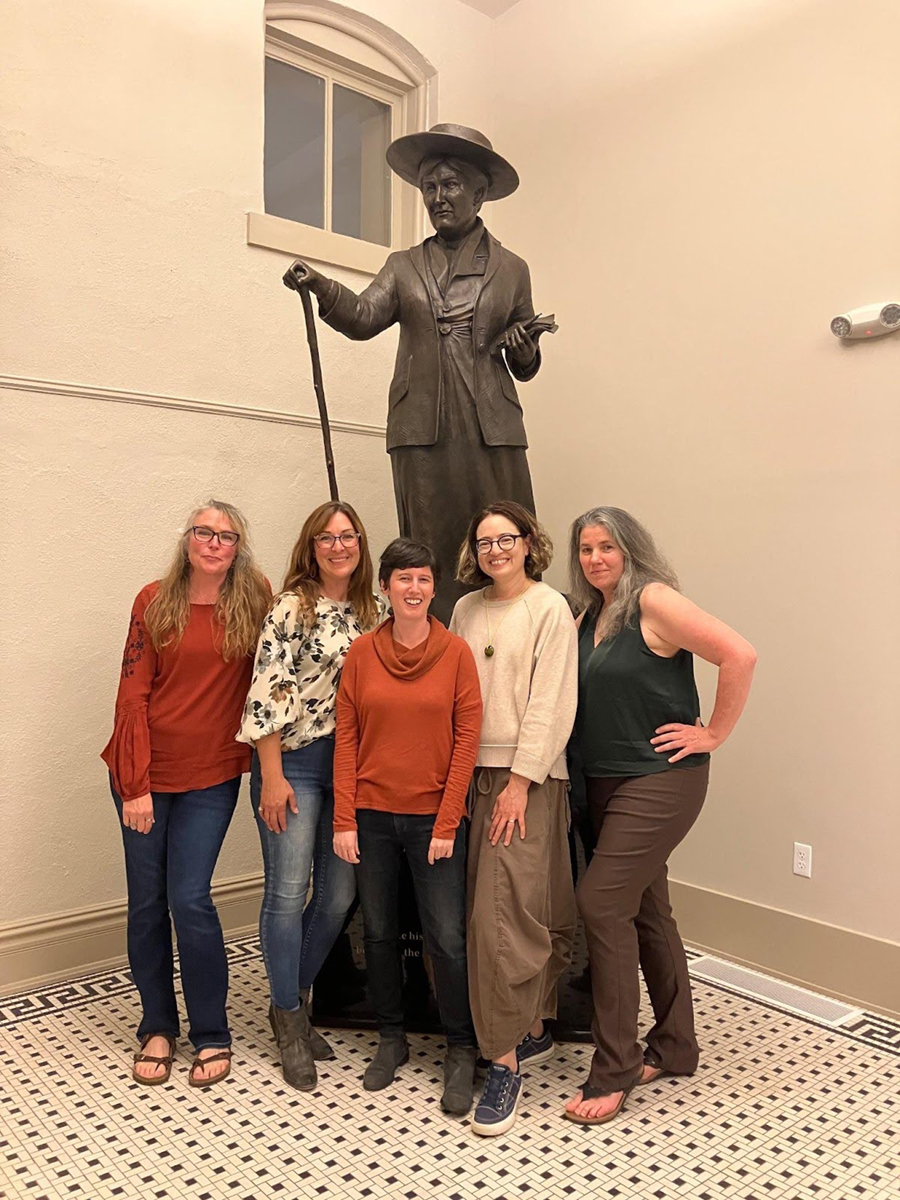
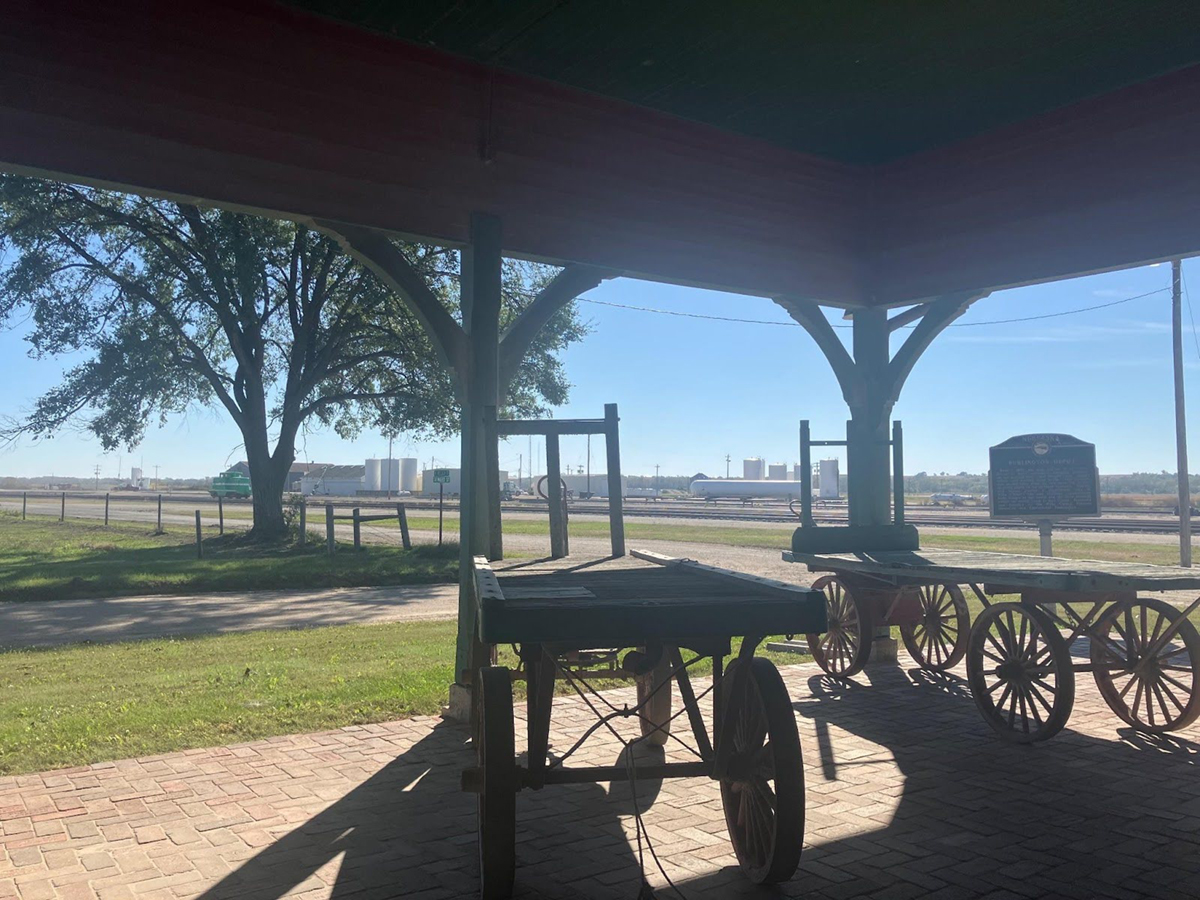
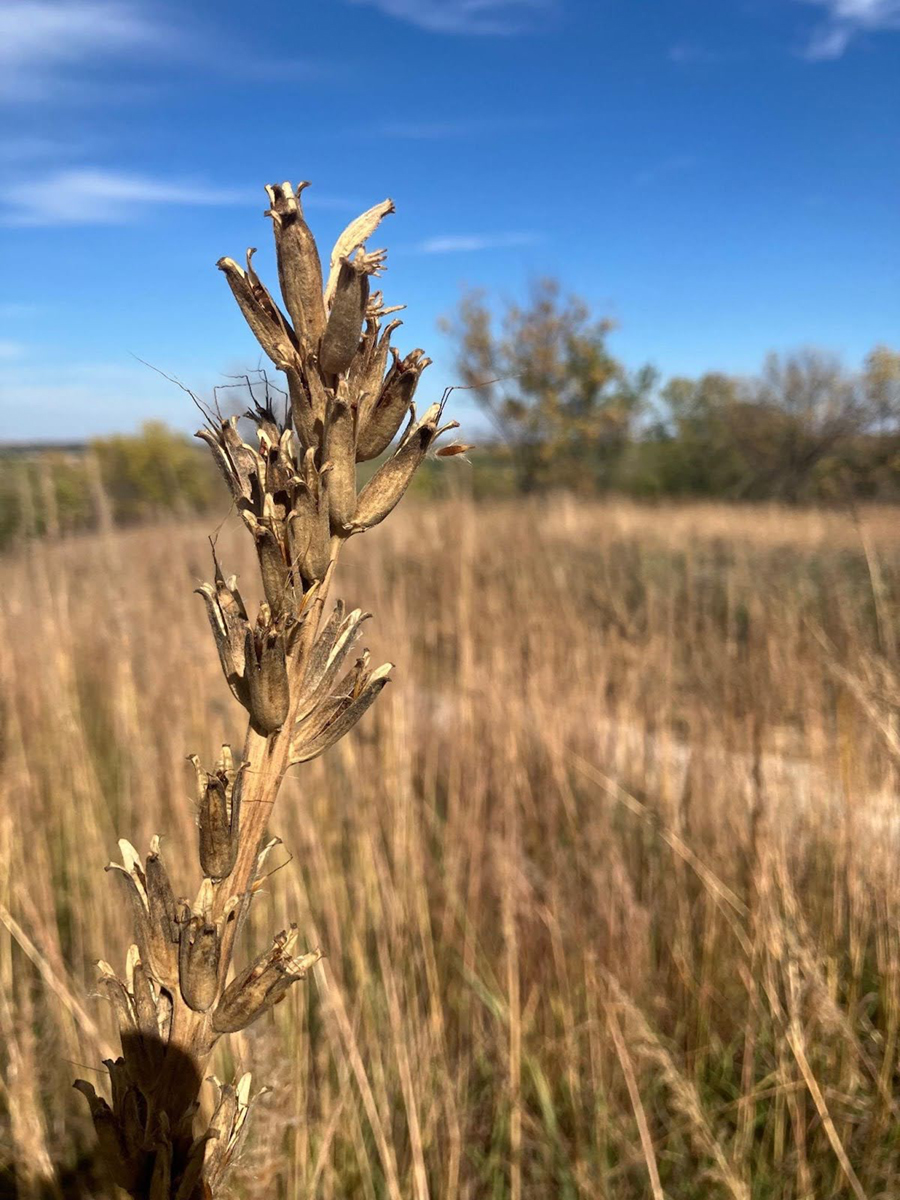
Affectionately dubbed the “Cather Crazies” by locals, the folks at the Cather Center have made Red Cloud a literary destination. In addition to the residency, they host a conference, tours, multiple seminars, readings, and are involved in the local schools. There are now more historical buildings with landmark status dedicated to Willa Cather than to any other American writer. Only the poet and I had specifically come for the landscape, but we all went to the prairie, the graveyard, and on every Cather outing the center arranged for us, including a Halloween inspired “Cather After Dark” tour focusing on murder and ghosts. It was a productive, inspiring time. Our residency concluded with a public reading. We were encouraged to share something written in Red Cloud. I stopped outlining and started drafting. The consequent scene, set on the open prairie, opens my current applications.
Applications for the Willa Cather Residency are open for the month of April; all you need is a strong writing sample and a good reason to be there. I recommend applying for fellowships and residencies before you think you qualify. For one thing, you might be wrong: Imposter Syndrome and Perfectionism are everywhere, and you are not competing against paragons, but other writers (i.e. your peers). For another: your application skills will improve with practice. Finally, you’ll discover, as I did, connections you didn’t suspect.
Don’t be sad when I tell you that Rachel and I didn’t manage a visit after all. We’ll both attend The Sancho Panza Writers Workshop in Dublin, Ireland this summer with a few other UAF grad students and graduates. One of us will give you an update.
BIO
MFC Feeley lives in Alaska. She has an MFA in fiction from the University of Alaska Fairbanks. She was a resident writer at The National Willa Cather Center, a Fellow at the Martha’s Vineyard Institute of Creative Writing, and is a board member of 49 Writers. Feeley wrote a series of ten stories inspired by the Bill of Rights for Ghost Parachute and has published in Best Micro-Fictions, SmokeLong, Jellyfish Review, Pulp Literature, and others. More at MFCFeeley.com.
Student Spotlight: Margaret Thomas
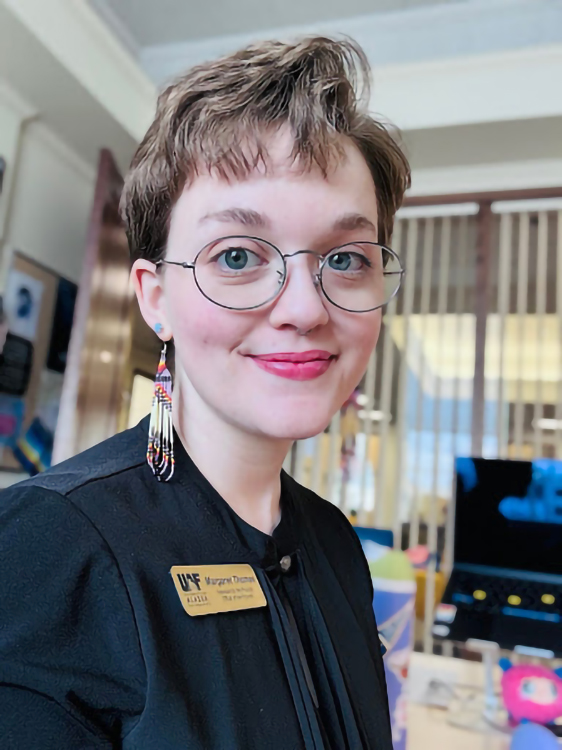
I’m a non-traditional, part-time student, and was officially enrolled as a bachelor’s student in the Fall of 2020 (fun times). Working full-time during Covid and doing all my classes online meant that, for at least the first half of my degree, I didn’t know anybody. I can't remember the names of most of the professors I had; and it wasn’t until years later, when I was finally on campus, that I realized I had been taking classes with the same students that whole time.
In these recent, on-campus years, my most inspiring professors have been Dr. Brightwell and Dr. Williams. Dr. Brightwell helped me to realize my skill in creative writing, and Dr. Williams (though he probably doesn’t realize this), made me realize that I am much more into American Lit than I am British Lit. Which is a hard realization for an English major, since all the canon seems to be British and there’s this pressure and expectation that you, as an English major, must enjoy it. That’s simply not true though, and even with books that aren’t my favorite, I prefer the writing style of American Lit so much more. Don’t let anyone tell you it’s wrong to passionately dislike Jane Eyre. I’m serious.
In addition to my realizations about my literary preferences this year, Dr. Brightwell shared with one of my creative writing groups in 2024 an opportunity to submit to Scribendi, a national Honors magazine. Surprisingly, I was one of 33 submissions out of 500+ that were accepted and published in their 2025 edition. It is my first publication outside of UAF’s IceBox. It’s a big enough literary journal that they have a release party every year at the Western Regional Honors Conference (WRHC), and they invited me to Denver to speak about my piece. I ended up attending almost the entire conference, and it was a fantastic experience. I got to watch students from all over the country come and share their Capstone projects. I watched presentations on Zines, DnD as a teaching tool in the K12 class room, how stranger-danger scare tactics put women at a higher risk of abuse from close friends and family; and at the end of it all, I got to listen to other Scribendi authors talk about their pieces.
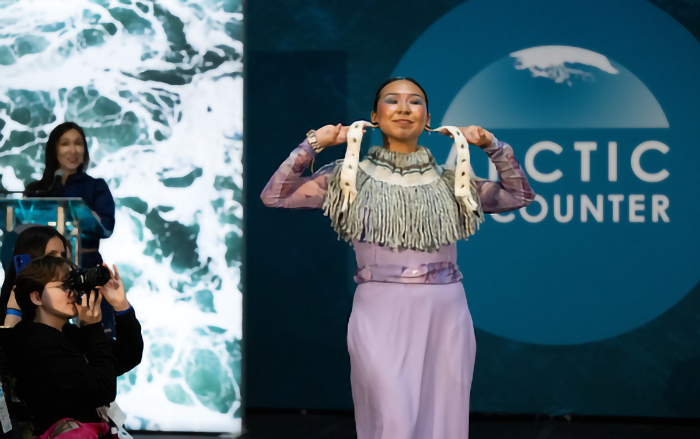
Margaret (bottom left) photographs a model during the Arctic Encounter Symposium fashion show. Along with her studies in English, she is part of the Arctic Leadership Initiative and is minoring in Alaska Native Studies.
I was very nervous to get up there and talk about my work, I was one of the only unsponsored students, I was certainly the only one from Alaska – but the Scribendi team was supportive and excited, and they knew me by name when I came in. When I introduced myself, they immediately started gushing about my work and what they loved about it. It was overwhelmingly positive, and completely shocking. It wasn’t until I was there that I realized how big this conference was, or how much time and love was put into the journal. They had clearly read these pieces closely and carefully, and they remembered each one of them. At the end of the day, I walked away far more confident in my writing than I ever was before, and I have carried it with me.
If I have one piece of advice for any writer out there: Submit. Submit every chance you get, even if you don’t think your piece is perfect. There are opportunities all around if you just put your name, and yourself, out there.
If you’d like to read my Scribendi publication, you can do so here:
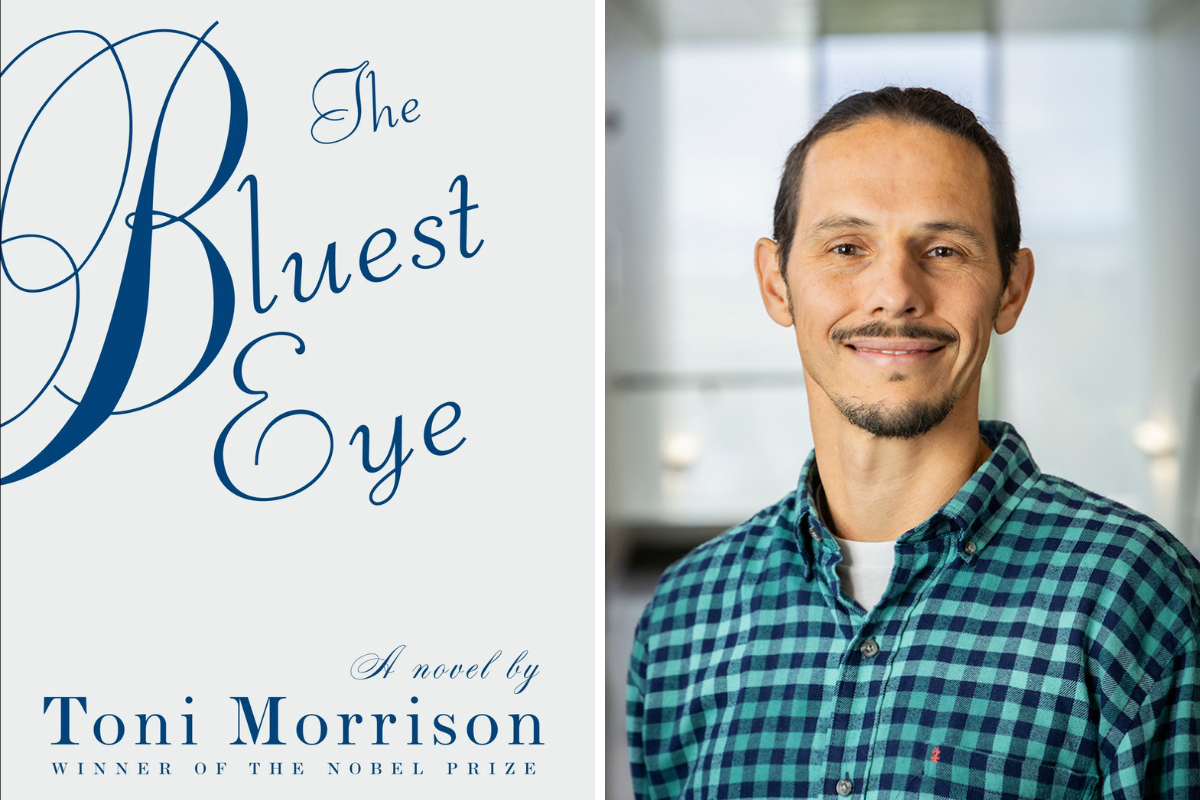
Toni Morrison's The Bluest Eye (1970)
reviewed by Jericho Williams
Toni Morrison’s The Bluest Eye is one of the most difficult books I’ve read and taught.
Morrison thought about her art this way: “Writing is, after all, an act of language, its practice. But first of all it is an effort of the will to discover.” The Bluest Eye attempts to understand how a child’s life can be destroyed, and Morrison offers no easy answers as she interrogates American culture and racism of the early 1940s in Lorain, Ohio.
The basis of The Bluest Eye originated from a childhood conversation in which Morrison recalled one of her friends telling her that she had been praying for blue eyes. Morrison felt “violently repelled by what I imagined she might look like if she had her wish,” and she continued thinking about this comment for many years.
Her experimental and innovative first novel grapples with beauty standards, dominant societal expectations, silencing, and erasure prior to the Civil Rights Movement. Pieced together, the fragmented narrative tells an inflammatory story that is both easy to read and shocking. It is a book about seeing, one that does not look away from what most would rather not witness.
There are many reasons The Bluest Eye remains important and should exist in public libraries, but perhaps the most compelling one for me is the reminder that children are not just of their homes, but rather children of societies. By asking hard questions, The Bluest Eye demands that readers consider their cultural values and the trickle-down societal impacts of oppression, poverty, and racism.
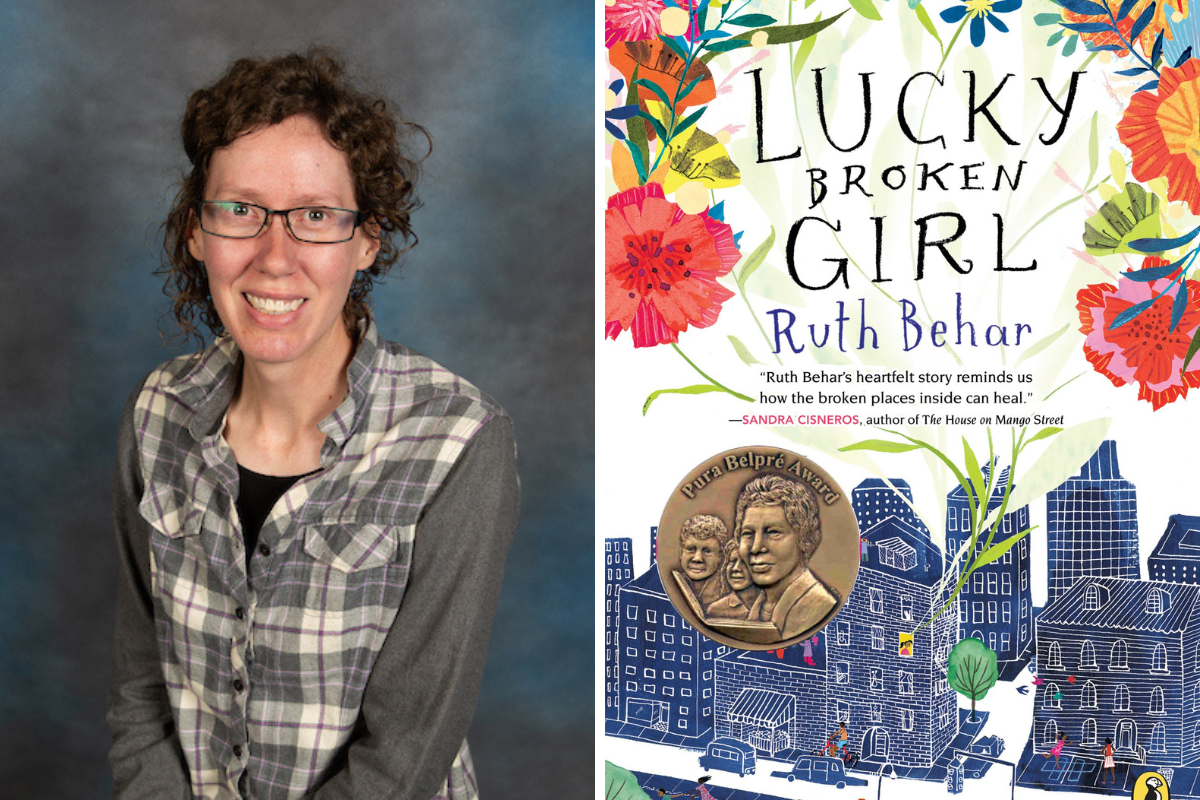
Ruth Behar's Lucky Broken Girl
reviewed by Gwen Retterer
This is a true story about Ruthie Mizrahi and her family who moved from Cuba to Queens, NY in the 1960's. Escaping the constrictive life they had under Fidel Castro, Ruthie's introduction to the United States includes meeting her neighborhood classmates who are also from different countries, playing hop scotch, and learning English at a public school.
Ruthie goes from being an animated and optimistic 10-year-old girl to almost being completely immobile due to an accident. Behar takes the reader into the mind of Ruthie as she journeys through the ups and downs of healing: grappling with hate towards the people that caused the accident, physical dependency on her mom as a caretaker, unexpectedly meeting new mentors, and finding inspirational outlets despite not being able to move.
The recommended audience for this book is 10 and up. While the style of the writing certainly embodies that of a 10 year old, the themes coming from Ruthie and all those around her transcend age. The following quotes will give you a snapshot of the themes, as well as a taste of what this book is all about.
"We're nobody. We're refugees. We just arrived in this country. What if they send us back to Cuba?" - Ruthie's Dad
"Try not to hate so much, mi niña. Maybe you'll get better faster." -Ruthie's Mom
"...Some of us come here as shooting stars, to shine brightly for only the briefest moment, and others of us come and overstay our welcome, living to a ripe old age and forgetting our own names." -Chico, Ruthie's friend
"Why is it that bad things have to happen so you learn there are lots of good people in the world?" -Ruthie
Alumni Spotlight: Jessica Klagmann (née Bryant)
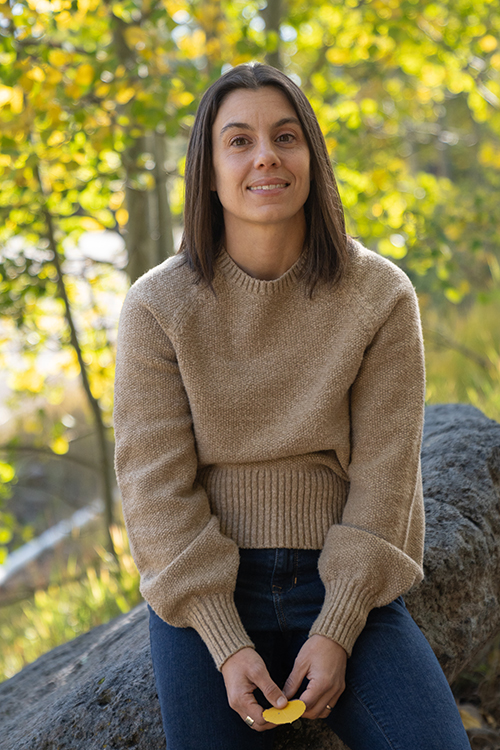
Jessica Bryant Klagmann
I was introduced to UAF by David Nikki Crouse, who was my first undergraduate writing
professor in New Hampshire, and who had graduated from UAF’s creative writing MFA
program. I’d never considered going to Alaska, but after losing my father in my last
year of college and learning that he’d always wanted to go, it felt like the kind
of adventure I needed. I remember David saying to me before I moved to Fairbanks:
You’ll live in a dry cabin. You’ll get a truck. You’ll probably get a dog. I did all of these things, much to my delight. They also told me: Alaska is a place that, by nature, forces you to figure something out about yourself. This, I found, was also true.
As a reader, I’ve always leaned toward magical realism, speculative fiction, and environmental
nonfiction. Books that shaped me and my work are Gretel Ehrlich’s The Solace of Open Spaces, Kevin Brockmeier’s Brief History of the Dead, and anything by Anne Valente, Nicole Krauss, and Rick Bass. A favorite recent read
was Anne de Marcken’s It Lasts Forever and Then It’s Over.
As a writer, I’m drawn to the ways people connect to wild landscapes and the natural
world, and magical realism has been my way of weaving lightness into dark subjects.
But I didn’t always do this well. David Nikki Crouse—who returned to teach at UAF—was
an incredible mentor, not just in the craft of writing, but also in becoming a teacher.
Filmmaker Len Kamerling encouraged me—as I struggled with pacing and action—to visualize
the way scenes unfold and fit together as a whole. Derick Burleson pushed me to find
grounding in my fantastical ideas, but then we also went off on tangents about the
exquisite beauty of flowers. Everyone I knew in Alaska taught me some simple truth
about life that carried into who I became as a writer.
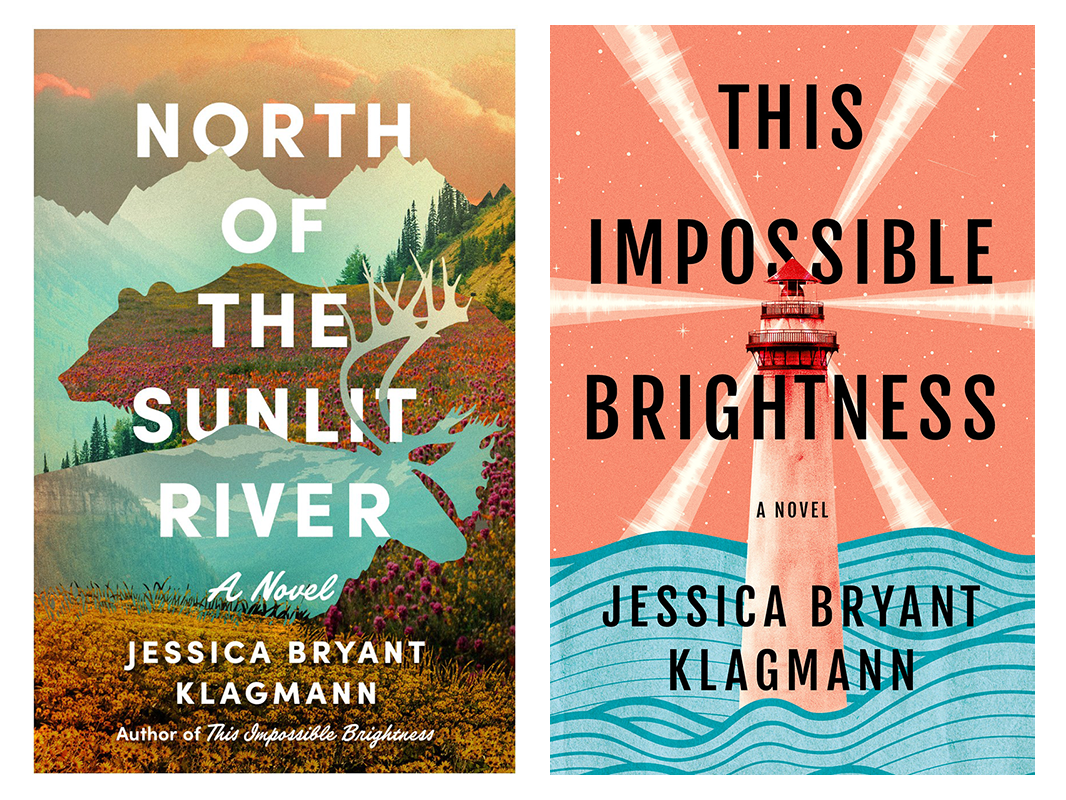
During my time at UAF, I wrote a thesis of three novellas, discovered a love for teaching, learned a thing or two about publishing (I was Permafrost’s editor-in-chief for Volume 32), and met my future husband. After we left Alaska for New Mexico, I worked at a college in Española as a writing instructor and the director of their adult education program. I also co-founded the school’s literary journal, Trickster. All the while, I kept writing stories, kept submitting. In 2013, I got my first publication for a nonfiction piece about my worst day in Alaska (and how a day like that can lead directly to the “figuring out” I mentioned). I started writing a novel in 2014, and after many, many submissions to agents—and many, many rejections—I finally signed with one. I felt like I’d made it, not realizing that it was just one step in a longer journey. A whole new round of rejections from publishers ended with that first novel getting set aside, but I’d been writing a second book to keep myself from going crazy, and in 2024, This Impossible Brightness was published.
My second novel, North of the Sunlit River, will be released this September. It’s set in Alaska and is about the ways in which lost loved ones can become greater than human—can become mythical—and how this act of myth-making can heal. Inspired by my time in Fairbanks and by my father, it was a way of finally getting him to Alaska, the place that left so much of its magic imprinted on me.
Every writer knows the best stories leave a lasting mark — and so do the best journeys. As they get ready to launch into their next adventures, four of our graduating English students share what made their time at UAF unforgettable. From lively classrooms to late-night writing sessions, their reflections celebrate the spirit of creativity, community, and growth that defines our department.
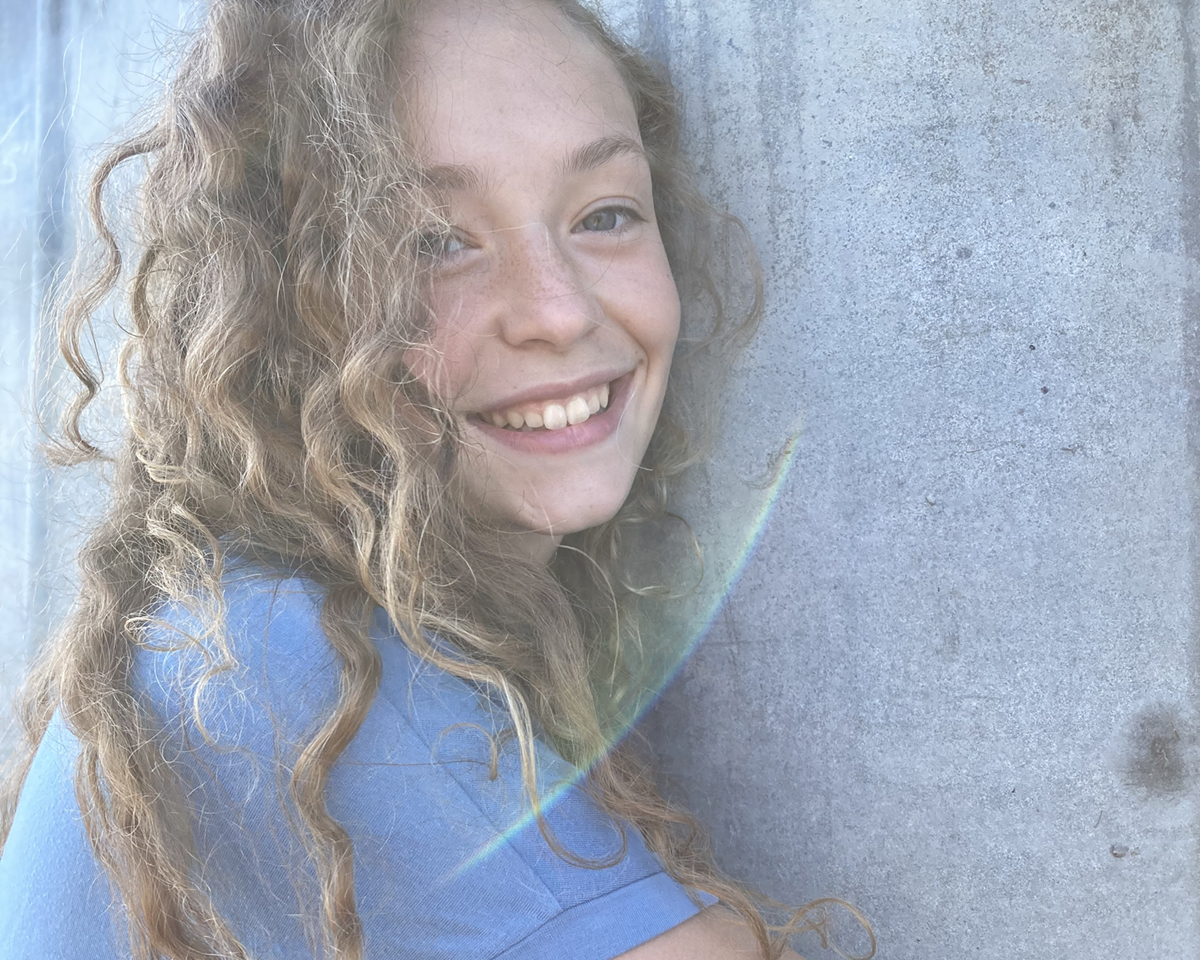
Sophia Martin, a dedicated English major and Creative Writing minor, has made her mark at UAF with her enthusiasm and talent. Recently named the English Department’s Outstanding Student of the Year, Sophia shares reflections on her favorite classes, experiences with literary publishing, and the vibrant, supportive community within the department.
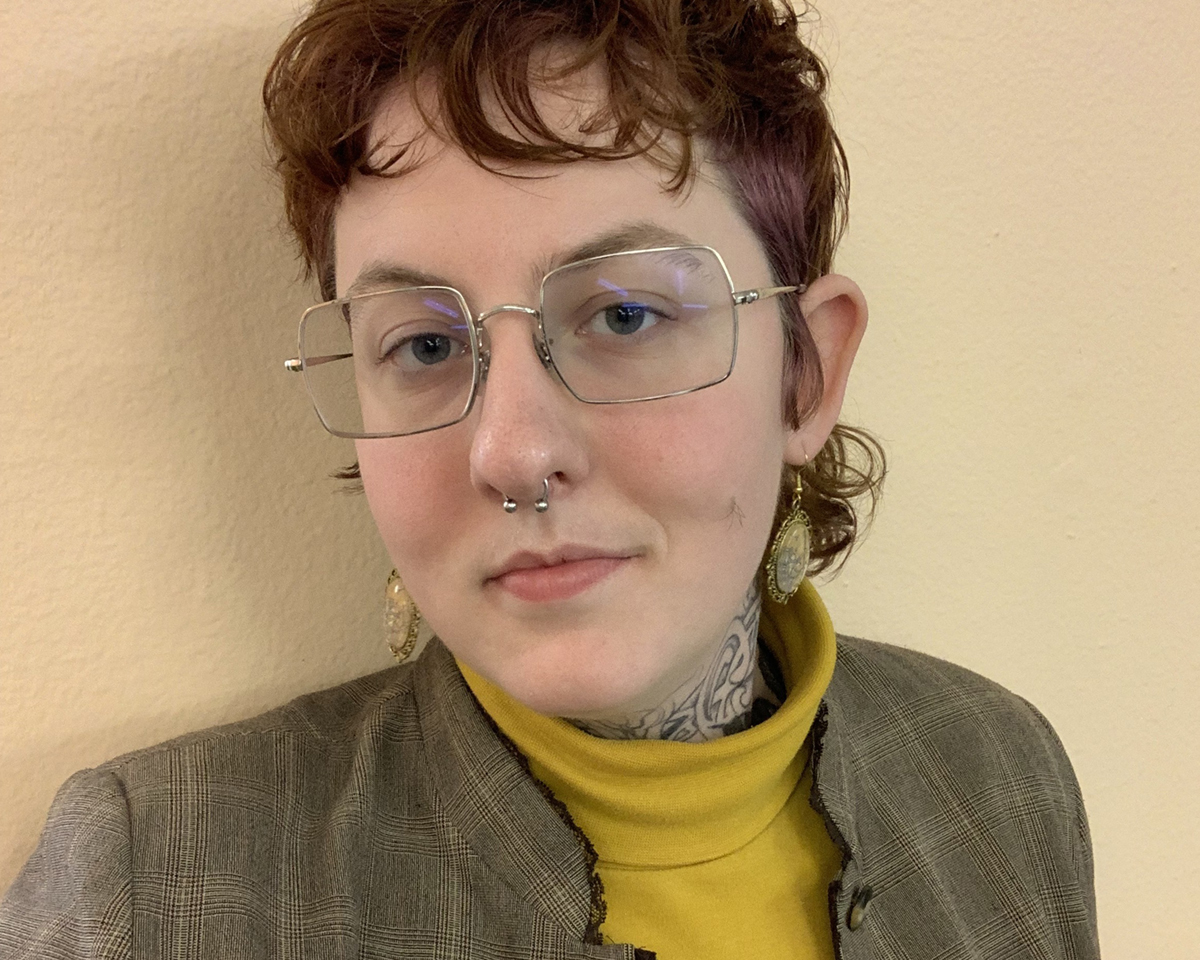
Aviv Snowberry, an English major with minors in History and Ancient, Medieval, and Early Modern Studies, has embraced curiosity and connection at UAF. Reflecting on favorite courses, personal research journeys, and the power of collaborative learning, Aviv highlights what makes the UAF English Department a truly special and welcoming place to grow.
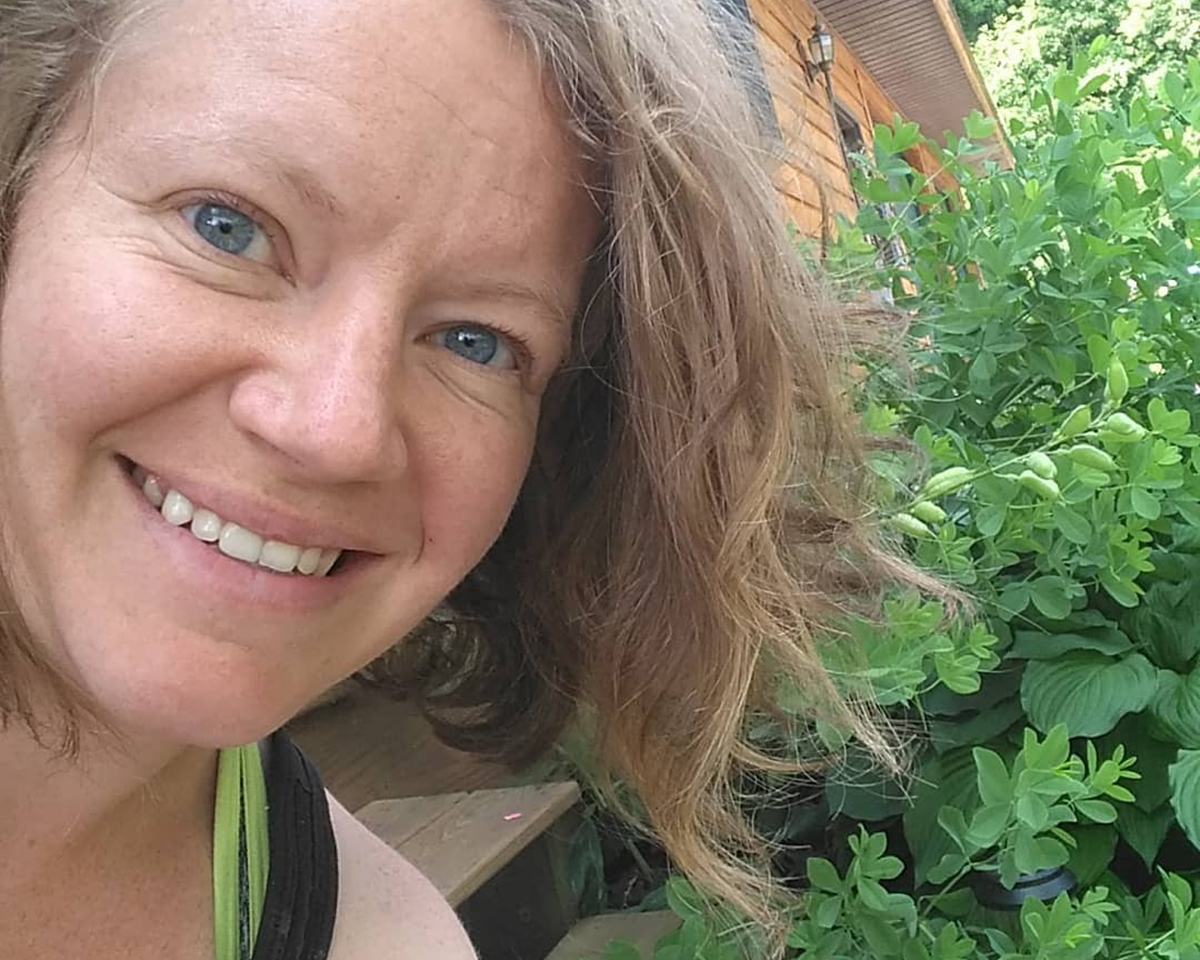
Rachel McKinley, a graduate of UAF’s MFA Creative Writing program, found creativity, growth, and confidence during her time at UAF. Through supportive classes and hands-on editorial experience with Permafrost, Rachel deepened her craft and discovered the joy of creative risk-taking in a community passionate about writing and exploration.
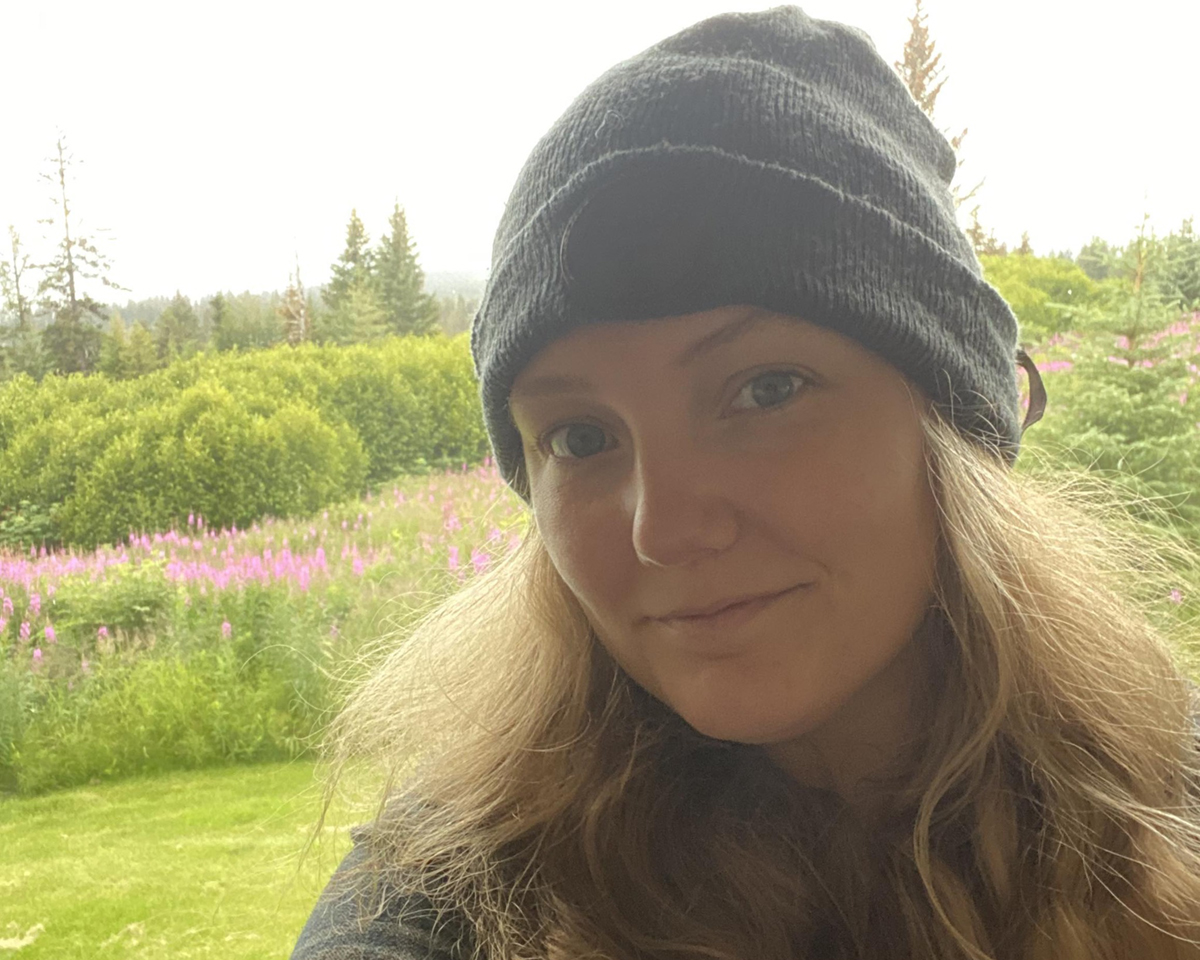
Rachel Blume, a graduate student in UAF’s MFA Creative Writing program, reflects on the community and growth she found during her time at UAF. From personal milestones to professional development as both a writer and instructor, Rachel’s journey highlights the deep support and resilience fostered within the UAF English Department.
Contest Winners
Thank you to all the students who participated in this year’s English Department annual writing contests. We are proud of every student who submitted a piece and shared their voice. A special congratulations to the students whose pieces were selected as winners - well done!
Northern Lights Nonfiction Essay Contest - Graduate Category
Rachel McKinley, Entomophobia (3rd Year MFA Creative Writing)
Harold McCracken Award for Outstanding Writing About Alaska and the North Country
Contest
Maggie May, It’s Okay, Nobody Knows We’re Out Here (1st Year MFA/MA Creative Writing & Literature)
Minnie E. Wells Award in Literary Criticism Contest
Malinda VanLoo, The Perks of Being a Wallflower: Not a Model, but a Mirror (Junior)
Farthest North Fiction Contest - Undergraduate Category
Margaret “Sarah” Thomas, Rapture (Senior)
Farthest North Fiction Contest - Graduate Category
Tim Ott, Heavyweight Cheater (3rd Year MFA Creative Writing)
Derick Burleson Poetry Contest - Graduate Category
Tim Ott, Umusarani (3rd Year MFA Creative Writing)
E.L. Bartlett Contest for Literary Criticism
Ayden Harris, “Please, Don’t Do Unto Us!”: The Nonbinary as Agent of Invasion of Empire in Victorian
Gothic Literature (2nd year MFA/MA Creative Writing & Literature)
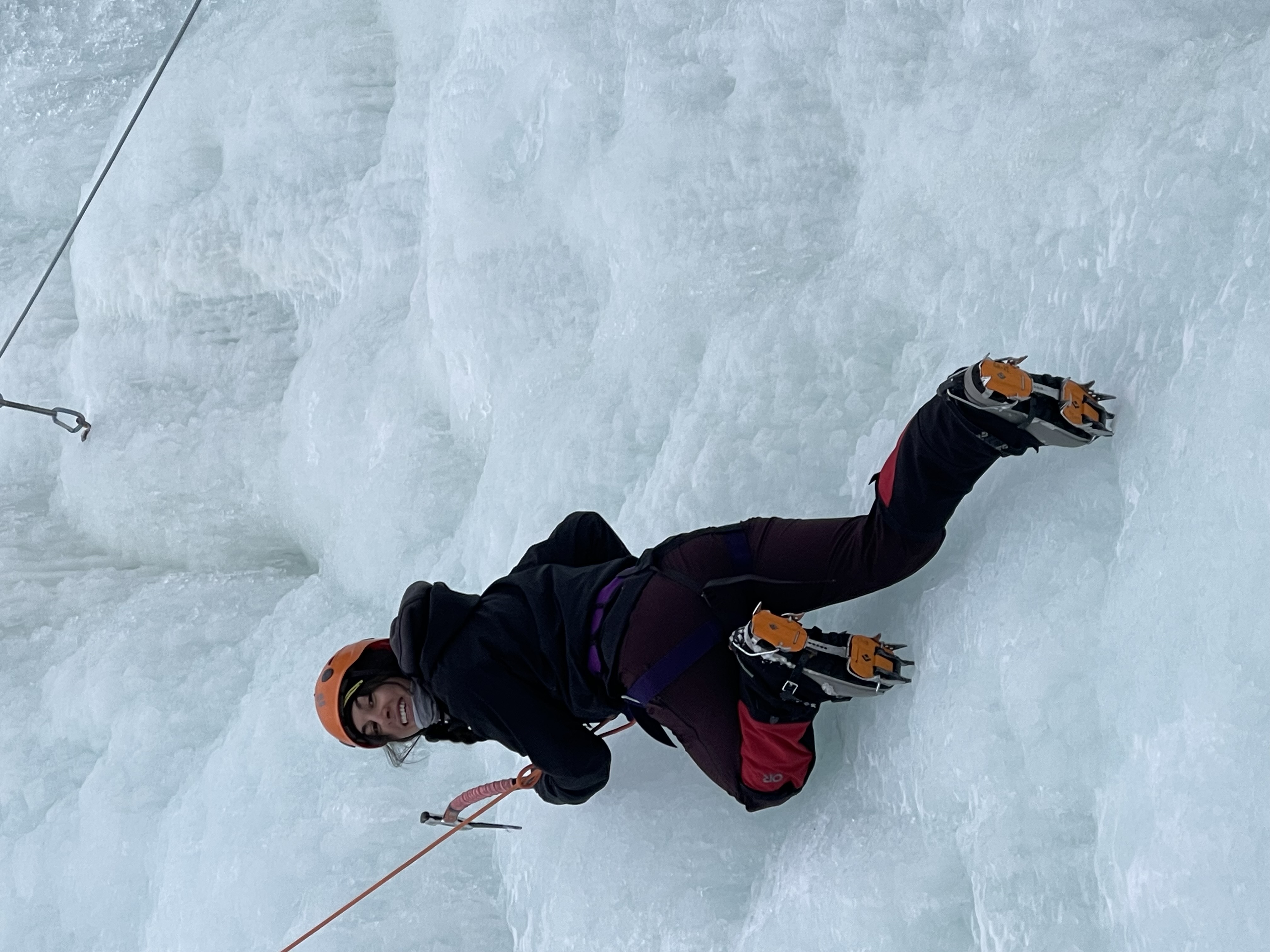
Spotlight on Second Chances
April is Second Chance Month, a time to raise awareness about the challenges faced
by those with criminal histories and to promote opportunities for successful reentry
into society.
This month, we highlight McKenzie, a dedicated volunteer with the L.I.O.N (Learning Inside Out Network) program. Through
teaching writing at the Fairbanks Correctional Center, she helps bridge the gap between
incarceration and the outside world, fostering education and connection.
Meet this year’s judges for the UAF Department of English writing contests!
These dedicated volunteers bring their expertise to evaluating entries across poetry, nonfiction, fiction, and academic essays. Learn more about their backgrounds and connections to UAF.
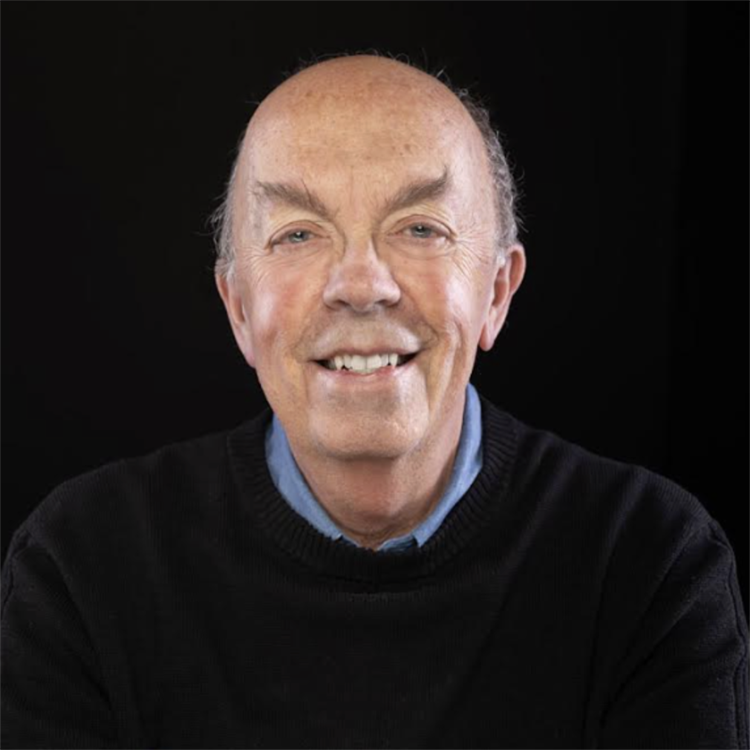
Richard Carr
Judge, Minnie E. Wells Literary Criticism and E.L. Bartlett Literary Criticism contests
A Professor Emeritus of English, Carr served at UAF for 28 years, directing the Writing
Center (1997-2023) and chairing the English Department (2010-2020). Inspired by Dickens'
Great Expectations and David Copperfield, he valued literature's life lessons. He frequently assigned Gunnar’s Daughter, a modern Viking tale by Sigrid Undset.
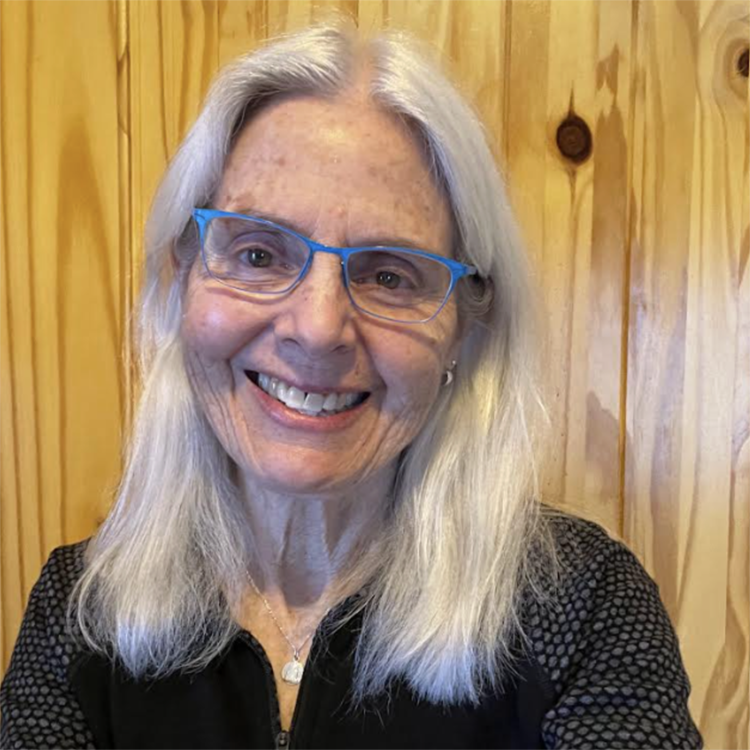
Carolyn Kremers
Judge, Northern Lights Essay Contest
A poet, nonfiction writer, and musician, Kremers authored Place of the Pretend People and Upriver. She developed the MFA creative nonfiction program at Eastern Washington University
and taught at UAF. A two-time Fulbright Scholar in Russia, she received the 2023 Alaska
Literary Award. Her work celebrates northern voices and experiences.
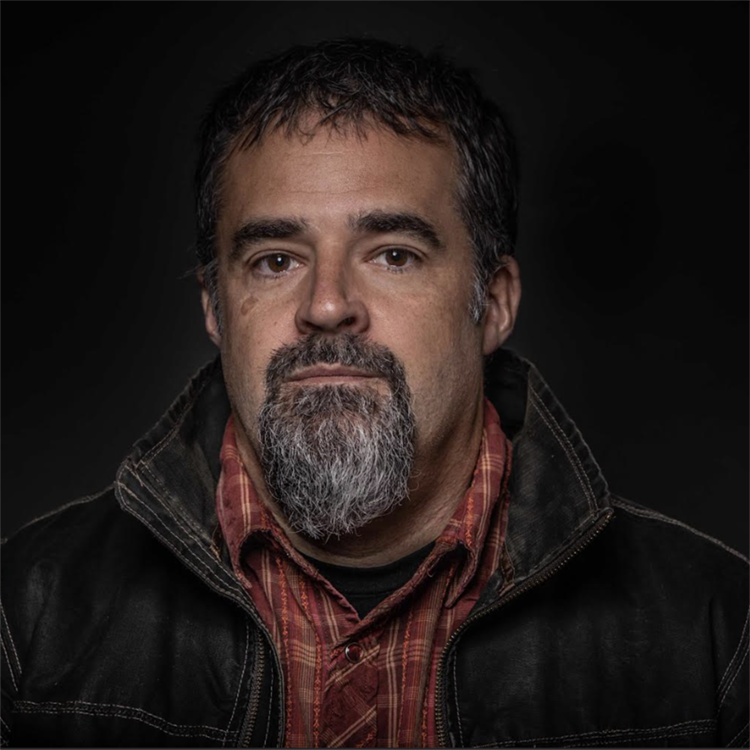
Don Rearden
An acclaimed novelist, screenwriter, and poet, Rearden wrote The Raven’s Gift, co-authored bestselling memoirs, and teaches writing at UAA. A recipient of multiple literary honors, he was a finalist in Coppola's Zoetrope contest. Raised in rural Alaska, his poetry collection Without a Paddle was praised for its compassion and relevance.
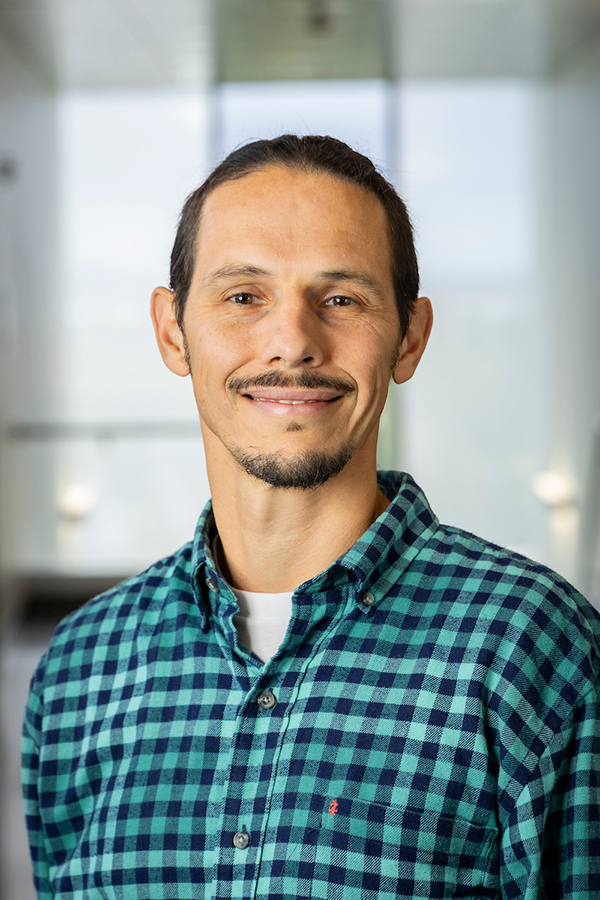
Brewing Connections
Associate Professor Jericho Williams has received the UAF People's Endowment award to help expand Tea Time, a student-led initiative started by Naomi King in Fall 2024. With this support, a new smart monitor will be installed in the Gruening lounge, allowing remote participation and strengthening connections across campus and beyond. Tea Time fosters belonging, professional growth, and meaningful conversations among students, faculty, and alumni.
Read More
In Sarah Stanley’s Writing and the Humanities class, students recently engaged in
a writing exercise centered around the whimsical tale of Alice in Wonderland. They delved into the concept of the “rabbit hole”, exploring its symbolic significance
while stepping into Alice’s shoes to ponder a central question: Why did Alice choose to jump down the rabbit hole in the first place? What is it about this mysterious decent that draws her in - and what might a “rabbit
hole” represent beyond its literal interpretation?
Now, we invite you to take a leap of your own - dare to jump down our WRTG F211X rabbit
hole! Just as Alice’s adventure in Wonderland offers limitless possibilities for discovery,
so too does the world of writing. Come along for the ride!
Contributing Authors:
Michelle T.
Audrey B.
Vanessa B.
Stuart C.
Jackson M.
Anthony W.
Lynnéa H.
Sofiia D.
Solstice-Rose Polaris Dream Millwee A.
Lena L.
Nic V.
Lorenzo E.
Hazel L.
Jack G.
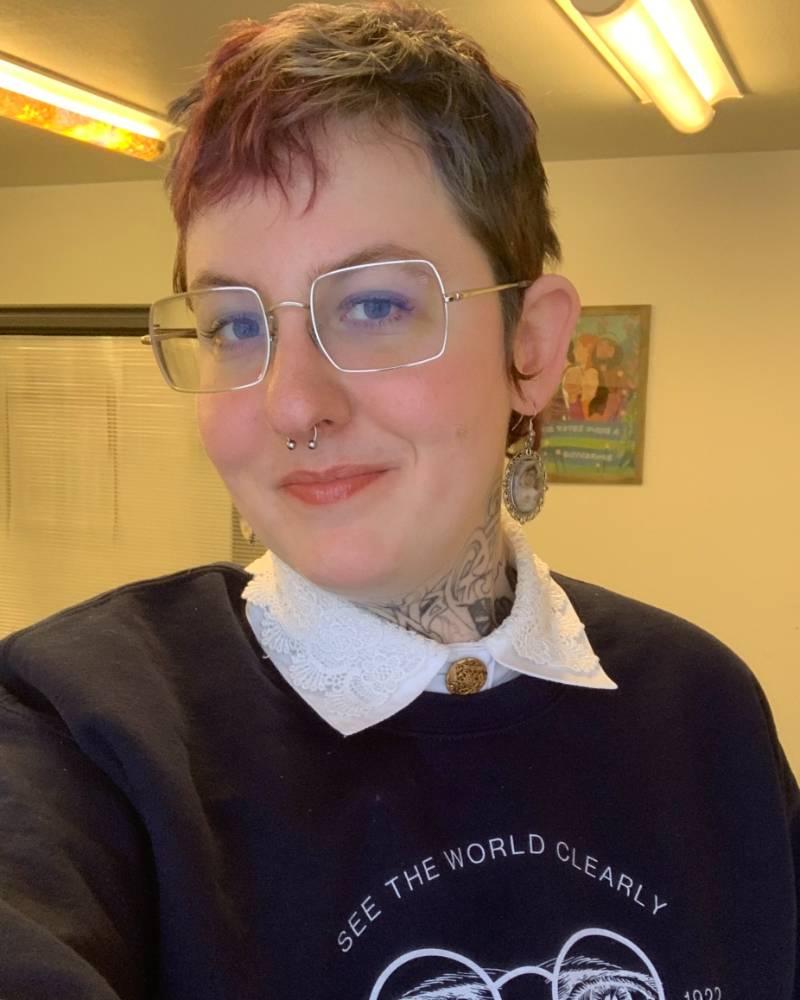
Exploring the Love of Literature with Aviv Snowberry
Aviv Snowberry, a passionate reader and writer, shares a captivating journey through their literary explorations. From childhood favorites like The Great Gatsby, Jane Eyre, and Shakespeare, to a newfound appreciation for romance, horror, and thriller genres, Aviv's reading tastes reflect a love for the full spectrum of human emotion and storytelling. Their reflections highlight a deep connection to literature and the joy of discovering new voices in contemporary fiction. Click to read more about Aviv’s influences, favorite authors, and unique literary perspective.
Read More
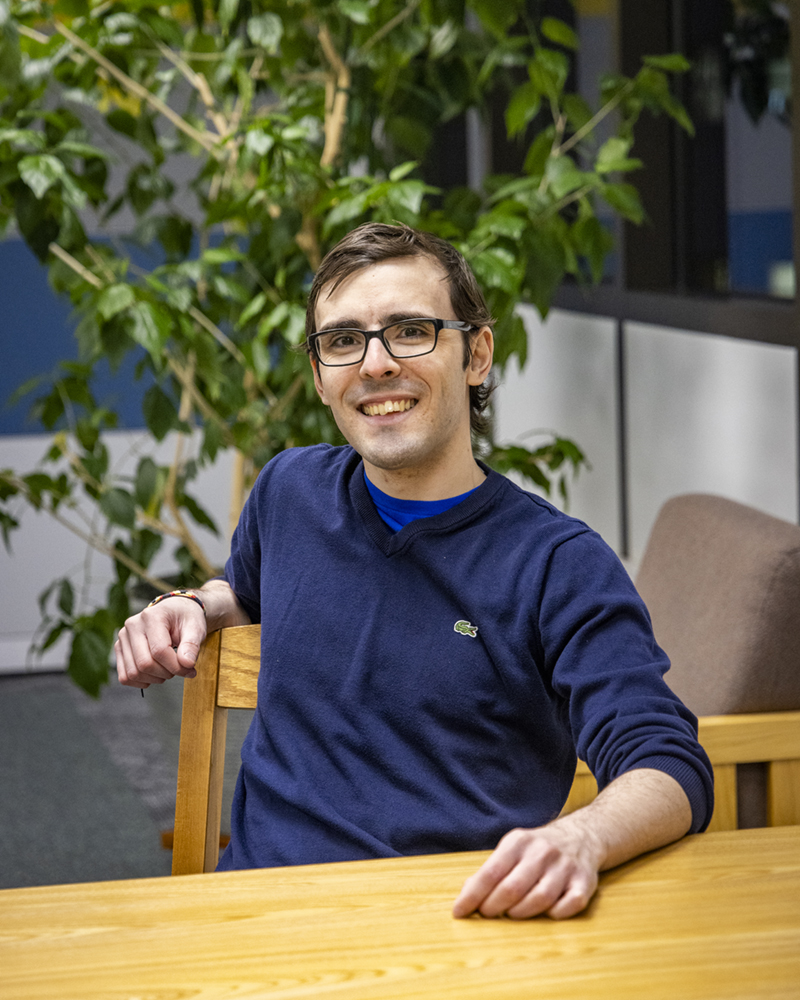
Manuel “Manny” Melendez, a graduate student pursuing an MFA in Creative Writing, has
been named the CLA Warrior of the Month for his exceptional contributions to UAF's
academic and creative communities. Manny is well-known for his leadership roles in
guiding both Permafrost, the UAF English Department’s literary journal, and The Sun
Star, the campus newspaper. His passion for writing, combined with his journalistic
and community-focused efforts, has had a profound impact on UAF.
In addition to his academic pursuits, Manny’s enthusiasm for UAF life shines through
in his personal involvement. From emceeing karaoke nights to running literary readings
for fellow grad students, his creative spirit fosters connection and inspires others.
Manny’s dedication to balancing academic, creative, and personal responsibilities
has made him a vital presence on campus. He will be honored for his achievements on
Thursday, January 30th at the UAF Women’s Basketball game, where the UAF community
will gather to celebrate him as the CLA Warrior of the Month during halftime. Let’s
pack the Patty Center in support of Manny!