


Marine energy project wraps up in St. George
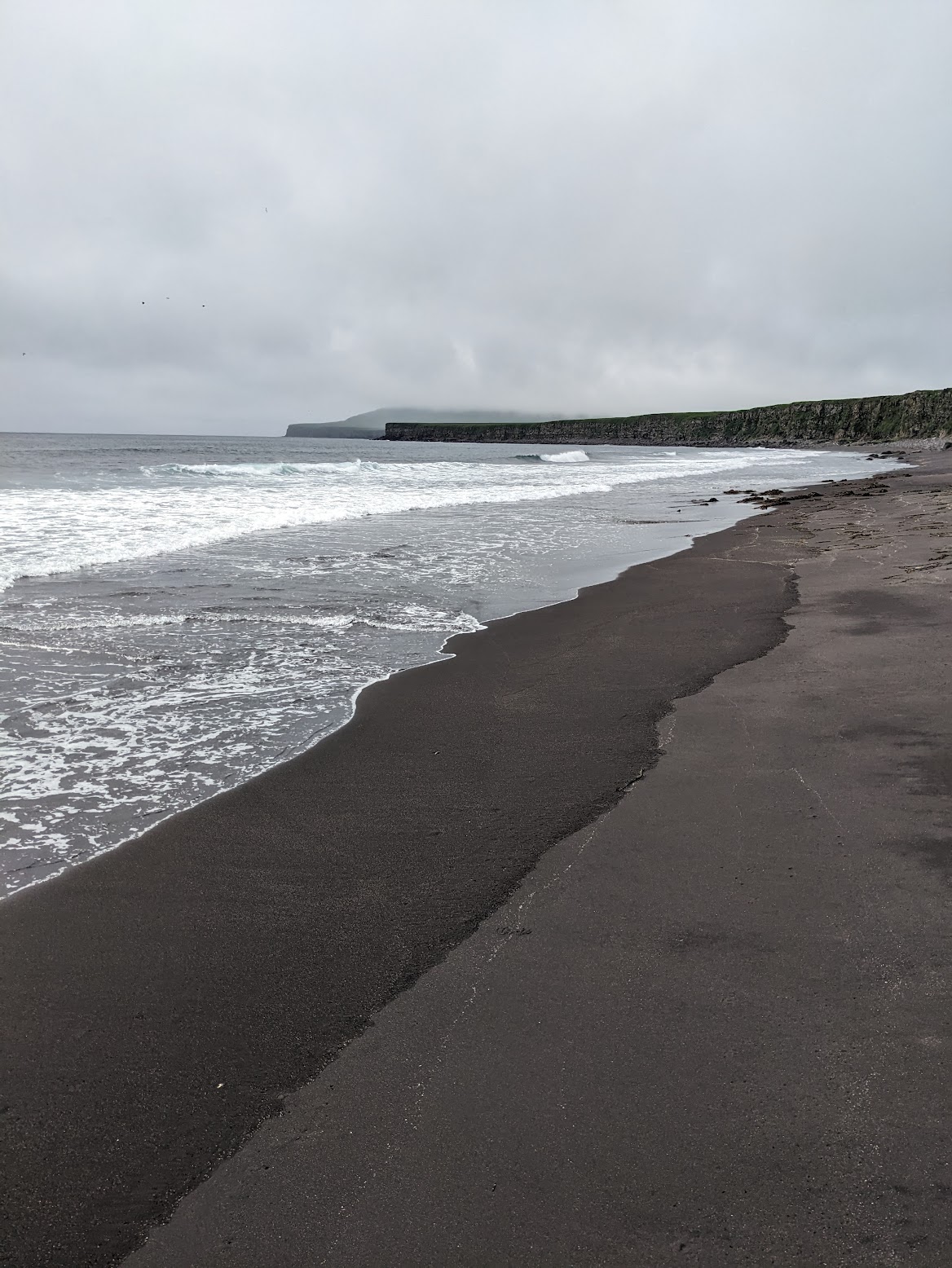
The island of St. George is located on an extinct volcano in the Bering Sea.
December 2, 2025
A collaborative research effort has wrapped up in St. George, a remote community in the Pribilof Islands, offering new insight into how marine energy could strengthen energy resilience in Alaska’s coastal and island communities.
The project, "Marine Energy Microgrid Pre-Deployment Toolkit to Accelerate Resilience of Coastal Communities," began in 2023 with a team of researchers from the Alaska Center for Energy and Power at the University of Alaska Fairbanks, Idaho State University, Idaho National Laboratory and the Xendee Corporation.
The team assessed whether wave and tidal resources could help offset the high cost and vulnerability of diesel-based power in St. George. In August, Katherine Reedy from ISU, Bax Bond from ACEP and Bikash Poudel from INL presented their findings to the city council.
St. George, a Unangax̂ community of about 40 residents, faces some of the highest energy costs in Alaska and depends on irregular fuel deliveries that are often delayed by extreme weather.
The research team evaluated the community’s current power system, future energy needs and local marine resources to model marine energy microgrids.
Researchers noted strong local interest in diversifying energy sources, though past setbacks have made residents wary of untested technology. The community experienced a failed oversized wind turbine project, locally remembered as the "million-dollar matchstick." They have also lost expected solar-development funding due to changes in the federal administration. Any new development must avoid disrupting the commercial halibut fishery, a critical economic lifeline.
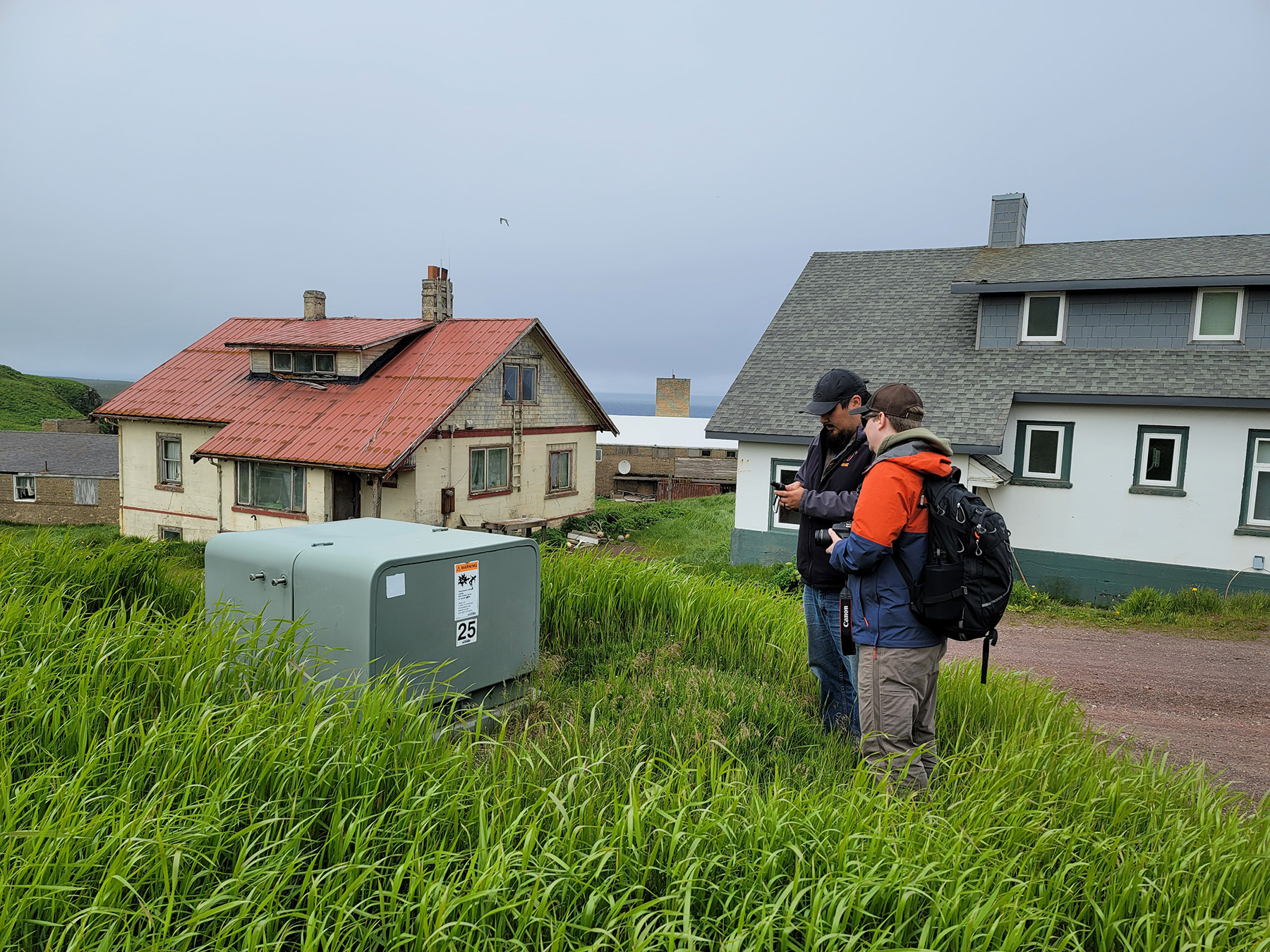
ACEP’s Bax Bond and Andrew Miles record transformer data and location in St. George, one of the Pribilof Islands in 2023.
The analysis in this project provided key insights into how a microgrid incorporating wave energy, solar power and battery storage could reduce diesel use and improve long-term reliability. It also noted that marine energy could meaningfully improve resilience if systems are placed close to the village to allow local staff to maintain equipment.
While a full transition away from diesel is not yet feasible, combining renewables with locally produced fuels such as hydrogen could strengthen energy independence over time.
St. George leaders are currently planning a new harbor on the north side of the island near the village site and exploring tourism opportunities, while also facing uncertainty about the future of fisheries and long-term community viability.
Researchers emphasized that continued community engagement will be critical as St. George weighs its energy options and plans for the future.
The project was funded by the U.S. Department of Energy’s Water Power Technologies Office.