The Scoop on Sports Sales
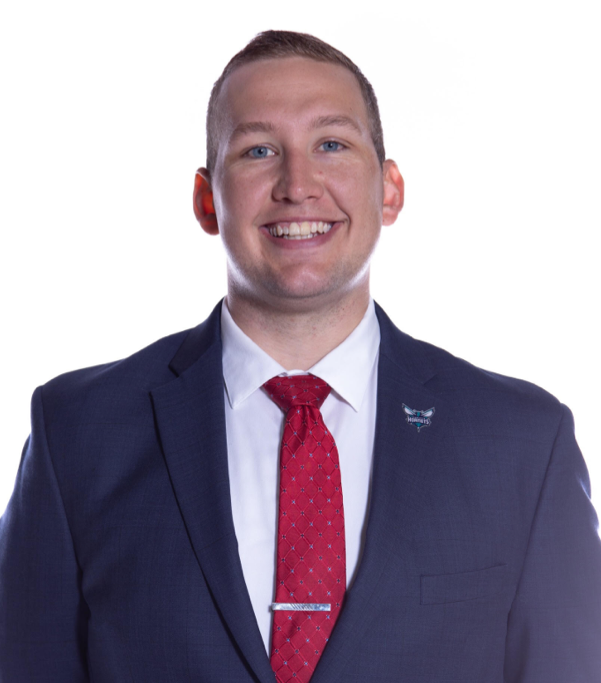
We spoke with Travis Misner, Manager of Partnership Development with the Charlotte
Hornets, to get the scoop on sports sales and the melding of business education and
the sports industry. Travis is a co-instructing the Sport Sales class for SOM’s Sport
and Recreation Business program, which has twenty students this semester.
Tell us about your background - both academically and professionally.
I received my BA from Loras College, a small liberal arts school in Dubuque, IA, where
I studied Physical Education and K-12 Teaching. While on campus, I was a baseball
student-athlete and had the unique opportunity to serve on the NCAA Division III National
Student Athlete Advisory Committee, where I represented over 10,000 student-athletes
from two different Division III conferences. This was where I discovered my passion
for the business of sports, and was able to be a part of conversations and decisions
that were far outside my realm of understanding.
In order to give myself the best chance at success in the industry, I knew I had to
go back to school to get my business degree. On the advice of a mentor, I decided
to attend Ohio University's (OU) dual MBA/MSA (sports administration) program, where
I could learn from some of the best in the industry. OU gave me so many unimaginable
opportunities, and taught me how to build a network and personal brand. While my primary
focus was to work in college athletics, I learned while on campus that my skill set
was better tailored for the world of sponsorship. Two of my strengths are creativity
and interpersonal communication, which are two essential skills for those working
in partnerships.
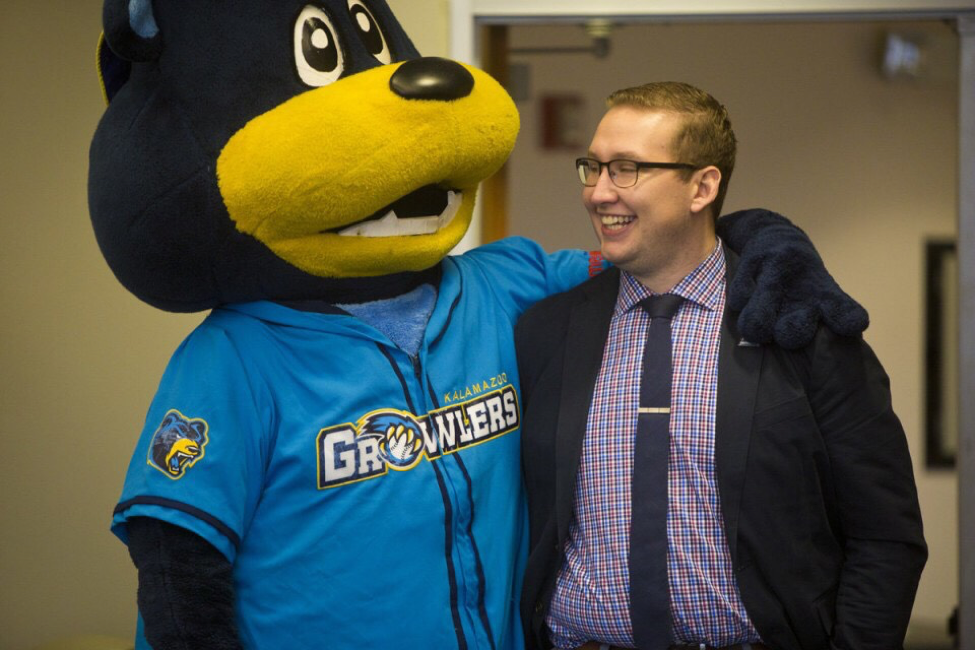
After OU, I worked for two years with the Kalamazoo Growlers summer collegiate baseball
team as Corporate Partnerships Manager, helping sell and activate over 90 local business
partners. In spring of 2018, I was fortunate to accept my current position, Manager
of Partnership Development, with the Charlotte Hornets. My path hasn't exactly been
linear, I've worked a multitude of jobs – both full and part time – and I believe
I am an aggregation of all my experiences. Outside of partnerships, I've been on the
operational team for the last four Super Bowls, and consulted on projects for companies
like the New York Jets, Google, NHL, and NBA. Being able to take lessons learned in
all areas of sports and entertainment has helped shape me into who I am today. I've
never been one to turn down an opportunity, and it's been a fantastic run up to this
point.
What does a "typical" day look like for you?
One of the great things about my job is there isn't really a "typical" day. I generally
break my job out into four different categories: Prospecting, Researching, Meeting
(both internal and external), and Building. I spend a lot of time reading prominent
sports business publications to make sure I keep my finger on the pulse of what's
new. Sports business is in a revolutionary time, with all the new technology out there
and different ways to consume our product, sports will be very different 10 years
from now than what you see today.
Of course, the other 75% of my time is generally spent actively selling. Prospecting,
calling, and meeting with business owners and decision makers is the lifeblood of
my position. No two clients are the same, and much of my time is spent navigating
all of the bumps and hurdles that are involved in creating a multi-level, six-figure
partnership.
During the season is also a little different from the offseason. Offseason is much
busier for me, as we try to find new partners for the coming year. During the season,
my time is spent mostly hosting clients at games, and building relationships ahead
of the summer sales time. The question I get most is about attending games: Yes, I
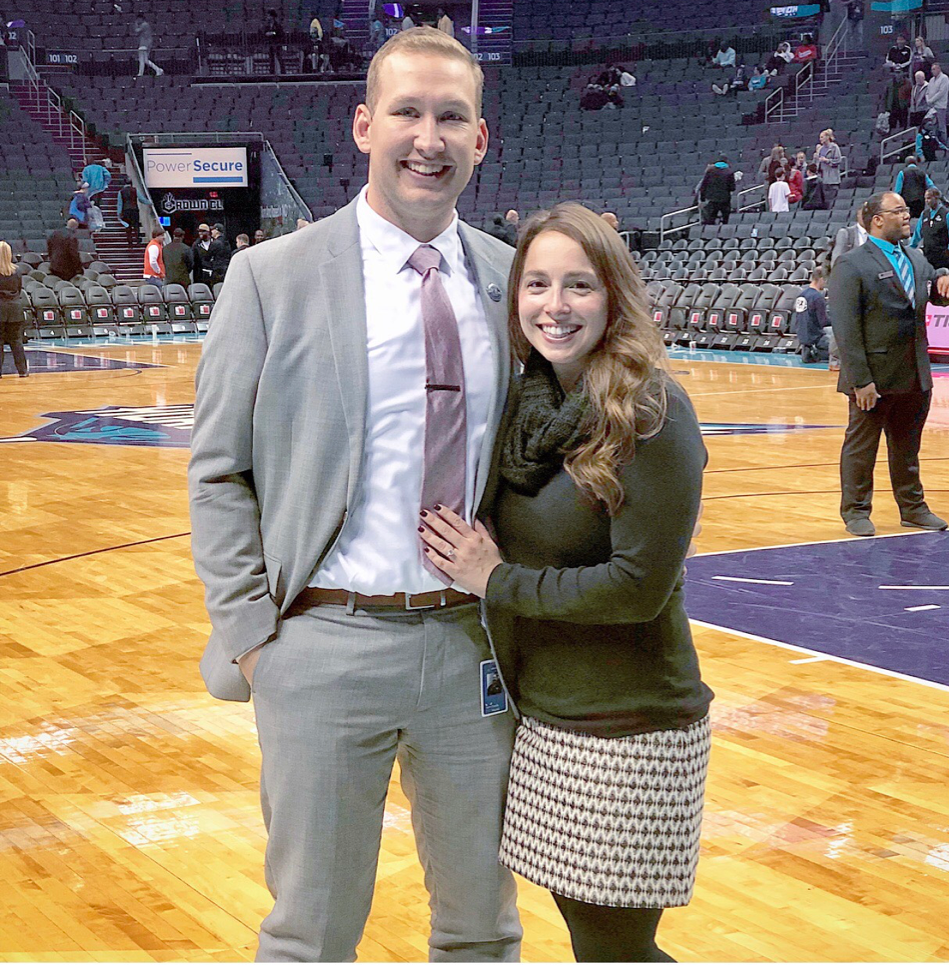
do attend 95% of Hornets home games, it's one of the best parts of my job!
Why did you choose to work in the sports industry? Do you have any important lessons
you’ve learned?
I do what I do because it combines interpersonal communication, competition, and creativity
all into one. At its root, I'm helping people, and that's my true passion. I have
the ability to provide a solution to business owners to help them grow their livelihood.
No two days are the same, and everything I do has a direct impact on the overall health
of our organization.
The number one lesson I've learned throughout my career is the importance of a network.
Building authentic relationships with others in the industry, as well as business
owners and managers, has a profound influence on overall success. I have always enjoyed
meeting new people, but never considered myself great at "networking." It wasn't until
grad school that I learned the value of a network. It's essential to understand that
the key to building a network is making sure you give as much as you take. Touching
base with people for no reason other than just to catch up will pay dividends. Also,
the best in the industry are willing to help others without asking something in return,
that's important.
Why you think a business degree is beneficial in the sports industry?
I use my business degree every day. Gone are the days where companies spend six figures
on a sign because the CEO thinks it looks good. Being able to read, digest, and explain
relevant data and analytics has become an essential skill in our world. There are
hundreds of ways to measure the success of a marketing campaign, and I have to be
able to understand how to prove success to a partner in a way they deem appropriate.
Outside of data and analytics, my job requires that I understand how any company works.
How do they make money, grow, and profit? How can they utilize the resources we can
provide through the Hornets to help aid their growth? Without my business degree,
I would have had a much steeper learning curve.
What you are focusing on in the Sports Sales class as an instructor?
Sales is a tricky term. It's often is seen in a negative light, related to making
hundreds of phone calls, repeated failure, getting hung up on, etc. Most people don't
realize that sales is applicable in every facet of life. If you're interviewing for
a job, you're selling yourself. If you work in marketing, you're selling your company
to consumers. If you work within a foundation or nonprofit, you're selling your cause
to those you help, and those who you need to support your cause.
My main goal for this course is for our students to walk away with a true understanding
of what sales is, and to open their eyes to the side of sports that most turn their
nose up at.
What can students expect in the sales class?
Students can expect real world application to traditional coursework. Every sales
lab and project I assign will have real value that students will be able to apply
throughout this course, and to other areas, as well. We'll walk through all the different
types of sales within the industry, the hierarchy of an organization, and ultimately
provide the students with essential skills and knowledge as they near the beginning
of their own careers