


Twenty years of Arctic report cards
Ned Rozell
907-474-7468
Jan. 30, 2026
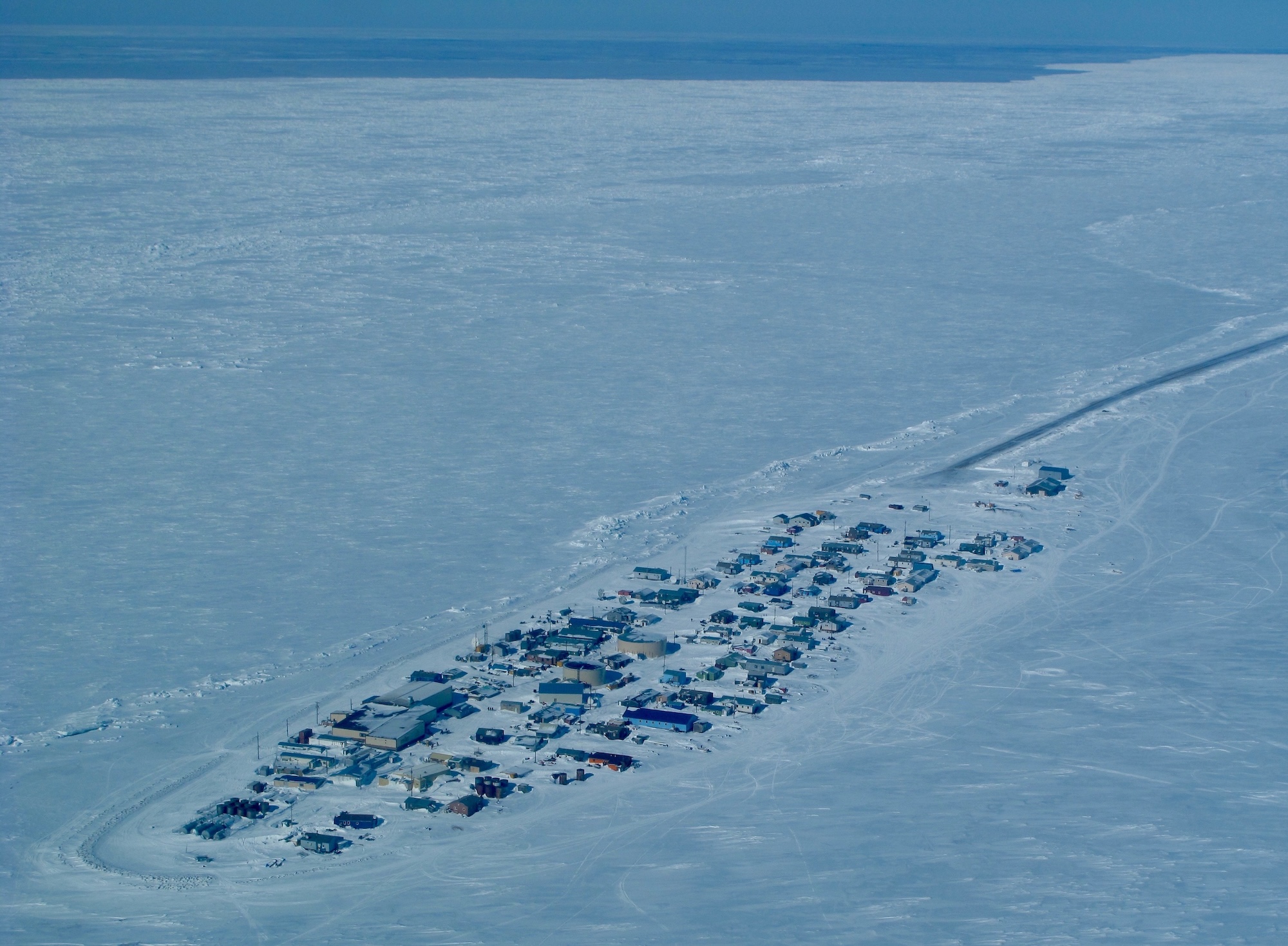
Northern sea ice, such as this surrounding the community of Kivalina, has declined dramatically in area and thickness over the past few decades.
Twenty years have passed since scientists released the first version of the Arctic Report Card, now a staple at the Fall Meeting of the American Geophysical Union.
Way back in 2006, at the Moscone Center in San Francisco, National Oceanic and Atmospheric Administration press people handed a paper version to reporters. Now it is a digital affair, more than 100 pages.
I sat in on the first Arctic Report Card press conference 20 years ago, and most of the years since. Here are some of the reported changes in the top of the world that have affected the rest of the globe.
Twenty years ago: The impetus for the first Arctic Report Card was a record low sea-ice extent scientists noticed in 2005. The sea ice that floats on the Arctic Ocean waxes and wanes with the seasons, growing in winter and shrinking in summer. In 2006, researcher Mark Serreze of the National Snow and Ice Data Center at the University of Colorado referred to the Arctic, particularly the large concentration of sea ice floating on the ocean, as “the refrigerator of the northern hemisphere.” He and other scientists urged that the rest of the world would notice as the fridge lost its power.
Fourteen years ago: Jim Overland of the Pacific Marine Environmental Laboratory in 2012 spoke of why shrinking sea ice might matter to someone who doesn’t live on a far-northern shore. Extreme northern warming “influences mid-latitude weather and storms. It creates a more wavy jet stream.”
That wavy jet stream opens a door between the Arctic and lower latitudes, possibly influencing the creation of giant hurricanes. Scientists gave the example of Superstorm Sandy, which blasted the East Coast of the U.S. and the Caribbean that year.
Eight years ago: In a 2018 study of 11 different fish species in the Bering and Chukchi seas, Chinese researcher Chao Fang found microscopic pieces of plastic in every one of more than 400 fish. Karen Frey, a geographer at Clark University, said the plastic flows up on ocean currents.
“All roads in the global ocean lead to the Arctic,” she said in a report card press conference.
Six years ago: By 2020, the lack of sea ice off Utqiaġvik had made it the most climate-changed community in America, with weather more similar to a Scandinavian coastal city than the town with frigid winters it had been for so long. The late Craig George reported over Zoom that bowhead whales swam in record numbers off Utqiaġvik because of an abundance of zooplankton that were inhibited by the sea ice before.
Five years ago: Bering Sea coastal residents reported much more ship traffic and floating plastic trash than ever before on their shores. Gay Sheffield of Alaska Sea Grant, part of the University of Alaska Fairbanks, worked alongside those in coastal communities to document and clean up more 350 items that washed ashore, “most with Russian, Korean, and/or Asian lettering.”
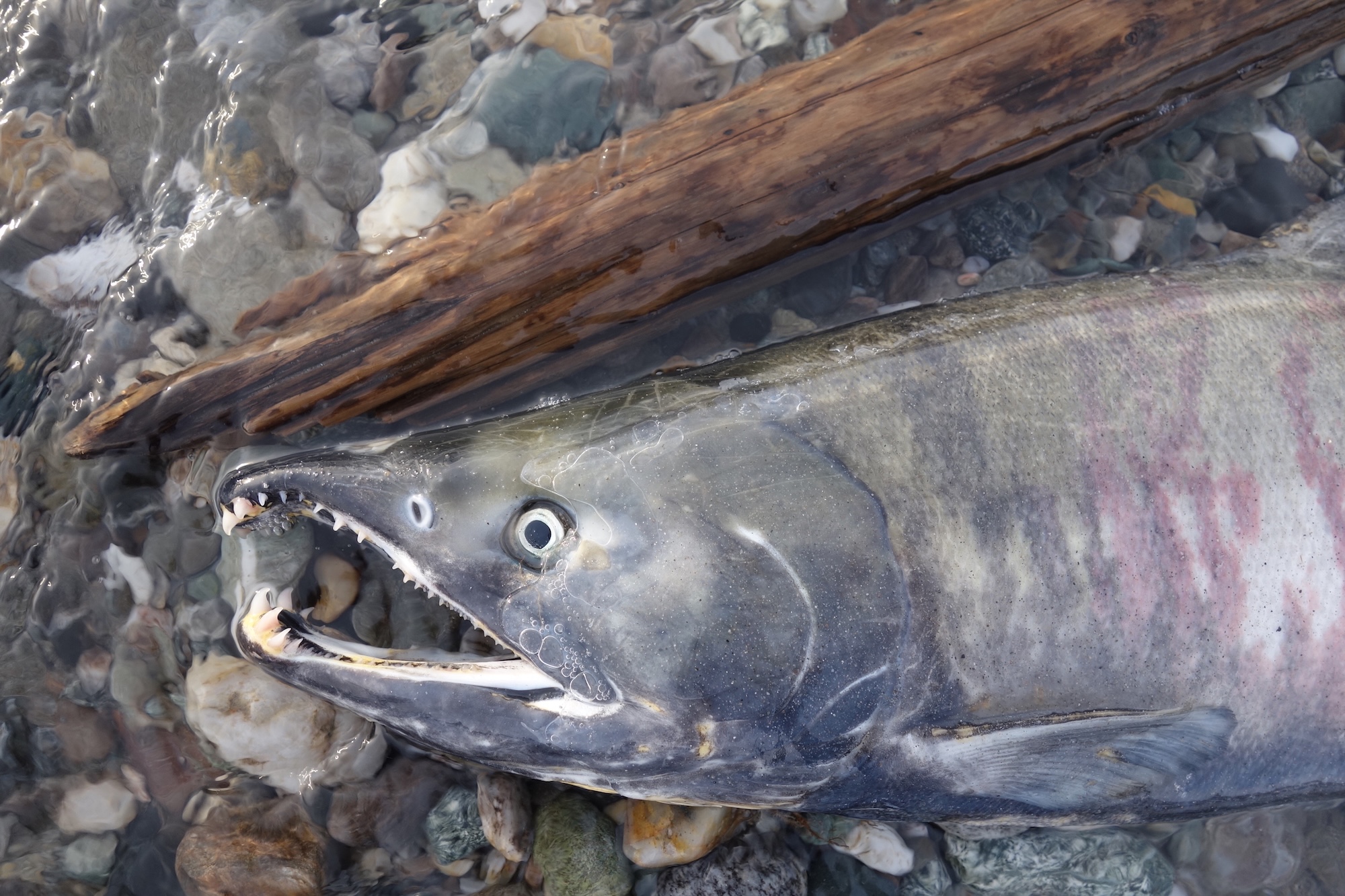
Chum salmon, such as this one that returned to the Delta River to spawn, recently crashed in numbers along with Chinook salmon.
Four years ago: Robb Kaler of the U.S. Fish and Wildlife Service in Anchorage and other Arctic Report Card authors noted that people found about 1 million dead seabirds on Alaska’s western coast and the Gulf of Alaska in the last decade. That compares to the 1 million dead birds found on beaches in the 40 years preceding that.
The warmer ocean has probably caused nutrient-rich fish like sand lance and capelin to decline. This has happened while less nutritious species like juvenile walleye pollock have increased in the waters offshore of western Alaska. Biologists referred to pollock as “junk food.”
Three years ago: In 2023, report card researchers wrote about the crash of chum and Chinook salmon in the Yukon and Kuskokwim rivers, along with simultaneous record high numbers of sockeyes harvested in Bristol Bay.
Chinook salmon, also known as kings, began declining in Alaska’s largest and second-largest river systems in the early 2000s. In summer 2023, no one on the Yukon River could fish for Chinooks. Alaska Native people had caught and eaten salmon for at least 12,000 years.
Chum salmon started to decline a bit later than Chinooks, but a similar dramatic decrease happened. As is the case with Chinooks, no one has been able to fish for chums the past few years.
Unlike Chinooks and chums, which live the majority of their lives in much warmer ocean with less nutritious prey, sockeye salmon spend the first year or two in Alaska lakes. Warming there has led to more plankton and other types of food they eat.
Two years ago: In December 2024, Brendan Rogers of the Woodwell Climate Research Center in Falmouth, Massachusetts, said that the far northern landscapes — for millennia places where frozen ground and new plants trapped more carbon than they emitted — were now a “small net source” of greenhouse gases wafted to the atmosphere.
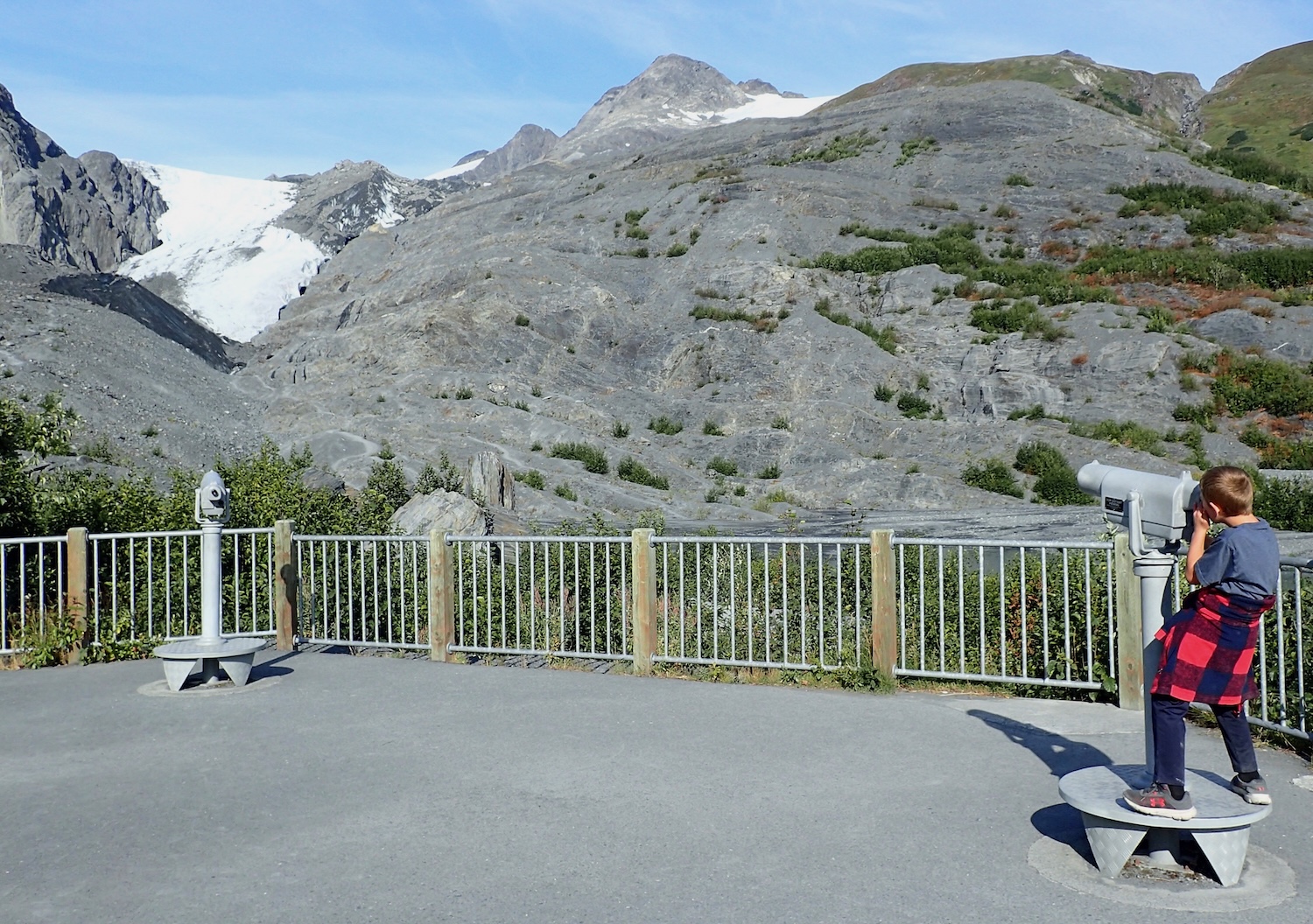
A boy uses a viewing scope to look at Worthington Glacier, near Valdez. Alaska glaciers have shrunk the height of a 10-story building since 1950.
Why? Warmer air temperatures have thawed ground that had been rock solid since the time of woolly mammoths. Microbes suspended in the deep freeze are waking up, eating ancient vegetation and other palatable stuff, and emitting their gases.
The most recent report card: Rick Thoman of UAF’s Alaska Center for Climate Assessment and Policy — a fitting report card editor for the last six years — recently summarized the December 2025 version.
In the preceding year, Earth’s area north of the Arctic Circle had the warmest air documented since 1900. The sea ice maximum in March was the lowest humans have been able to document by satellite since 1979. Alaska glaciers have shrunk the height of a 10-story building (of which there are none in Fairbanks) since 1950. More than 200 streams and rivers in the Brooks Range and a bit farther south and west have turned a rusty orange due to permafrost thaw releasing iron, aluminum and other minerals.
Since the late 1970s, the University of Alaska Fairbanks Geophysical Institute has provided this column free in cooperation with the UAF research community. Ned Rozell is a science writer for the Geophysical Institute.