


New film documents community resilience in Western Alaska
Tom Moran
907-474-2622
Dec. 15, 2025
A new short film details ways that residents in Western Alaska are responding constructively to changes to their local environment.
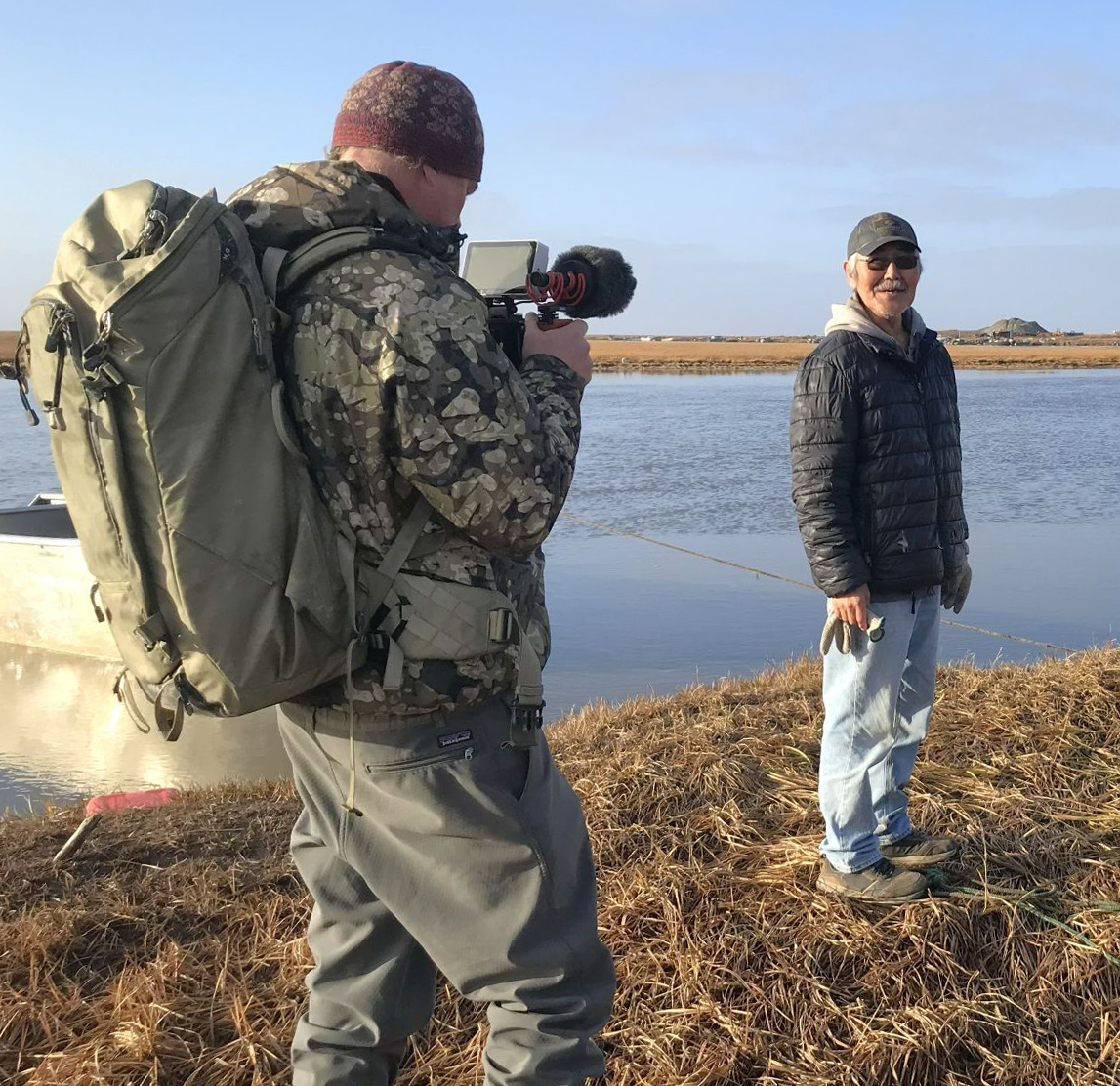
Ryan Peterson films retired schoolteacher James Ayuluk in Chevak in 2022.
“Cumikluten (Pay Attention)” is a 36-minute documentary produced by Polaris, an interdisciplinary project to identify sources of resilience in the rural Western Alaska communities of Chevak and Dillingham. The film follows local residents as they describe the impacts of environmental change on the two communities and show the various ways people are confronting it.
“It’s really a celebration of the resilience of the communities and people of Western Alaska,” said Davin Holen, coastal community resilience specialist with Alaska Sea Grant at UAF and a social scientist on the project. “We want to demonstrate that even when confronted with challenges, these communities are resilient, and that people want to remain on their ancestral lands.”
From 2020–2025, researchers with Polaris (which stands for Pursuing Opportunities for Long-Term Arctic Resilience for Infrastructure and Society) worked with Indigenous collaborators in Chevak and Dillingham to quantify environmental changes through natural science approaches. They also tracked local perception and responses through social science methods.
The communities face challenges on multiple fronts. Both are confronted with increased coastal erosion and susceptibility to severe storms, such as Typhoon Merbok in 2022 and the recent Typhoon Halong. Wildlife habitats are also changing, forcing residents to alter their subsistence practices.
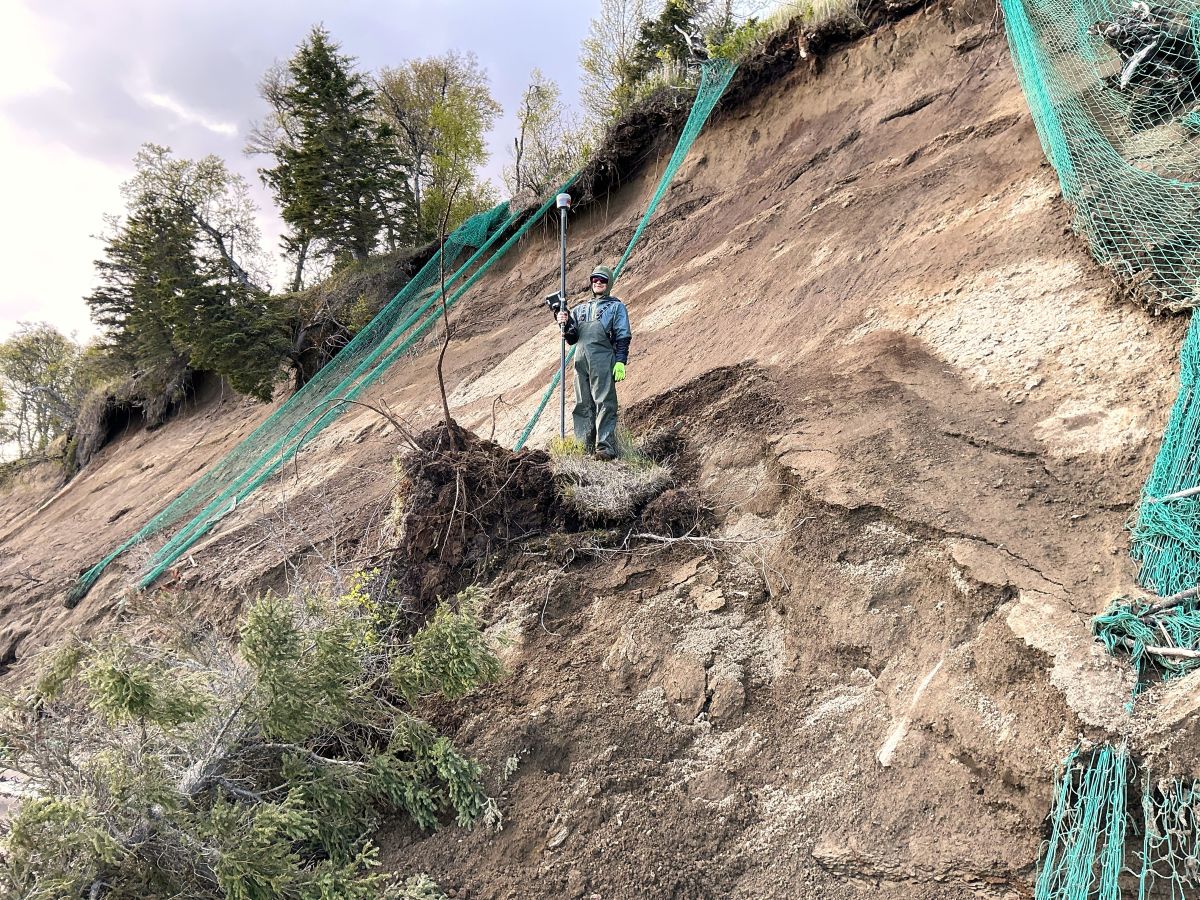
UAF graduate student Seth Classen carries out a coastal topographic erosion survey in Dillingham in June 2025.
The film tracks residents of the two communities as they hunt, forage, garden, teach and learn, describing in the process the changes they see around them. The narrative reveals many sources of community strength: deep veins of local ecological knowledge, opportunities for younger generations to draw on the wisdom of elders, an ingrained tradition of sharing resources, and a drive to revitalize subsistence traditions.
Holen said a major goal of the project was providing data, decision support tools and outreach products to coastal communities in Western Alaska. He said the film is a valuable method of demonstrating local residents’ capacity to adapt.
“There has been a lot of negative storytelling about the impacts to communities of environmental change,” he noted. “We wanted to tell a positive story of the resilience of Western Alaska communities. And (filmmaker) Ryan Peterson really did that, he did a really good job to tell that story.”

Davin Holen, back, and Roy Atchak view the Ninglikfak River in Chevak. Atchak is first chief of the Chevak Native Village and president of the Chevak Company Corp.
The Polaris project was funded by the National Science Foundation. The project team included scientists from UAF, the University of Alaska Anchorage, The Pennsylvania State University, Michigan Technological University and Alaska state agencies, with the support and cooperation of tribal organizations in the Chevak and Dillingham areas.
Three University of Alaska faculty served as co-principal investigators: Holen, UAF professor of coastal geography Chris Maio (who is featured in the film, as is Holen) and UAA professor of economics Lance Howe.
The video was produced by Ryan Peterson of Alaskanist Stories and is dedicated to the late Todd Radenbaugh, a former professor of environmental science at the UAF Bristol Bay Campus.
The film “Cumikluten (Pay Attention)” is available on YouTube.
ADDITIONAL CONTACT: David Holen, 907-786-0751, dlholen@alaska.edu
127-26