


Researchers begin 1,600-mile journey across Alaska
Katelin Avery
907-474-5414
March 20, 2026
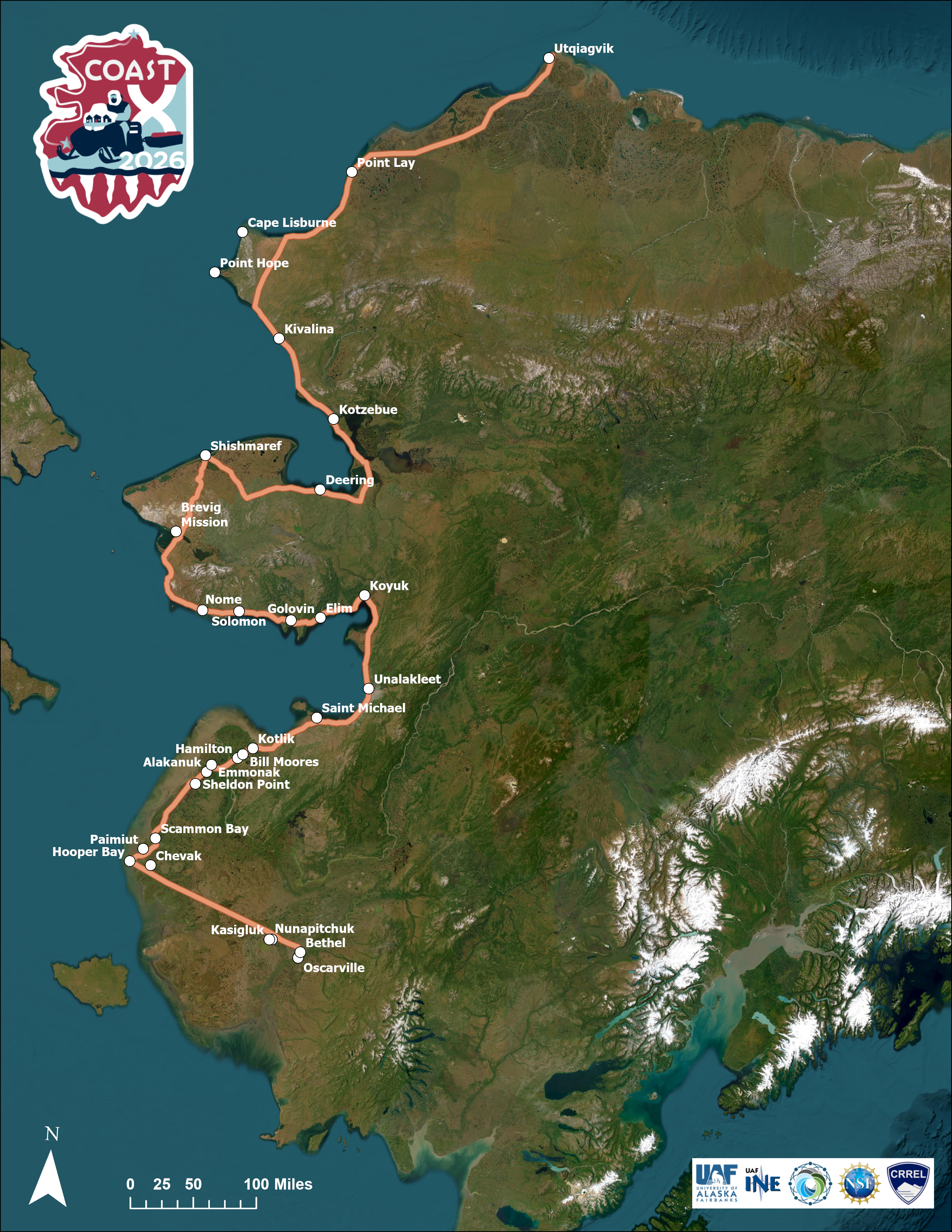
A map of western and northern Alaska shows the COAST-X 2026 expedition route connecting coastal communities from Bethel north to Utqiaġvik, with labeled stops including Hooper Bay, Nome, Kotzebue and Point Lay.
University of Alaska Fairbanks researchers will launch a 1,600-mile snowmachine expedition
along Alaska’s western and northern coasts Saturday, March 21, to exchange information
about the evolving environment with communities en route.
The journey from Bethel to Utqiaġvik will be led by UAF Institute of Northern Engineering
researchers Benjamin Jones and Phillip Wilson.
The project is dubbed the Collaborative Observations of the Arctic Shorezone: a Traverse
for Knowledge eXchange, or COAST-X.
While the distance covered will roughly equal a trip from Miami to Montreal, COAST-X
isn’t just about covering ground. It’s about connecting it.
The team will stop in more than a dozen communities across the Yukon-Kuskokwim Delta, Norton Sound, the Bering Strait and the Chukchi Sea coast. In each, residents will share what they’re seeing, such as changes in sea ice, shoreline erosion and shifting permafrost. The researchers will bring tools, data and context. They’ll also visit schools.
The effort will focus on understanding how northern systems and communities are changing and what that means for access, infrastructure and life along the coast.
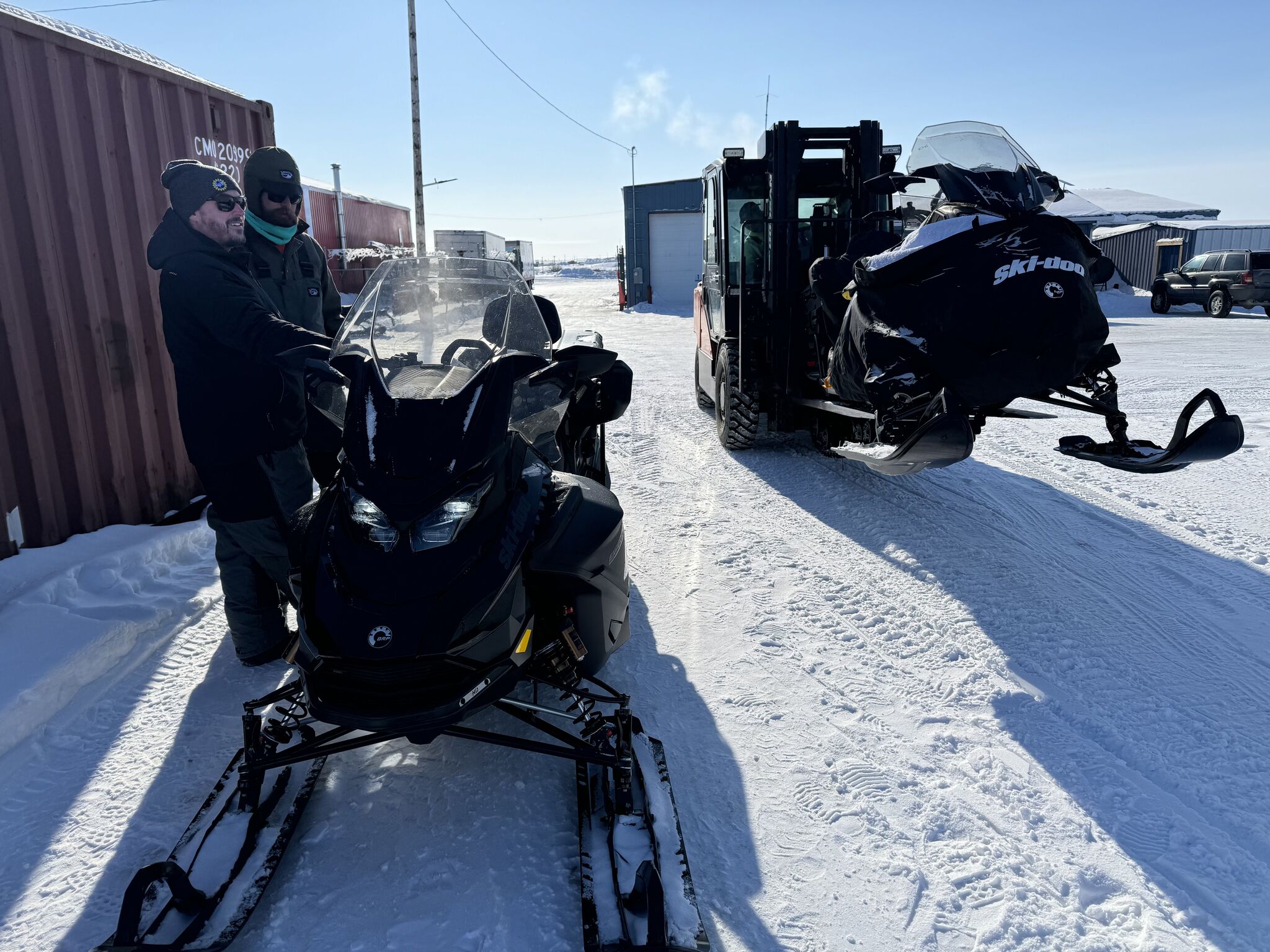
UAF researchers Benjamin Jones, left, and Phillip Wilson prepare snowmachines and cargo in Bethel, Alaska, in preparation for a 1,600-mile coastal traverse to Utqiaġvik.
This winter has delivered unusually cold temperatures and difficult snow conditions, creating a narrow window for the traverse. The team is now in Bethel, moving through final preparations, collecting gear, packing sleds, meeting collaborators and connecting with local people.
The team will share real-time tracking. They’ll post field updates and observations at the project’s blog and website, as well as on LinkedIn.
The work is supported by the National Science Foundation through the UAF-led ACTION
project — the Alaska Coastal Cooperative for Co-producing Transformative Ideas and
Opportunities in the North. The U.S. Army Corps of Engineers’ Cold Regions Research
and Engineering Laboratory is a collaborator.
ADDITIONAL CONTACT: Melissa Ward Jones, research assistant professor and director of INE’s Water and
Environmental Research Center, mkwardjones@alaska.edu
192-26