


Arctic LENS connects NASA science with community-based monitoring
Jennifer "Moss" Moss
907-474-7189
Oct. 12, 2026
New funding will expand a 30-year community-based monitoring and education outreach program across Alaska, helping bridge local observations with learning from NASA Earth science missions.
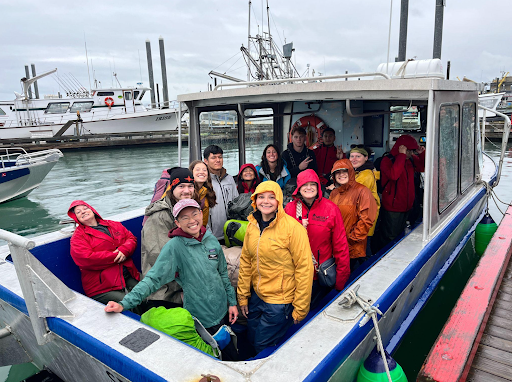
Undergraduates participate in an Arctic and Earth SIGNs research intensive trip during summer 2026 in Kachemak Bay. Arctic LENS will extend this program.
The $5.5 million competitive NASA Science Activation Award covers five years. The project includes over 40 collaborators at 11 institutions nationwide, with many from the University of Alaska Fairbanks.
With the funding, the UAF International Arctic Research Center and partners are launching the Arctic Learning and Engagement with NASA Data for Community Solutions project, or Arctic LENS. Katie Spellman, research associate professor and co-director of education at the center, leads the initiative. Co-investigators include UAF team members Elena Sparrow and Matthew Balazs, Malinda Chase of the Association of Interior Native Educators, Maria Tzortziou of the City College of New York and Antonio Mannino of NASA’s Goddard Space Flight Center.
The funding also continues to sustain the Global Learning and Observations to Benefit the Environment program, which Sparrow brought to UAF in 1996 to support youth and community engagement in science and environmental monitoring. GLOBE is a worldwide effort to coordinate crowdsourced observations of the environment across 128 countries.
“Long-term projects like GLOBE help break the practice of short funding cycles that bring science in spurts to Alaskan communities,” said Sparrow, a UAF research professor. “GLOBE has allowed us to build long-term relationships and trust between communities in Alaska and science institutions like UAF or NASA.”
Over the past 10 years in Alaska, GLOBE reached 136 communities and worked with 170 partner organizations or schools, 3,741 educators and 12,547 youth participants through a prior NASA cooperative agreement with UAF called Arctic and Earth STEM Integrating GLOBE and NASA assets. It also builds upon the youth and community engagement of the UAF Alaska Coastal Cooperative, Bonanza Creek Long Term Ecological Research Schoolyard Program, and the educator training models created by the Association of Interior Native Educators. The Arctic LENS project will build on these connections to further bridge Earth observations from the land, sea and sky with daily life in Arctic communities.
Arctic LENS combines foundational learning and local environmental monitoring through culture and art, connections to NASA Earth observation missions, and Arctic community collaboration.
The project's teaching and learning span multiple generations through a video series called "GLOBE Grandma" that supports elementary-level science, high school GIS lessons, drone workshops, UAF Climate Scholar undergraduate courses and professional-level development support. Through partnerships with the Association of Interior Native Educators, traditional values, language, arts and crafts are woven into the fabric of science education.
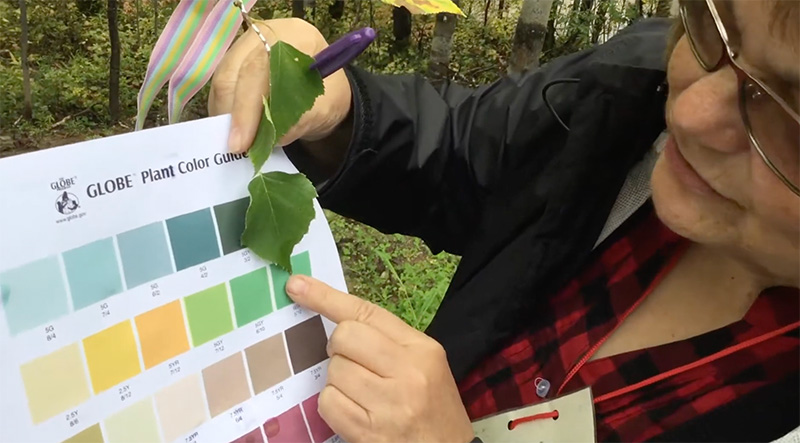
The Arctic LENS project will connect NASA missions such as Arctic Coastlines: Frontlines Of Rapidly Transforming Ecosystems to youth and community learning in Alaska. Activities will include science camps, after-school clubs, citizen science campaigns across all seasons, and high school and undergraduate research-intensive courses, including a research cruise from Nome to Nuiqsut. The activities will give Alaskans hands-on experience that integrates NASA Earth mission goals for observation and system monitoring.
"What excites me most is seeing students I worked with on science projects years ago in rural village classrooms now walking into my UAF climate courses as young adults," Spellman said. "This new funding allows us to continue to build genuine, lifelong, culturally sustaining pathways in doing and using science from early childhood straight through to adult community leadership."
Rapidly changing ecosystems require access to real-time, ground-validated conditions for normal activities like safe travel on frozen waterways, vegetation changes for harvesting, and permafrost thaw for making infrastructure decisions. Arctic LENS flips the classic top-down science model and instead starts with community observations and priorities, then sees where science can help.
“What's great about this project is that the science is rooted in place and done with communities, not just in them,” Balazs, a UAF research assistant professor, said. “It allows the education activities and research to address local needs and priorities, while making science more relatable for youth and giving researchers a deeper understanding of the area.”
While community priorities guide observation, several NASA Earth observation missions provide satellite data as a supporting tool rather than as a driver for investigations.
ADDITIONAL CONTACT: Katie Spellman, klspellman@alaska.edu, 907-474-1554
056-27