
Slugs
PMC-10070 View this publication in PDF form to print or download.
Slugs can be damaging pests to many Alaska gardens. They are adaptable, feed on a wide variety of organic matter and are seclusive, making management difficult. Using an integrated pest management approach allows growers to assess damage and evaluate management options.
Biology
Slugs are mollusks, although slugs appear quite different from some of the more familiar mollusks such as clams or octopi. Slugs belong to the largest group of mollusks, the gastropods, which consists of a diverse group of over 85,000 species of marine, freshwater and terrestrial animals. Slugs have a complex evolutionary history with different groups independently losing their shell and adapting to breathe air. Although they may look similar, the types of slugs you see in your garden may not be closely related. This may explain why some management techniques work, and others may not.
Slugs prefer areas that are cool, damp and sheltered; Alaska has lots of slug habitat. Alaska is home to several native slugs like the banana slug (Ariolimax columbianus), the meadow slug (Deroceras laeve) and the reticulate taildropper (Prophysaon andersoni). But our pest species are more often non-native species like the black slug (Arion ater), the leopard slug (Limax maximus) and the grey garden slug (Deroceras reticulatum). Seventeen species of slug have been found in Alaska and identifying them can be difficult. Cooperative Extension agents may be able to assist with identification.
Most slugs live 1 ½-2 years. Newly hatched slugs are small, only a few millimeters long, but can grow quickly. Juvenile slugs look like adult slugs in color and features and spend most of their time in the soil. It takes most species several months to a year to reach maturity. Slugs are hermaphrodites, having both male and female sex organs. When most species mate, both will receive a sperm and have the ability to lay fertilized eggs. Some will quickly lay eggs and die, while other species will remain active, laying a few eggs at a time for several months.
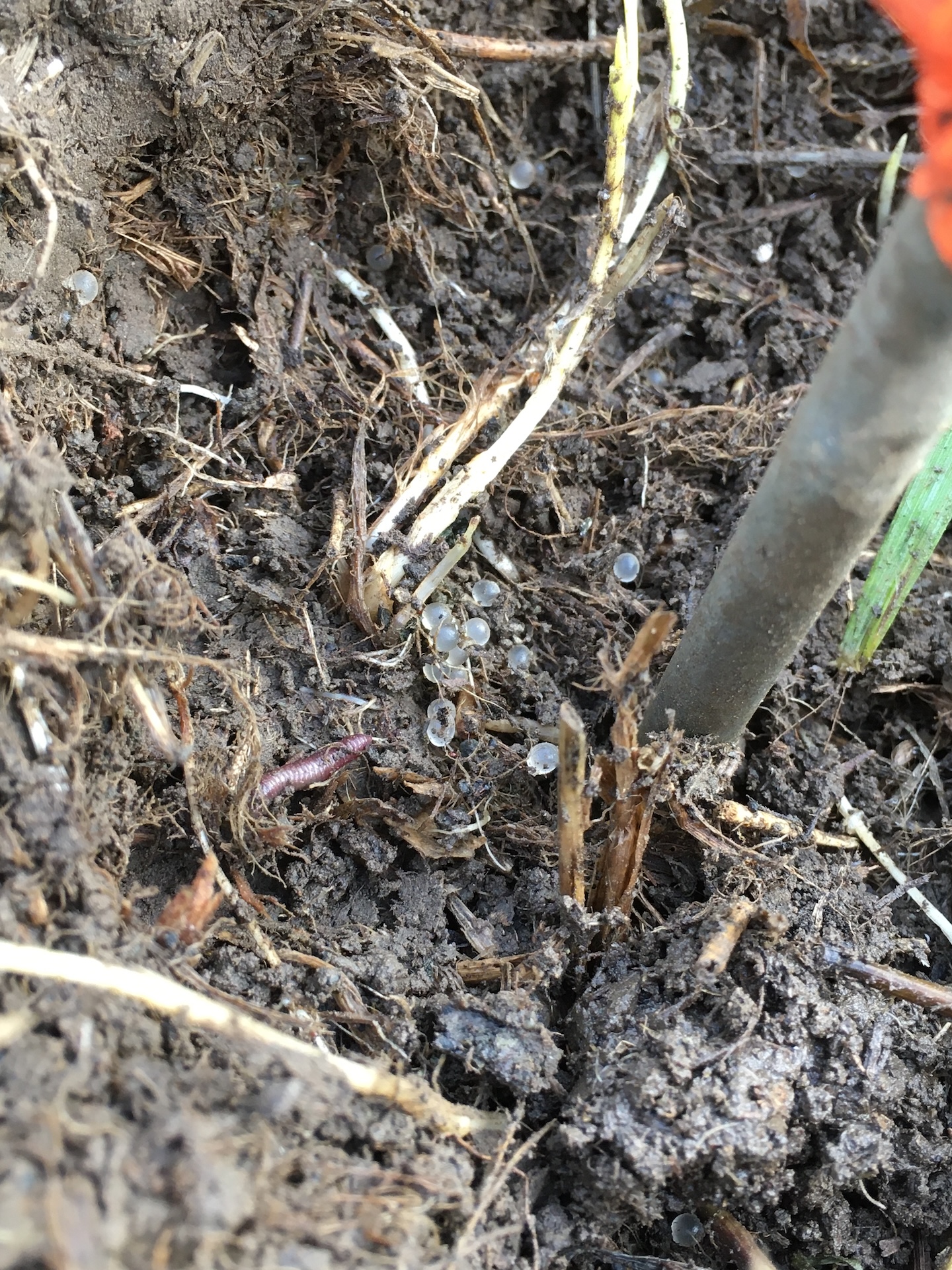
Slugs are not cold-tolerant animals and will succumb to below freezing temperatures quickly. Many slugs in Alaska overwinter in the egg stage. Eggs are often laid in leaf litter or under several inches of dirt where the winter temperatures rarely drop much below freezing. Slug and snail eggs may resemble earthworm eggs, but are opaque clear-to-whitish spheres about 2 millimeters in diameter, while earthworm eggs are often more oblong and ridged. In warmer parts of the state, juvenile and adult slugs may overwinter in well-sheltered and insulated places.
Slugs will feed on a variety of plants, fungi, animal feed and even feces. A slug’s mouth has a rasp-like organ, called a radula, with many small teeth that it uses to cut away food bits. Fresh bites may look like they have tooth marks. Often this creates a round or oval hole in a plant leaf. Slugs also may eat from the edge of a leaf, sometimes removing entire leaves. They will feed directly on stems, tubers and carrots, tunneling into the plant or vegetable. Slugs are active diggers and will feed voraciously on freshly planted seeds and new seedlings.
Slug Control
Monitoring
When dealing with slugs, it’s important to use an integrated pest management approach. The first step is identifying the pest. Slug damage can easily be confused as damage from other pests, so it’s important to verify their presence.
Searches early in the morning are the most productive and it’s important to check the underside of leaves, especially leaves on the ground. Because slugs feed on a wide variety of plants, looking for similar damage on various types of plants can be an indication of slugs. Slugs are capable climbers, and although most damage will be on leaves at the ground level, they will also feed on terminal leaves and flowers. Slugs leave a mucus trail, and it may be possible to see these trails long after the animal is gone.
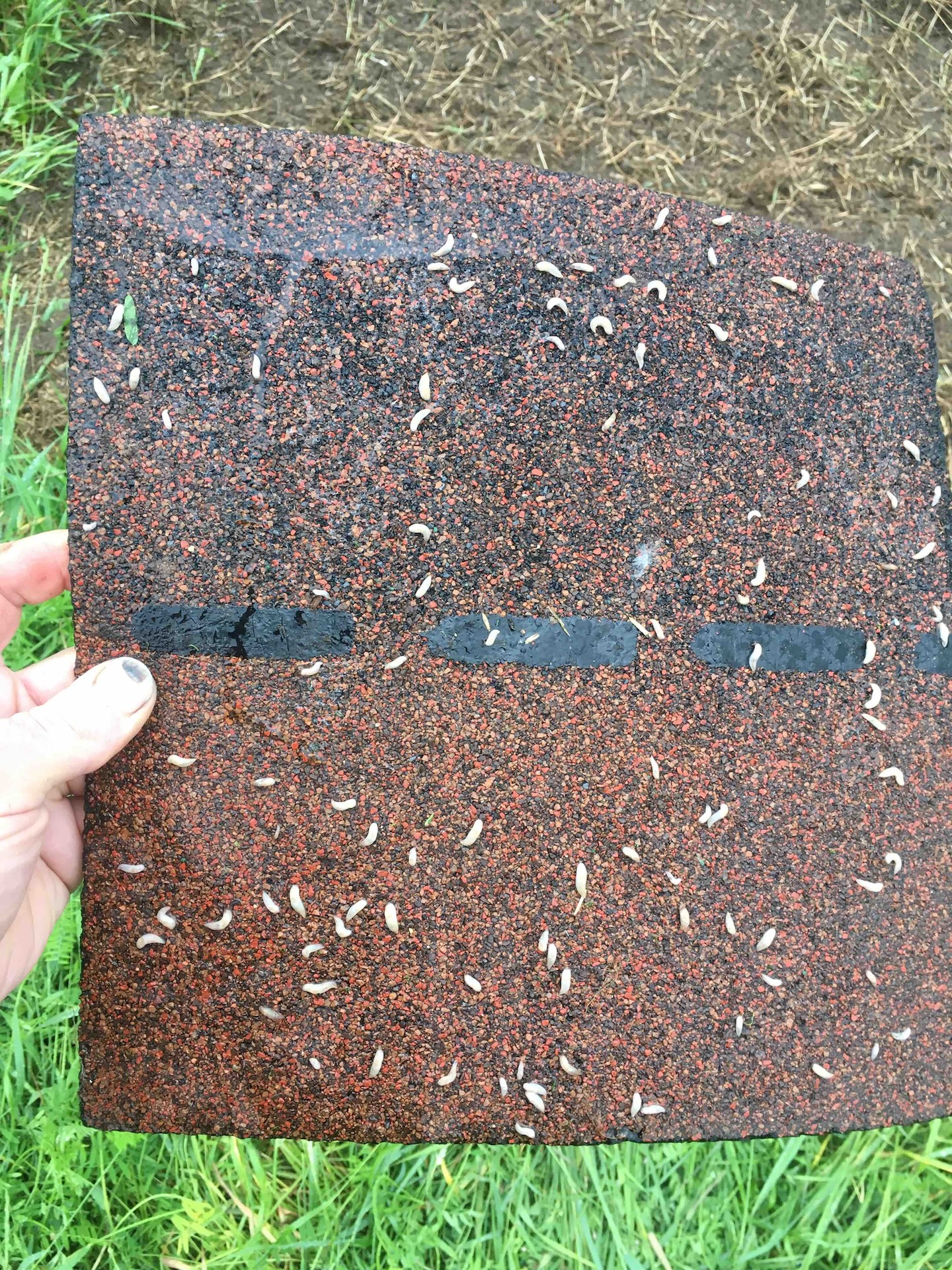
“Refuge traps” can be effective monitoring tools. You can make a refuge trap by laying out a piece of roofing shingle or wood near plants suspected of being fed upon by slugs. The slugs will hide under the trap and an early morning check of the trap’s underside will reveal if slugs are present. A good way to categorize the number of slugs found under traps is none, few or many. Slugs will use a refuge trap for a while, then move on, therefore, the number of slugs found under the trap isn’t truly representative of the number of slugs around. As fall brings less daylight and more moisture, traps will become less effective as there is more suitable habitat elsewhere. There is no action threshold for slugs.
It’s important to recognize that eliminating slugs is an unrealistic expectation, but there are some actions that can control damage.
Manual control
If few slugs are found, hand removal can be productive. Look for them early in the morning. Removed slugs can be placed into a cup of salty or soapy water, and dead slugs should be discarded properly. Masses of dead, decomposing slugs will be unpleasantly fragrant, so discarding them in a trash can or treating them as you might treat bad meat is warranted. Some slug species have a tendency toward cannibalization, and leaving a dead slug on the ground may attract more unwanted visitors. It may also be desirable to wear gloves, as a slug’s response to attempted predation is to release a large amount of mucus.
Natural predators
Slugs have a variety of predators. There are native shrews, beetles, frogs and spiders that will feed on juvenile slugs, but many slugs will quickly grow too large to be a meal. Domestic birds, like ducks, and migratory birds, like cranes, will feed on larger slugs. However, Alaska’s slug pests are often non-native introduced species that lack any effective native species to control them. If using domestic birds, care must be taken to prevent the birds from eating the plant you are trying to protect, or allowing the birds to defecate on produce.
Sanitation
Proper garden sanitation is a good practice to reduce slug habitat. Slugs like decaying matter, so removing dead or half-eaten leaves helps. Careful pruning and plant layout to increase light and reduce both moisture and hiding places will reduce the number of slugs in an area. At the end of the season, proper sanitation is key, as many slug eggs are laid on plants and leaves lying on the soil. Good sanitation removes next year’s pests.
Barrier options
If slug numbers are large, habitat modification or barriers may be the most effective means of reducing damage. It’s important to identify areas in a garden or yard where slugs are found, as damage-causing slugs may be migrating from that area. Common areas of high slug density are lawns, compost piles, glens and ditches. Installing a barrier between those areas may be helpful, but no barrier is absolute.
Slugs need moisture. Therefore, using materials that do not retain moisture will be less attractive to slugs and limit movement. Options include changing garden pathways from wood mulch to gravel, or building raised beds from materials that do not hold moisture like plastic or metal.
Slugs are generally nocturnal and will look for cover during the day. Buffer areas that are kept vegetation free are less attractive to slugs. For larger growing areas, maintaining a tilled buffer strip around a garden will reduce the number of migrating slugs as the open dirt area is uninviting. These buffer strips can be increased by planting flowers and plants that slugs generally do not feed on, such as roses, peonies and geraniums.
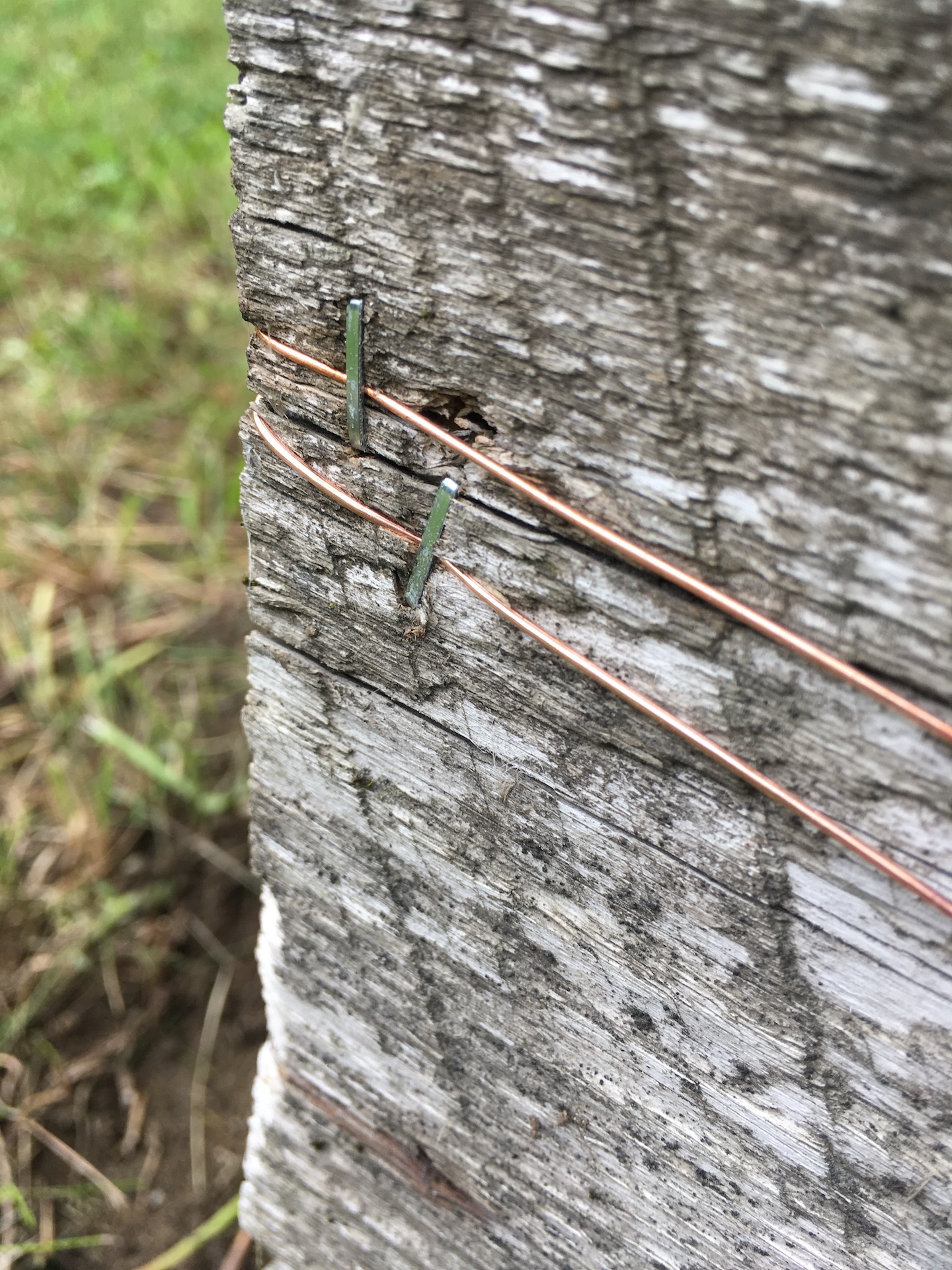
Two strong barrier options that slugs are less likely to cross are electric fences and bent metal fences. Electric fences work similarly to those you may see for moose but on a much smaller scale. An electric slug fence consists of two wires laid near each other, one with a positive charge and one with a negative charge and only 9 volts DC. When the slug touches both wires, it receives a shock and recoils.
Commercial options are referred to as snail fencing and used with the commercial escargot industry. For a small grower, it is possible to install these on a raised bed or the footer of a greenhouse. It’s best to install them on a vertical surface so thatshocked slugs fall back. They can be electrified with a battery, which allows them to be installed in various locations. Like other electric fences, it’s important to keep the fence area free of vegetation as this will arc the two lines and draw a charge.
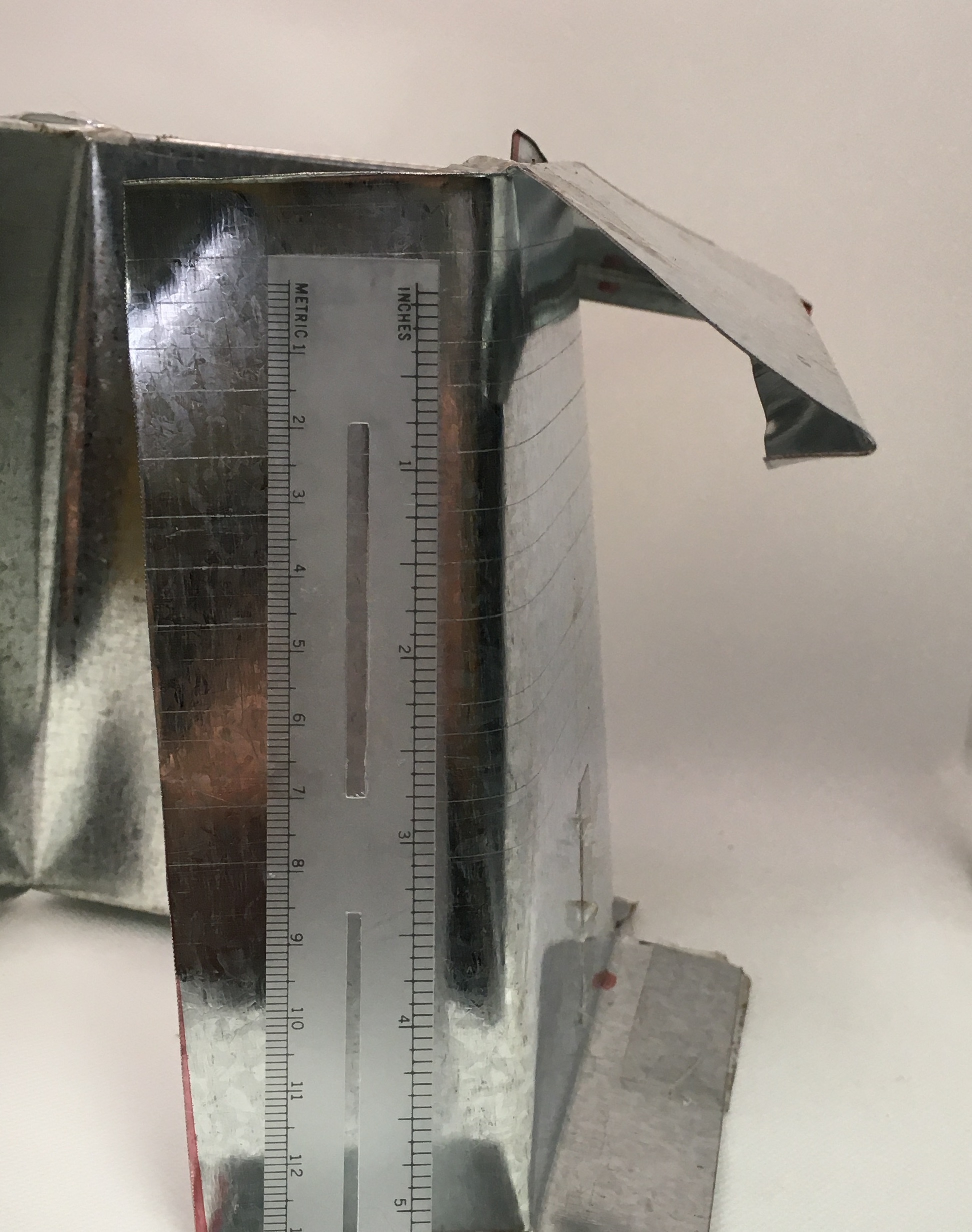
Bent metal fencing is similar to an edging fence. Slugs are capable climbers, so the design of the bend is important. Fences with multiple inward bends outperform single-bend fences or straight metal fences. Like electric fences, they need to be kept free of vegetation, which may function as a ladder for slugs. Slugs are also capable diggers and fence bases should be buried several inches into the soil. Costs of materials and availability limits the utility of this type of fence, but they are a generally low-maintenance option once installed.
Baits and traps
Depending on the species of slug and the time of year, baits can be an effective monitoring and management option. Slugs are attracted to yeasty or malty odors. Taking advantage of this, a simple homemade trap using beer may work to monitor and trap slugs. A beer trap consists of a plastic cup dug into the ground with the lip of the cup level with the soil. A few ounces of beer are added to the cup so slugs that climb down will drown. A plastic plate or wooden board may be suspended over the cup. This shelters the beer bait from rain but also makes the trap more effective as it creates an attractive dark area. These types of traps should be placed between a source population and the garden to intercept migrating slugs.
Commercial baits are often a yeasty pellet mixed with some type of pesticide. If using a pesticide, it’s important to read and follow the label. The label is the law. Pesticides are registered by the U.S. Environmental Protection Agency and have undergone vigorous testing. Always read and follow the label before buying, and when handling and applying pesticides. Pesticides are only safe and effective when applied according to label directions. If you have questions about pesticides, the Cooperative Extension can provide assistance.
Common home-use pesticides include active ingredients of sulfur, iron phosphate and sodium ferric EDTA. Both of the latter function by poisoning the slug with iron, which causes it to stop feeding. They are attractive because they can be sprinkled near food plants and have no residual risk when applied correctly. Synthetic bait options contain metaldehyde and are limited to commercial farm settings in Alaska. This compound disrupts the slug’s ability to produce mucus.
Bait-type pesticides don’t kill all that many slugs but do stop them from feeding, which increases yields. In Alaska, pellet baits can be difficult to use correctly as they often dissolve in excessive moisture. Proper storage of baits is also important. Improperly stored products may be attractive to dogs. Some products may contain a bittering agent to make them less attractive to mammals, which will be listed on the label. Documented poisonings by slug baits have been because of improper storage and not normal field use.
Topical pesticides
A variety of topical pesticide options are available for slugs. Most are marketed as “natural,” but it’s important to remember that these products are a pesticide and all contain something intended to kill. Research has found that low concentrations (0.5%) of spearmint or thyme essential oils mixed in water with a 1% inert soap solution works well on grey garden slugs (Deroceras reticulatum). Many commercial products contain variable amounts of essential oils, and care should be taken to purchase a product with enough oil to be effective. Essential oils also have no residual effect as the active ingredient volatizes quickly, so they need to be applied directly to the slug. This reduces the risk of non-target impacts, but also does nothing to prevent damage.
Solutions of ammonia are a popular social recommendation as a slug pesticide, but should not be used. Store-bought ammonia is not regulated and concentrations can contain from 1-10% ammonia. Higher concentrations may be very caustic and cause soil and plant damage. These products also contain other agents, which may be toxic to plants or animals. It’s important to remember ammonia is a cleaner, not a pesticide. Other social recommendations, like salt, are also discouraged, as salt can cause long-term soil damage.
A slug’s response to a topical pesticide is to release mucus, which may be difficult to wash away. Therefore, care should be taken not to use these types of products on slugs when they are on plants. Slugs can often be dislodged before spraying. Remember, eliminating all slugs is an unrealistic expectation.
Integrated slug management strategy
1. Identify the culprit: Verify the observed damage is caused by slugs
- Trap or monitor to collect specimens
- Identify the slugs, or contact Cooperative Extension for help (www.alaskapestreporter.org)
2. Evaluate the level of damage
- If little damage or few slugs are found, no action may be necessary
3. Examine habitat for possible slug attractants or population reservoirs
- If damage-causing slugs are migrating in, consider installing a barrier
- Consider making the garden less hospitable to slugs by:
-
- Thinning plants to increase airflow and decrease humidity
- Removing weeds to reduce slug hiding spaces and food resources
c. Consider moving decaying organic matter or other food resources nearby that may be attracting slugs to the area
4. Take management action if necessary
- If few slugs are found, try hand removal first
- Consider the use of a bait pesticide
-
- Evaluate application site, pesticide active ingredient, as well as cost and availability of products
- Consider if the environment is dry enough for bait use. Consult with the Cooperative Extension if there are questions.
c. Consider if a topical pesticide could be beneficial such that:
-
- Pesticides should be applied on the slug away from the plant
- The damage-causing type of slug is susceptible to the pesticide. Consult with the Cooperative Extension if there are questions.
5. Evaluate effectiveness of control option
- Continue to monitor plants for damage and slug activity
- Determine if control measures are having a desired effect
Slugs are a difficult and adaptive pest. Management will take time and effort. If considering pesticides, think about what an acceptable outcome will be. Eliminating slugs is an unrealistic expectation; there is far too much good slug habitat in Alaska. Taking action to reduce the slug population with manual removal, habitat modification, traps, or barriers may help reduce damage to acceptable levels.
To simplify information, trade names of products have been used. No endorsement of named products by the University of Alaska Fairbanks Cooperative Extension Service is intended, nor is criticism implied of similar products that are not mentioned.
Jozef Slowik, Extension IPM Technician. Originally written by Wayne Vandre, Extension Horticulture Specialist.
Revised February 2026