
Building Pollinator Habitat into the Alaska Garden
HGA-00501 View this publication in PDF form to print or download.
by Alexandria Wenninger, IPM Research Professional
Alaska is home to a beautiful diversity of pollinating insects, including bees, flies, beetles, wasps and butterflies. Pollinators are insects that gather floral resources, which include nectar and pollen, and in doing so move pollen from plant to plant. The insect gets food from the plant while also helping the plant produce seeds and fruit.
Nectar is a sugary liquid that gives pollinators energy for flight, thermoregulation and care of their young. Pollen is rich in protein and contains vitamins and minerals that are essential for the development of the larvae of some pollinators, such as bees.
Pollinators can be grouped into two subtypes: obligate pollinators and facultative pollinators. Obligate pollinators are pollinators that require floral resources to complete their life cycle.
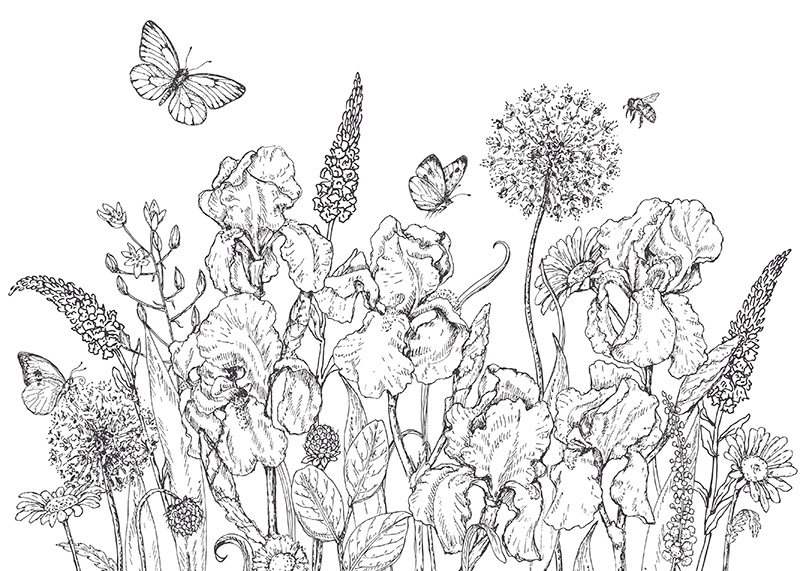
Our primary obligate pollinators in Alaska are bees, of which we have over 100 species! Facultative pollinators don’t require floral resources to complete theirdevelopment. However, access to floral resources benefits these insects by increasing their lifespan and allowing them to produce more offspring. Most pollinators in Alaska are facultative, which includes hover flies, predatory and parasitoid wasps, beetles, butterflies, moths and more.
Pollination increases genetic diversity of plants, which is essential for gardens, managed food systems and native plant communities alike. Pollination helps improve the quality and yield of many of the fruits and vegetables we work so hard to fill our freezers, jelly jars and root cellars with, and if we’re lucky, may even earn us a ribbon at the fair!
Plant breeders use pollination to combine genetics for desirable plant traits, such as yield, size or disease resistance to develop new varieties of fruits and vegetables. Pollination also helps our forests and meadows build resilience to face disturbances and changing environmental conditions.
Good pollinator habitat provides pollinators with a continuous supply of food resources, nesting habitat and overwintering sites, as well as protection from pesticides, invasive plants and non-native competitors.
Twelve Tips for Building Pollinator Habitat into the Alaska Garden
Plant flowers that bloom at different times of the season. Different pollinators emerge at different times throughout the summer. Plant a variety of flowers that allow for a continuous supply of floral resources for pollinators. Incorporate early bloomers such as willow, northern red currant, woolly geranium and Jacob’s ladder; midsummer bloomers such as alpine sweetvetch, western columbine and wild rose; and late bloomers such as fireweed, yarrow and goldenrod.
Plant flowers of different shapes. Pollinators vary in the size and shape of their bodies and mouthparts, which determines the flowers they can collect pollen and nectar from. Butterflies have a straw-like proboscis that can reach inside tube-shaped flowers, such as columbine, to sip nectar. Bumblebees have robust bodies that allow them to crawl inside hooded flowers, such as lupine and alpine sweetvetch. Beetles are clumsy fliers and need flat, wide flowers that offer room for landing, such as yarrow or cow parsnip. Pollinators with shorter mouthparts prefer more open flowers, such as cinquefoil and goldenrod.
Plant flowers of different colors. Some pollinators have preferences for certain flower colors. Bright yellows, purples, whites and pinks tend to be attractive to many pollinators. Variety is key!
Incorporate native flowers. While some of our pollinators are generalists and will obtain resources from many different flowers, others have more specialized relationships with our native plants.
Incorporating native plants into your landscaping can help attract and support pollinators that have preferences for native plant species. An example is the Clark’s mining bee. This early emerging native bee has a strong preference for willows.
Another is the Holarctic blueberry mason bee, which specializes in plants in the genus Vaccinium. It can be difficult to find native plants for sale in nurseries. However, native plants can often be grown from collected seed or can be transplanted with permission from the landowner.
Plant hollow and pithy-stemmed plants for cavity-nesting pollinators. Many cavity-nesting bees and wasps will excavate plant stems to use as nesting tunnels. Plants with hollow stems or stems filled with soft pith are most readily used, such as wild rose, goldenrod, red-berried elder and raspberry. Incorporate a variety of these types of plants, as different pollinators prefer different stem diameters.
Don’t be too eager to remove the dead stems from the garden. Many cavity-nesting pollinators nest in the stems after they are done actively growing, and their young won’t emerge from those nests until the following year. Dead stems can be pruned to 8-18” in early spring and then left standing for two years to allow time for pollinators to nest and emerge from the stems.
Build structure and habitat complexity. Building habitat complexity into your yard and garden is a great way to provide nesting and overwintering habitat for pollinators. Brush piles can provide habitat for nesting bumblebees during the summer as well as winter shelter for many other pollinators. Areas of bare, undisturbed ground and sandy banks provide areas for ground-nesting bees to build nesting tunnels for their young. Downed logs and decaying wood are used as nesting habitat by some cavity-nesting bees and wasps.
Crevices in rock piles and edgings are used by some species of cavity-nesting bees and provide overwinter shelter for pollinators, as well. Allowing leaf litter and other debris to remain over flower beds in the fall can help provide insulation for overwintering pollinators.
Make use of sunny areas. Sunny areas facilitate blooming and nectar production, creating more resources for pollinators. Warmth from the sun also allows pollinators to fly at lower air temperatures and allows them to be active earlier in the morning and stay active later into the evening.
Manage invasive plants. Many invasive plants are excellent spreaders that outcompete other flowering plants, reducing floral diversity. While some bees make use of invasive flowers, work in Southcentral Alaska has found that native flowers support more pollinator species than invasive flowers.
Floral diversity is essential for attracting and supporting our wonderful variety of Alaska pollinators, so don’t be afraid to remove those invasive plants — the pollinators will thank you! Your local Cooperative Extension Service has resources for learning how best to manage invasive plant species.
Provide additional foods for facultative pollinators. Many of our Alaska pollinators have varied diet requirements depending on their life cycle stage. While adult butterflies are pollinators, larval butterflies, called caterpillars, are herbivores. Many caterpillars need specific host plants, so if you’d like to attract a favorite butterfly species to the garden, it helps to plant the appropriate caterpillar food. For example, caterpillars of the Canadian tiger swallowtail and the mourning cloak feed on leaves of broadleaf trees and shrubs, such as cottonwood, willow, aspen or birch. Milbert’s tortoiseshell caterpillars specialize on nettle leaves.
Alaska is also home to many pollinators that need insect prey to complete their development. For example, the larvae of aphid wasps and hoverflies feed on small, soft-bodied insects such as aphids. Having some sacrificial plants where you allow herbivores to feed not only helps support pollination but also helps maintain a population of beneficial predators in the garden.
Be mindful of pesticide use. Be aware that many common pesticides marketed for control of unwanted pests also can harm pollinators. Reduce the use of broad-spectrum insecticides as much as possible by employing an integrated pest management approach.
When appropriate, employ cultural and physical techniques to prevent pest issues up front. Monitor regularly for pest issues to catch problems early.
If you do need to use a pesticide, choose more selective chemicals that target specific pests and have lower residual activity to reduce nontarget impacts. Before purchasing and applying any pesticide product, read all label directions. Some labels will have specific application instructions to reduce harm to pollinators.
In general, avoid spraying flowers that are in bloom; weedy species like dandelions can be mowed prior to application to reduce contact with pollinators. Avoid spraying near water sources that pollinators may use, such as bird baths, puddles or kiddie pools. Avoid making applications during the warmest part of the day; spray early in the morning or late in the evening when flying insects are less active. If your property adjoins another property where pesticides are used regularly, consider modifying the habitat to make use of strategically placed shrubs or hedgerows to help mitigate pesticide drift.
Say “no” to imported species. While several species of bumble and mason bees are sold on the internet, none of the species available are native to Alaska. Not only do non-native species compete for food and nesting resources with native bees, but they can also spread novel diseases and pests to our native bees. Additionally, it is not legal to import these species into Alaska. Help protect Alaska’s pollinators by building habitat to support our native pollinators in the garden rather than importing non-native species.
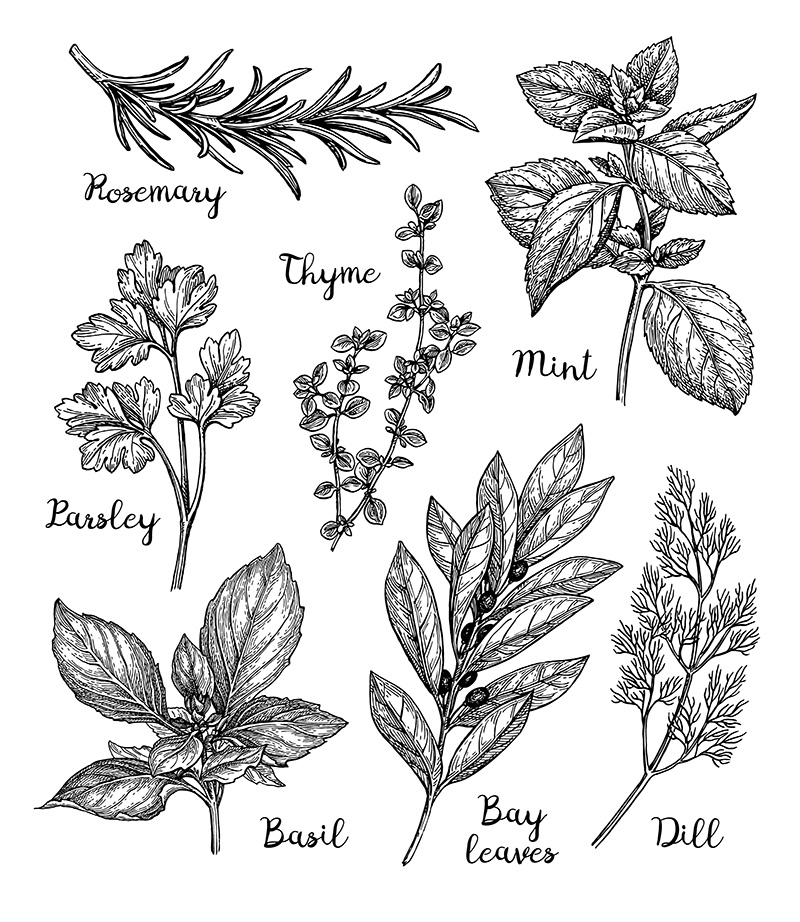
Let your herbs flower. Looking for ways to multipurpose your garden? Try an herb garden! Many of our herbs have flowers that are attractive to pollinators, such as chives, basil, cilantro, dill, mint, thyme, rosemary and sage.
Alexandria Wenninger, IPM Research Professional
Additional Resources
Graziano, Gino, Ashley Grant and Trish Wurtz. “Invasive Plant Issues: Control of Bird Vetch (Vicia cracca), PMC-00341.” University of Alaska Fairbanks Cooperative Extension Service. https://www.uaf.edu/ces/publications/database/gardening/files/pdfs/PMC-00341-Control-of-Bird-Vetch.pdf
Moore, Nancy J., Donald R. Ross and Peggy Hunt. 2004. “Guidelines for Planting Seeds of Alaska Native Plants from the Native Plant Nursery” Alaska Plant Materials Center. https://dnr.alaska.gov/ag/akpmc/pdf/GuidelinesShortProtocolsfor2004Seed.pdf
Pollinator Partnership. “AK Ecoregional Planting Guide.” https://www.pollinator.org/pollinator.org/assets/generalFiles/pollinator-garden-cards_Alaska_v3.pdf
Foltz Jordan, Sarah, Jennifer Hopwood and Sara Morris. 2020. “Nesting & Overwintering Habitat for Pollinators & Other Beneficial Insects.” Xerces Society for Invertebrate Conservation. https://xerces.org/sites/default/files/publications/18-014_02_Natural-Nesting-Overwintering-FS_web.pdf
New April 2026