
Intro to Ruminant Nutrition
LPM-00501 View this publication in PDF form to print or download.
by Joanne McCrea
Ruminants such as cattle, sheep, goats and reindeer use microbial fermentation in the rumen, the largest of four stomach compartments, to break down tough plant materials into volatile fatty acids, which are used for energy. These microbes (bacteria, protozoa and fungi) also take nitrogen to create proteins that the animal can use. When planning what to feed these animals, it’s important to consider this microbial environment because it plays such an important role in the animal’s health and access to nutrients.
The needs for energy, protein, fats, vitamins and minerals should be met by the diet or ration. Good nutrition management aims to provide the right nutrients and to make the environment suitable for rumen microbial fermentation. Understanding an animal’s nutritional requirements, what foods provide those nutrients, basic animal nutrition concepts and feed analysis terms can improve how diets are managed.
The National Research Council (NRC) is part of the National Academies of Science, Engineering, and Medicine, a group of experts appointed by Congress to offer insights and guidelines on animal nutrition. Because an animal’s nutrient requirements change during different stages of life, like when it is growing, pregnant, or nursing, the NRC provides specific information for each of these stages. You can find detailed guidelines and recommendations for animal nutrition for free on the NRC’s animal nutrition reports website: https://animalnutrition.org/nrc_reports.
*See second half of publication for definitions of highlighted words.*
Fundamental Principles of Ruminant Nutrition
Animal nutrition goals focus on using a balanced diet to meet the animal’s energy, protein, fat, vitamin and mineral requirements. When selecting feed for an animal, it’s helpful to consider how the nutrients in the feed are digested and absorbed. Feeding rations that support a healthy rumen environment are crucial for keeping animals healthy and productive.
Energy
The first step in figuring out how much food an animal needs is understanding its energy requirements. This means considering factors like the temperature of its environment, its weight, age, and whether it’s growing, pregnant or producing milk. The NRC charts linked above provide this information for animals at various ages and production stages.
One challenge for pregnant or lactating ruminants is that they may not be capable
of eating the amount of food they need. For instance, a cow late in her pregnancy
has less room in her abdomen because of the developing calf, which may limit her ability
to eat large amounts of food. To ensure she gets enough energy for both herself and
her growing calf, she might need to eat more energy-dense food that has less volume
overall.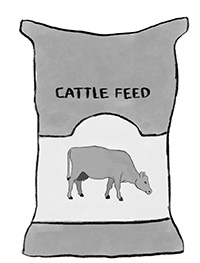
It’s important to provide the right amount of energy and nutrients in a quantity that the animal can actually consume. After determining the energy requirements, how much food the animal should eat can be estimated. As the amount of roughage (also called NDF) in the feed increases, the total amount of food the animal can eat is likely to decrease. A general guideline is that a cow can consume about 1.1% of her body weight in fibrous material each day.
For example, if you have a cow that weighs 1,300 pounds, she could eat around 14.3 pounds of NDF in a day. If the forage offered is 45% NDF, she could eat about 31.7 pounds of that forage each day (calculated by dividing 14.3 pounds by 0.45).
Depending on the animal’s energy needs and the nutritional content of the forage, it may be necessary to add extra nutrients to its diet or replace some of the forage with a more nutrient-rich feed.
How animals digest their food and use the nutrients is also crucial. Carbohydrates (sugar, starch, and fiber) are fermented by the rumen microbes and converted to volatile fatty acids (VFAs). The main types of VFAs produced are acetic, propionic and butyric acids. These acids are absorbed into the bloodstream and help the animal produce sugars and fats.
Different types of food influence which type of VFA is produced. Cereal grains promote the production of propionic acid, while fibrous forages encourage the production of acetic acid. Propionic acid is particularly important for producing glucose, which is needed in higher amounts during late pregnancy and while lactating, as it helps create lactose (the sugar found in milk). If there isn’t enough propionic acid, milk production might decrease.
Maintaining a healthy rumen environment is important for animal health. The ideal environment in the rumen needs to be maintained within a certain pH range. Feeding too many sugary or starchy foods can lead to rapid changes in VFA production, lowering the pH and affecting digestive health. A low rumen pH (below 5.5) can cause a condition known as rumen acidosis, which can have serious health consequences. Including fibrous foods in the animal’s ration helps increase rumination and saliva production, which adds bicarbonate to balance the acid levels in the rumen.
Essential amino acids and protein
Animals require protein in their diets, which is often measured as crude protein (CP) percentage. Proteins can be classified based on how they are used. Some pass through the rumen to be digested and absorbed in the abomasum and small intestine (rumen bypass protein). Others are broken down and used by the rumen microbes (rumen-degraded protein) to make microbial protein. The microbes eventually enter the abomasum to be digested, and the protein they contain is absorbed and used by the animal.
 Nitrogen is required for making amino acids, which are used to build proteins. Nitrogen can come from dietary protein and from
nonprotein sources like urea, ammonium phosphate and saliva, which contains urea. While nonprotein nitrogen
sources can’t be directly used by the animal, rumen microbes can use them to produce
microbial proteins. The amount of nonprotein nitrogen sources should be carefully
calculated and monitored, as too much can lead to toxicosis and/or ammonia poisoning,
which can be fatal.
Nitrogen is required for making amino acids, which are used to build proteins. Nitrogen can come from dietary protein and from
nonprotein sources like urea, ammonium phosphate and saliva, which contains urea. While nonprotein nitrogen
sources can’t be directly used by the animal, rumen microbes can use them to produce
microbial proteins. The amount of nonprotein nitrogen sources should be carefully
calculated and monitored, as too much can lead to toxicosis and/or ammonia poisoning,
which can be fatal.
Certain amino acids, like methionine and lysine, are considered limiting amino acids for production, meaning they are essential for production of milk or meat. The lack of these amino acids will limit the animal’s production regardless of other nutritional components. These two amino acids can also be easily broken down in the rumen, further limiting their availability. To avoid this, some amino acids are chemically treated to decrease degradation within the rumen, so they move through the rumen intact and are digested in the abomasum and absorbed in the small intestine. These rumen-protected amino acids may be added to rations to increase milk and meat production. Utilizing protected amino acids may lower the crude protein requirement in the diet and nitrogen waste in urine and feces.
Essential fatty acids and lipids
Ruminants need essential fatty acids in their diets, but too many high-fat foods can harm the rumen microbes and the animal’s overall health. The type of fat and chemical structure matters. Unsaturated fats tend to be more harmful to rumen microbes than saturated fats.
Rumen inert fats are fats that can pass through the rumen without negatively affecting microbial health and are digested and absorbed in the small intestine. These are often in the form of a calcium salt.
Adding rumen inert fats to an animal’s diet may improve production without detrimental effects on the rumen environment.
Overall, it is recommended that ruminant rations are less than 5-7% fat dry matter with considerations for the type of fat used.
Vitamins and minerals
Under normal conditions, rumen microbes produce the water-soluble B vitamins required by the animal. A deficiency of B vitamins in ruminants can occur when dietary changes or health issues disrupt normal rumen microbe activity.
One example is thiamine (vitamin B1) deficiency, which can happen if an animal eats plants that contain thiaminase, an enzyme that degrades thiamine. Diets high in grains can also alter the rumen environment, encouraging the growth of thiaminase-producing bacteria in the rumen. Thiamine deficiency causes polioencephalomalacia, a serious neurological condition. Learn more in the publication “Polioencephalomalacia in Ruminants.”
Similarly, vitamin K is normally provided by the rumen microbes. However, if the microbe activity is disrupted or if the animal eats clover contaminated with a compound called dicoumarol, it can become deficient in vitamin K. Dicoumarol is a toxin produced by certain molds that can grow on clover. Because dicoumarol prevents the body from using vitamin K, it may cause blood-clotting disorders.
Ruminants synthesize vitamin D naturally through exposure to sunlight. Animals with limited access to sunlight may need supplemented rations.
Animals convert beta-carotene, which is present in most forages, into vitamin A. This vitamin is crucial for vision, healthy skin, hair and hoof growth. While adults can store vitamin A in their fat tissue, younger animals have fewer fat stores and are more susceptible to deficient diets. Beta carotene levels in forages will decrease as the forage ages.
Vitamin E is required for normal immune system function, reproductive function, proper muscle and nerve function and selenium use (an essential trace mineral). Fresh forage contains vitamin E, but the content decreases after harvest. Alpha tocopherol, a form of vitamin E, may be added to feed to to preserve the fat in the feed and keep it from becoming rancid.
Essential minerals are an important part of a balanced ration. There are a few key reasons that providing the right amount of minerals can be complex. First, different forms of mineral supplements will have different bioavailability (the ability of a substance to be absorbed and used by the body). Secondly, mineral absorption and use depend on the levels of other minerals and vitamins in the diet. For example, a cow can be eating enough copper, but still become deficient if she consumes too much sulfur or molybdenum. In the rumen, these elements bind together, forming insoluble compounds that essentially trap the copper, preventing the animal from absorbing it. High levels of calcium or iron can also interfere with copper absorption. Finally, minerals can be toxic in excess, and the recommended levels and toxic doses vary per species. For example, sheep are more vulnerable to copper poisoning than cattle.
Different forms of mineral supplements will have different bioavailability (the ability of a substance to be absorbed and used by the body). Calcium (Ca) levels are impacted by phosphorus (P) levels. Too much phosphorus can prevent the body from properly using calcium. Rations should maintain a calcium-to-phosphorus ratio greater than 2:1. For example, legumes often have a higher ratio (greater than 4:1), while bran has more phosphorus than calcium.
During the periparturient period (the time immediately before and after giving birth) and peak lactation, the animal may require higher levels of calcium. If the animal doesn’t get enough calcium or can’t use the calcium properly, they may develop hypocalcemia (milk fever), a condition that can become life-threatening.
Feed and forage analysis
The nutrient content in feed and forage varies based on environmental factors like soil composition, rainfall, temperature, harvest time and storage conditions. Because of this, a feed and forage analysis, which determines a feed’s nutrient levels, can be used to make a balanced diet that meets production goals and maintains a healthy rumen.
Feed and forage analysis is a valuable tool for identifying nutrient deficiencies or imbalances, which can cause a wide range of health issues, including stunted growth, chronic gastrointestinal disease or decreased fertility. Animals with a properly balanced ration are healthier and more resilient to parasites and some diseases.
Feed and forage samples can be shipped to laboratories for analysis. Interpreting these results and designing the final ration is a complex task, and consulting with an experienced animal nutritionist is highly recommended to translate the data into effective feeding strategies.
Consulting an animal nutritionist to interpret the analysis results may be helpful in designing a balanced ration. Some examples of laboratories are listed here:
Dairy One: https://dairyone.com/services/forage-laboratory-services/about-the-forage-laboratory/
Ag Health Labs: http://www.aghealthlabs.com/
Servi Tech: https://servitech.com
Water quality analyses are also recommended because water may contain unwanted elements, such as excessive nitrates or sulfur, or toxic minerals, such as arsenic or lead. If the water supply is found to have a high level of sulfur, the animal’s feed could be adjusted to account for that intake, preventing the total daily dose from reaching a toxic level.
Definitions
Feed and forage types or characteristics
Digestible nutrients: The components of animal feed, including protein, fiber, fats and carbohydrates, that can be absorbed and used by an animal’s body for energy and productive functions
Concentrates: Animal feeds that contain a lot of energy or protein. Concentrates typically contain more than 18% total digestible nutrients (TDN). Common examples include cereal grains like corn, oats and barley.
Forage or roughage: Fibrous feed materials with a relatively low digestible nutritional value, with less than 18% TDN. They are essential for the digestive health of animals.
Ensiling: A method of storing forage under anaerobic conditions (without oxygen). Anaerobic fermentation creates an acidic environment that preserves the forage.
Silage: Forage that has been chopped and stored using the ensiling method.
Haylage: Hay that has been chopped and stored using the ensiling method.
Baleage: Baled forage wrapped tightly in sheets of plastic and left to undergo anaerobic fermentation.
Total mixed ration (TMR): Complete animal feed mixtures that combine roughage and concentrates into a homogenous blend. Sometimes ingredients may be ensiled and other nutrients, such as nonprotein nitrogen sources and minerals, can be added. Special mixers, called TMR wagons, are used to mix these rations. Mixing errors can occur if the added ingredients are mismeasured or if the wagon is not working well.
Brewer’s grains, distillers grains or spent grains: Byproduct grains from alcohol fermentation that can be sourced from distilleries or breweries. While these grains have a lower energy content because the sugars and starches are used to make alcohol, they still provide fiber, protein and fat to the animal. However, their overall nutritional content will differ from that of unspent grain — for example, the sulfur and phosphorus content may be higher in spent grains. Because there are recommended limits on how much spent grain an animal should eat, it’s best to use a feed analysis when incorporating spent grains into an animal’s diet.
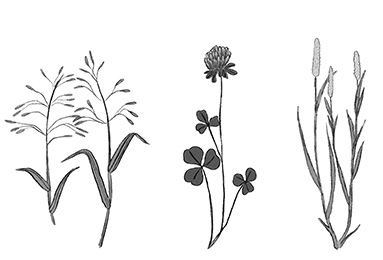
Forage legumes: A group of forage plants that include alfalfa, clover and trefoil. Legumes generally have more digestible energy, protein and calcium than grass forages. They also have a symbiotic relationship with rhizobia microbes that fix nitrogen from the soil.
Forage grasses: A group of forage grasses such as timothy, brome and orchard grass. In general, as these grasses mature, they become less nutritious and harder to digest.
Particle size: The size of the feed particles, which can be measured using a series of sieves that filter feed based on size, ranging from 19 millimeters to 1.18 mm. Particle size can affect how long animals chew their feed, how much they can eat in a day and how well they digest the feed. It may also influence the stomach’s pH level and microbiome.
Nutrient components
Carbohydrates: Sugars, starches and fibers. Animals use carbohydrates as a source of energy. They are made up of three elements: carbon, hydrogen and oxygen.
Sugar: A simple form of carbohydrate that consists of carbon, hydrogen and water.
Starch: A more complex carbohydrate with many sugar molecules linked together.
Fiber: A carbohydrate that provides the structural support found in the cell wall of plant cells. It includes cellulose, hemicellulose and lignin.
Cellulose: A complex carbohydrate of many glucose units linked together. The cell wall of plants is mostly cellulose. Ruminants can only partially digest it, while monogastrics, like pigs and humans, cannot digest it at all. Cellulose is used to measure the fiber content of a food. Cellulose is insoluble in neutral and acid detergents used in feed/forage analyses.
Hemicellulose: Another component of plant cell walls, hemicellulose is a heteropolymer carbohydrate — a complex carbohydrate made up of two or more types of sugar units connected in various ways. It’s easier for ruminants to digest than cellulose.
Lignin: A complex carbohydrate that binds cellulose and hemicellulose, giving a rigid structure to the cell walls. Neither ruminants nor monogastrics can digest lignin, and as the amount of lignin in plant material increases, the cellulose in the forage becomes less digestible.
Amino acids: Nitrogen- and carbon-rich molecules that are the building blocks for making proteins. Some amino acids are essential, meaning that animals need to have them provided in the ration.
Protein: Molecules made up of multiple amino acids joined by peptide bonds. Proteins are important micronutrients for the animals’ health, building muscle and tissue, supporting lactation and other functions.
Rumen-degraded protein: Protein that is broken down and used by microbes in the rumen.
Rumen bypass protein (or rumen undegraded protein): Protein or amino acids that are not degraded by the rumen microbes and are digested in the abomasum and absorbed in the small intestine.
Rumen-protected amino acid: An amino acid treated to prevent microbes from breaking it down in the rumen. These amino acids are chemically altered or coated with a material that prevents rumen degradation. Many amino acids that are not protected from rumen microbial degradation will not make it past the rumen and will not be available for the animal to absorb in the small intestine.
Microbial protein: Protein made by the microbes in the rumen. These microbes are eventually digested in the abomasum, allowing the animal to absorb and use the protein contained in the microbes.
Nonprotein nitrogen sources: Sources of nitrogen, like urea and ammonium phosphate, that microbes can use to make microbial protein. Animals don’t directly use these sources of nitrogen to make proteins, but can digest the microbial protein. Using feed additives can help increase the nitrogen available for producing microbial protein.
Lipids: A group of molecules that includes fats, fatty acids, oils, cholesterols, phospholipids and waxes.
Fats: A group of lipids known as triglycerides.
Vitamins: A group of organic compounds required for normal cellular function and overall health.
Fat-soluble vitamins (A, D, E, K): Vitamins that dissolve in fat. These can be stored in the body fat for long periods of time, compared to water-soluble vitamins, which are not stored in the body.
Water-soluble vitamins (C and B): Vitamins that dissolve in water, and are not stored in an animal for long. These need to be provided daily.
Essential minerals: These are inorganic substances required for cellular functions, health and growth. Some essential minerals have narrow safety ranges, meaning the amount between the recommended amount and the toxic amount is small.
Macrominerals: Essential minerals needed in relatively large amounts. These include sodium, chloride, potassium, calcium, phosphorus, magnesium and sulfur.
Microminerals: Essential minerals needed in relatively small amounts. These include iron, iodine, selenium, copper, zinc, cobalt, manganese and molybdenum.
Feed and forage analyses and ration calculations
As fed: A feed as it is fed to the animal. This includes any water content it may have, which can vary significantly between different feeds.
As fed basis: The nutrition content of the feed, including the water it contains. This phrase is used to clarify that the feed analysis reflects the actual feed given to animals. On an as fed basis, feed may contain from 90% water for lush pastures to 10% water for cereal grains.
Dry matter (DM): The contents of a feed after removing all the water.
Dry matter basis: The nutrient contents of a feed or forage from a dry matter sample. This helps us compare different feeds by looking at their nutrient content without considering the water. By looking only at the dry matter, feeds that might have different moisture levels can be compared.
Dry matter intake (DMI): The amount of feed on a dry matter basis that the animal eats.
Total digestible nutrients (TDN): An estimate of the energy available in a feed or forage, taking into account everything that can be digested, including carbohydrates, fiber, protein and fats.
Gross energy (GE): The total amount of energy in a feed.
Digestible energy (DE): The gross energy of the feed minus the energy lost through feces.
Fecal energy (FE): The amount of energy lost through feces
Metabolizable energy (ME): The gross energy of the feed minus the energy lost through gas, feces and urine.
Megacalorie (Mcal): A unit of energy, where one megacalorie equals 1,000 kilocalories (and one kilocalorie equals 1,000 calories).
Net energy (NE): The gross energy of the feed minus the energy lost through gas, feces and metabolic processes, the energy it takes to turn food into energy. Also called heat increment. Net energy is what the animal can actually use for growth, maintenance or production.
NEm: Net energy for maintenance
NEg: Net energy for growth
NEl: Net energy for lactation (milk production)
Total nitrogen (TN): A measurement of all the nitrogen content in a feed or forage. Includes nitrogen from amino acids, protein and nonprotein nitrogen sources.
Crude protein (CP): An estimate of the total protein in the feed, calculated using total nitrogen and applying a conversion factor specific to the feed. For example, a conversion factor for the legume alfalfa is 6.25. To convert an alfalfa meal with a total nitrogen of 3% to crude protein, you would multiply 6.25 by 0.03 to get 18.75% crude protein.
Crude fiber (CF): A measure of the fiber content in the feed. This measurement includes fiber that ruminants can only partially digest, making it a poor indicator of feed digestibility in ruminants. It’s more useful for estimating the digestibility of feeds for monogastric animals like pigs and horses.
Neutral detergent fiber (NDF): A measure of fiber in a feed or forage that indicates the bulk fiber or roughage present in the feed. The analysis to determine NDF uses neutral detergent to dissolve the easily digested starches, sugars and proteins, leaving a fibrous residue that is primarily cell wall components of plants (cellulose, hemicellulose, lignin and ash). The fibrous residue is converted to a percentage of the dry weight of the feed sample.
Acid detergent fiber (ADF): The percent of the feed that contains cellulose, lignin and ash. The ADF analysis exposes the NDF component of a feed to an acid detergent, which dissolves the hemicellulose. The ADF measurement indicates the amount of poorly digested cellulose and nondigestible lignin and ash present in the diet.
Ash: The total mineral content of the feed or forage. This is determined by burning the feed and weighing the residue left after all organic matter has been burned off.
Feed conversion ratio (FCR): A ratio comparing the amount of feed used to the amount of product (like meat or milk) produced. A lower number indicates better efficiency since the animal converts feed into output more effectively. This may be expressed as pounds of total mixed ration fed: pounds of milk produced.
Joanne McCrea, Assistant Professor of Large Animal Medicine
Reviewed March 2026