


Photo by Bryan Whitten.
Planetarium construction continues at the west side of the University of Alaska Museum
of the North on UAF’s Troth Yeddha’ Campus in Fairbanks in August 2025.
By Rod Boyce
The dream of a planetarium at the University of Alaska Fairbanks will come to life in spring 2026 with the opening of the new 65-seat facility to the public.
The planetarium, under construction as an add-on to the west side of the University of Alaska Museum of the North, will be named for Walt and Marita Babula, the formerly anonymous donors whose $7.4 million donation is funding the project.
The couple’s gift is the largest ever to the University of Alaska from living individuals.
The project itself is a testament to the lasting impact of philanthropy in our community, said UAF interim Chancellor Mike Sfraga.
“Aspirations and grand visions like our new planetarium can sometimes seem out of reach,” he said. “We are so grateful for the partnership that has enabled Walt and Marita’s vision to be realized and create this extraordinary place that will educate and inspire Alaskans and museum visitors for generations to come.”
The planetarium is a collaboration between the museum and the UAF Geophysical Institute and will provide a forum for highlighting astronomy, UAF research, and Alaska’s cultural and biological richness.
“Most importantly, it will enable space science education opportunities for K-12 and higher education students,” the Babulas said in a written statement. “We also envision the planetarium as a place that will spark the curiosity of Alaskans and visitors from around the globe about our Alaska culture and vast universe.”
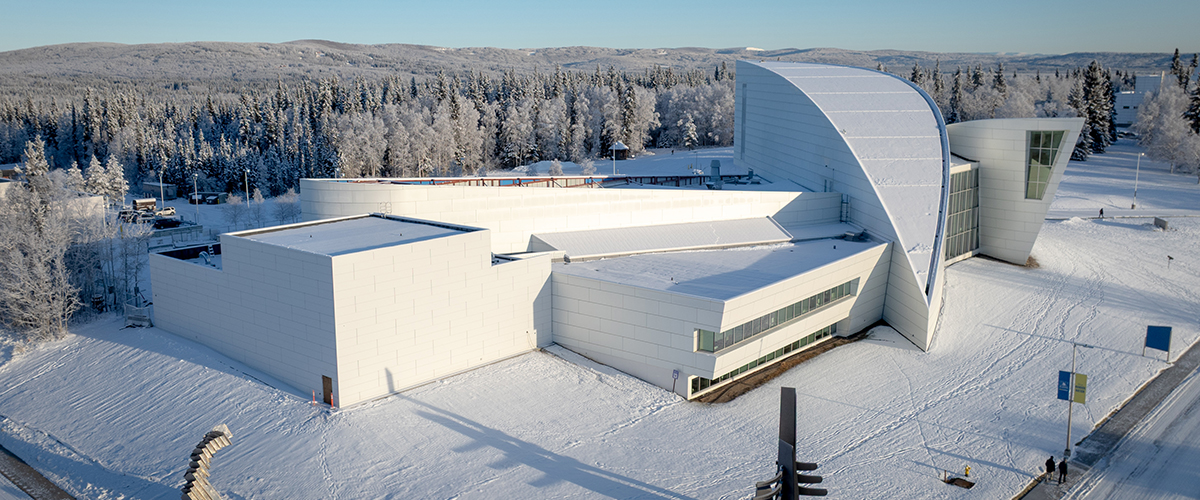
Snow surrounds the UA Museum of the North, including its new planetarium addition (at left), in November 2025. Crews continue to work inside the enclosure.
The 5,700-square-foot planetarium will include an 11-meter dome, two ultrahigh-resolution projectors, four image-generation computers and theater-quality sound. It is being built by Davis Constructors & Engineers of Anchorage.
In addition to being a draw for visitors to Interior Alaska, the planetarium will serve the community, prekindergarten-12th grade school groups, and UAF students and faculty. It will also host special events.
The planetarium will be more than space-based, museum Director Patrick Druckenmiller said.
“A planetarium, despite its name, is really just a big dome theater,” he said. “We’re looking forward to bringing in a variety of content programming that will feature a multitude of subjects, especially relating to Alaska and the Arctic.”
Donor magic
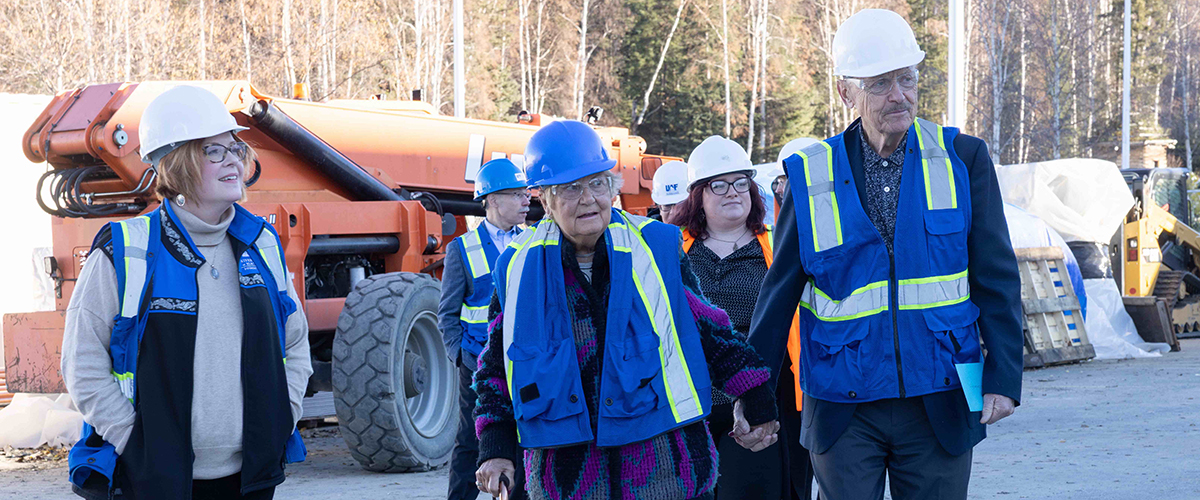
Marita and Walt Babula walk hand in hand Oct. 11, 2025, at the site of a 65-seat planetarium. The Babulas made a previously anonymous donation of $7.4 million to the project.
Walt Babula arrived in Fairbanks in 1970 and was stationed at Bassett Army Hospital at Fort Wainwright, becoming the post’s first full-time orthodontist. He established Fairbanks Orthodontic Group in 1974 and has been providing orthodontic care to Interior Alaska families ever since.
Marita Babula began her career at Fort Wainwright in Army Community Services but later transitioned into a full-time position as office manager and treatment coordinator for Fairbanks Orthodontic Group.
Among their many contributions, the Babulas also made possible the Babula Children’s Garden at UAF’s Georgeson Botanical Garden.
“Fairbanks has been home to us for decades,” the couple wrote in a statement. “We are pleased to give back to a community that we love.”
Other notable donors assisting the project include longtime UAF champions Sarah and Cary Keller, who committed $250,000 in start-up funding for the planetarium director position.
Sarah Keller came to Fairbanks in 1978. She earned her master’s degree from UAF in natural resources in 1990 while working as a wildlife biologist for the Alaska Department of Fish and Game. She has been involved with the museum for many years as a member of the Museum Advisory Council.
Cary Keller moved to Alaska in 1984 and eventually opened Sportsmedicine Fairbanks. He has been a UAF athletics team physician and has also provided those services for North Star Ballet, Fairbanks Ice Dogs hockey and high school teams.
“Sarah and I support the mission of the planetarium, for it is an iconic opportunity for education,” Cary Keller said in a written statement. “It is a state-of-the-art, three-dimensional audiovisual theatre that will attract audiences for decades.
“We are particularly excited by the opportunity for K-12 education at the planetarium. It will make lifelong memories for Alaska’s children.”
The Kellers said the planetarium and museum will forever enhance each other and earn a worldwide reputation.
“The University of Alaska and the people of Alaska can be forever proud of the Walt and Marita Babula Planetarium,” Cary Keller said.
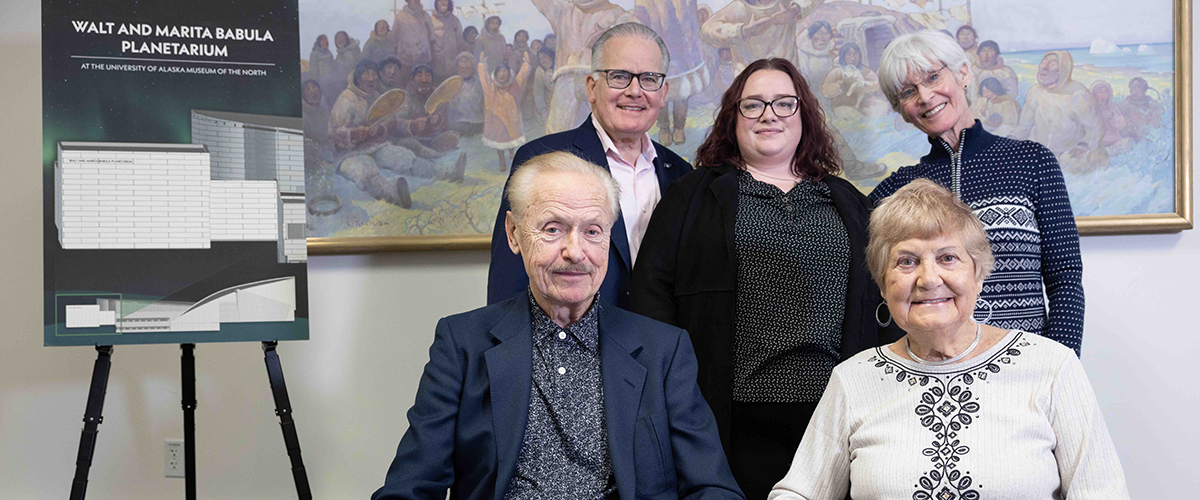
Walt and Marita Babula visit the planetarium construction site at the University of Alaska Fairbanks on Oct. 11, 2025. The Babulas sit with planetarium donors Cary and Sarah Keller, flanking newly hired planetarium director Omega Smith.
Additional support came from the M.J. Murdock Charitable Trust, which pledged nearly $450,000 toward the planetarium’s projection and sound systems.
“The Murdock Trust has been honored to support the collaborative and innovative work of the Geophysical Institute and Museum of the North over the years,” Elaine Charpentier Philippi, senior program officer for education and leadership development at the Murdock Trust, said earlier this year.
“As the planetarium takes shape, we will be excited to see how these investments bring expanded capacity, increased visitor experience and deeper research in the natural sciences for the benefit of the visitors and researchers alike,” she said.
The Murdock Trust has been an incredible partner on the planetarium project, Druckenmiller said. “They recognized the power of philanthropy by the Babulas for this transformational project and saw that as a great opportunity to partner with us on this crucial component of the project.”
Their support of the project is invaluable and will help elevate the programming at the planetarium, added Geophysical Institute Director Robert McCoy.
“We are delighted to partner with the trust to purchase the latest systems so we can provide the public an exciting and highly enjoyable science experience,” he said.
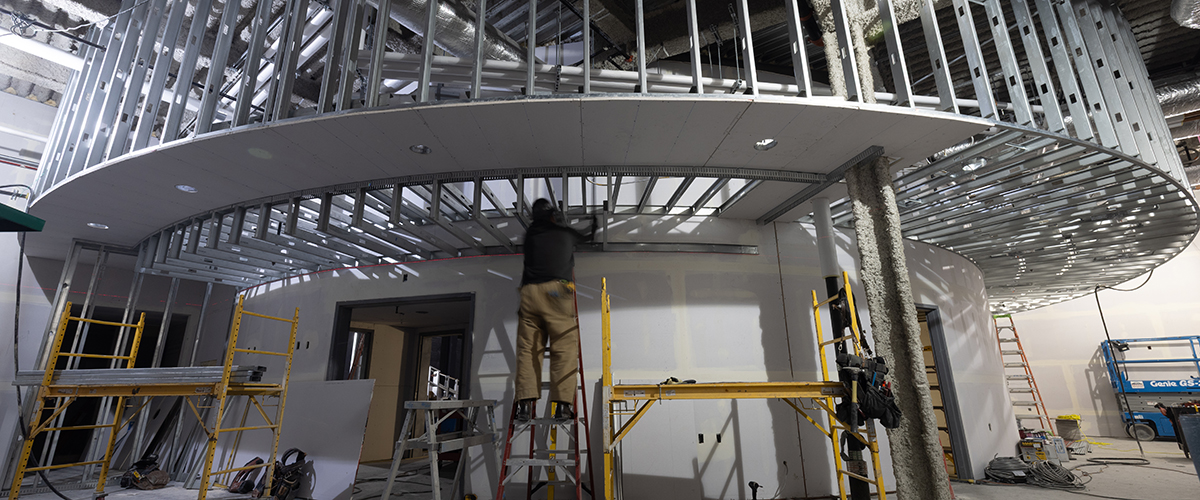
A crew member works on the planetarium structure inside the new museum addition.
Other contributors include an estate gift from Michael and Eileen Lynn Rice, along with support from Davis Constructors and Engineers, Inc. and RESPEC.
A director’s vision
Omega Smith has been in the planetarium world for a long time. The newly hired planetarium director knows what a big moment this is for UAF and the community.
“The planetarium at the museum will celebrate our science and stories born right here in Alaska,” Smith said. “I look forward to fueling the curiosity of students, faculty, the broader Fairbanks community and the tens of thousands of visitors who come for a unique Alaska experience.”
Growing the planetarium’s content will involve partnerships among the museum, the Geophysical Institute and other UAF departments, Smith said. The programs will not only showcase the groundbreaking work of university researchers and space science but also highlight Alaska’s rich cultural heritage.
Smith has extensive planetarium experience, having worked nine years at the University of Alaska Anchorage’s Planetarium and Visualization Theater as manager and then senior planetarium presenter. She previously worked as planetarium and science education coordinator at the Anchorage Museum.
“As a lifelong Alaskan who grew up beneath the northern lights, I’m honored to be this planetarium’s first director,” she said. “I’m deeply grateful to the donors whose astronomical generosity is helping bring to life a long-held vision of the Geophysical Institute and UA Museum of the North.”
Rod Boyce is a science communicator at the UAF Geophysical Institute.