Header Logo

Newswire logo

July 2, 2024

Research, workforce development and economic growth news stories and other feature articles from the University of Alaska Anchorage, University of Alaska Fairbanks, University of Alaska Southeast, University of Alaska System Office and the UA Foundation. Compiled by the University of Alaska System Office of Public Affairs.


University of Alaska Anchorage

Buried in the catalog: Hidden-gem courses

There are a variety of non-traditional courses offered for students attending the University of Alaska Anchorage. Hidden among the many standard courses offered are unique courses such as Dog Mushing and Modernist Cuisine. 

To find these electives, students just have to know the right terms to search for in the registration section on UAOnline. Selecting the correct semester will offer more electives as some courses are only offered during specific semesters.

Contact: Austin Osborne

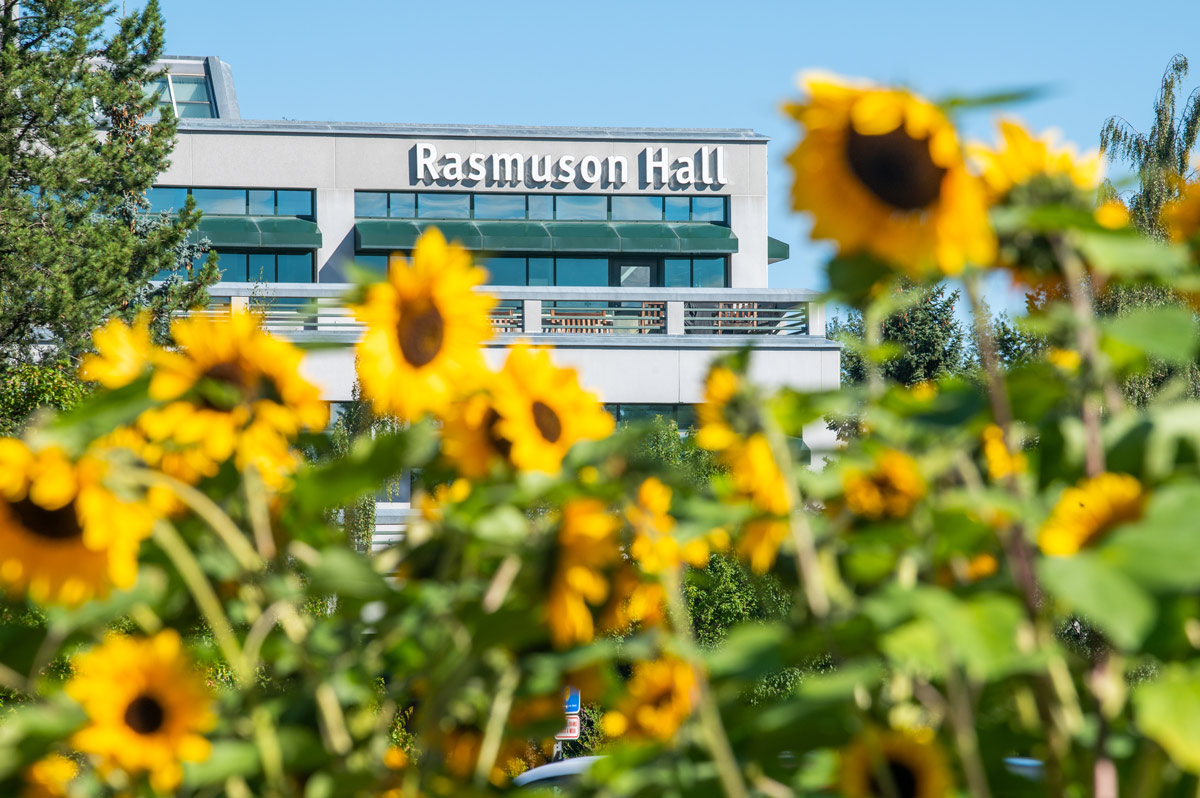
Rasmuse Hall on the Uaa campus, seen through flowers in the foregroundNeed a break from standardized tests? Explore UAA’s catalog and get a unique experience through a variety of non-traditional courses!


Empowering Alaska’s smallest businesses: Alaska SBDC secures second round of $19M funding for Alaska State Small Business Credit Initiative

The Alaska Small Business Development Center (SBDC) at UAA's Business Enterprise Institute (BEI), having deployed over $19 million in Alaska State Small Business Credit Initiative (SSBCI) funding in the program’s first year, recently announced a second round of $19 million in funding for the SSBCI. Alaska is the fifth state to reach this program milestone due to the speed with which it is deploying SSBCI funds. This federally funded program supports Alaska’s smallest businesses and most marginalized entrepreneurs, fostering economic growth and job creation throughout the state.

Contact: Austin Osborne


Alaska college sports notebook: UAA track star named GNAC Male Athlete of the Year

In his first year with the program and in the United States altogether University of Alaska Anchorage freshman track star Joshua Caleb didn't just hit the ground running, he made history along the way. On Monday, he added yet another prestigious honor to his already impressive resume when he was named the 2023-24 GNAC Male Athlete of the Year.

Caleb is the first male freshman in program history to win the award, and just the second-ever freshman to receive the honor since the conference was founded in 2001-02. The only other was Seattle Pacific University women's cross country/track and field star Jessica Pixler during her freshman campaign in 2006-07.

Contact: Austin Osborne


University of Alaska Fairbanks

New research shows flood risk for several Alaska communities

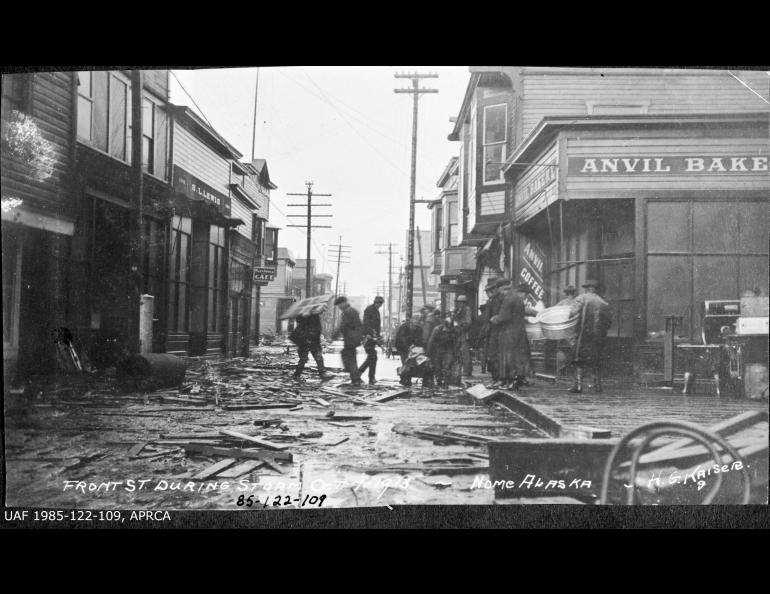
Coastal Alaska communities from the Yukon-Kuskokwim Delta northward will see more of their buildings exposed to flooding by 2100 if they continue developing at the same location, according to new research.

University of Alaska Fairbanks graduate student Richard Buzard found that 22% of structures in 46 of 55 analyzed coastal communities are in flood plains. Sea level rise projections suggest the percentage will increase to 30–37% by 2100, he reported.

Western Alaska coastal communities currently have the greatest flood exposure and the most structures at risk, Buzard writes. 

The research was published in April in Scientific Reports.

Contact: Rod Boyce

historical photo of Nome street during a storm on October 7, 1913Front Street in Nome, Alaska during a storm on October 7, 1913. UAF archive photo

Visualizing the landscape of tribal communities

The University of Alaska Fairbanks has released a set of resources to help researchers and academics working in rural Alaska understand the complexities of tribal communities. 

The new materials come amid increased focus on Arctic climate research and Indigenous priorities, a trend that tribal communities welcome but can find taxing.

Adelheid Herrmann, a co-investigator at UAF’s Alaska Center for Climate Assessment and Policy, developed the resources as part of her work building capacity in rural communities to respond and adapt to climate change. Herrmann, of Dena’ina and German descent, is from the community of Naknek, Alaska.

Contact: Adelheid Herrmann


New way to spot beetle-killed spruce can help forest, wildfire managers

A new machine-learning system developed at the University of Alaska Fairbanks can automatically produce detailed maps from satellite data to show locations of likely beetle-killed spruce trees in Alaska, even in forests of low and moderate infestation where identification is otherwise difficult.

The automated process can help forestry and wildfire managers in their decisions. That’s critical as the beetle infestation spreads.

The identification system by assistant professor Simon Zwieback at the UAF Geophysical Institute was detailed in the ISPRS Journal of Photogrammetry and Remote Sensing on May 18. Zwieback is also affiliated with the UAF College of Natural Science and Mathematics.

Contact: Rod Boyce


University of Alaska Southeast

Alaska leads the nation in drone innovation, wants to use it to save more lives

Alaska is at the forefront of using drone technology to better forecast and study disasters such as avalanches, according to Unmanned Aerial Systems (UAS) experts.

About 40 UAS experts attended an interactive peer exchange in Juneau on Tuesday and Wednesday to witness the breakthrough technology used to monitor Alaska avalanches. 

Outside of avalanche and landslide monitoring, DOT hopes its drone in a box can assist in mapping and studying Suicide Basin to increase situational awareness around glacial outburst flooding.

DOT holds internships in conjunction with the University of Alaska Southeast’s drone mapping program, which continues to be developed

Contact: Kevin Myers

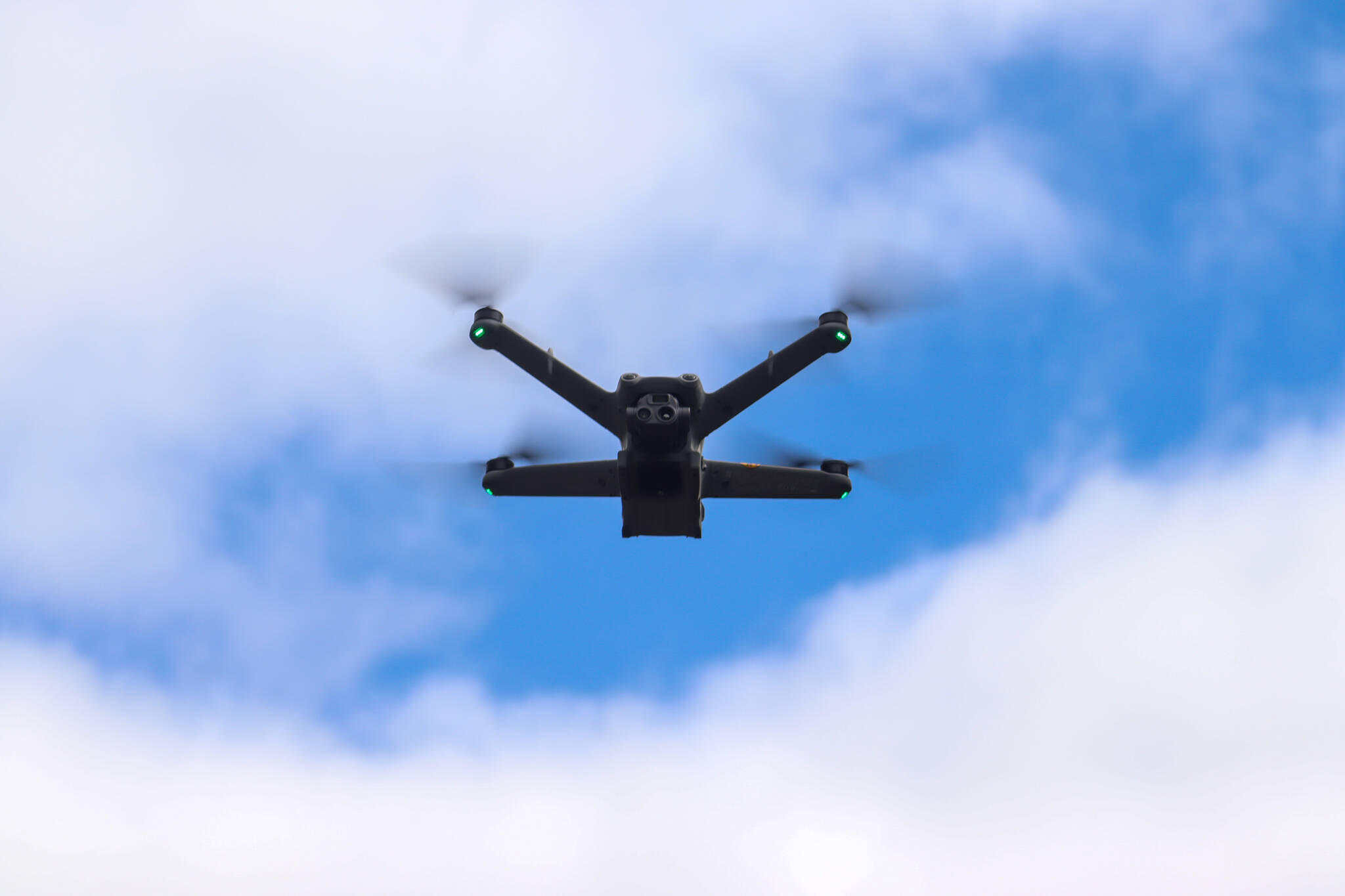
The DGI from dock one flies as part of an Alaska Department of Transportation and Public Facilities drone demo on Tuesday.The DGI from dock one flies as part of an Alaska Department of Transportation and Public Facilities drone demo on Tuesday. It’s used for mapping missions. (Jasz Garrett / Juneau Empire)


UAS Project Featured in White House Policy Document on Ocean Justice

The University of Alaska Southeast is proud to announce that a UAS faculty led collaborative project with local and federal agencies was featured in a recent White House policy document on Ocean Justice. This prestigious recognition underscores the significance of community-engaged research in advancing environmental and social justice.

Spearheaded by UAS Professors Dr. Sanjay Pyare and Dr. Jason Fellman, along with Ryan Bellmore from the U.S. Forest Service, this initiative serves as a prime example of integrating scientific research with community and tribal engagement to address critical environmental challenges. The highlighted project, "Community Engagement in a Stream-network Assessment of Salmon Thermal-habitat in the Situk River Watershed of Yakutat, Alaska," involves a dynamic collaboration between UAS, the U.S. Geological Survey through the Alaska Climate Adaptation Science Center, with the coastal Alaska community of Yakutat.

Contact: Kevin Myers


Undergraduate fellows start projects helping communities

The Alaska Sea Grant Community-Engaged Fellowship for undergraduate students is part of a national program coordinated by the Sea Grant network. The program focuses on increasing representation in the coastal sciences and prioritizes community involvement as a core component of science-based work. The program also prioritizes mentorship, cohort building, and developing professional skills. Fellows are provided with a stipend.

Joi Gross is studying at University of Alaska Southeast and is leading statewide outreach and education efforts focused on marine debris prevention. Gross is based in her hometown of Anchorage and being mentored by Brooke Carney with Alaska Sea Grant.

Mary Simeon attends University of Alaska Southeast and is spending the summer in her hometown of Bethel collecting oral histories focused on salmon from community elders. Simeon is being mentored by Stori Oates with the Alaska Fisheries Science Center.

Contact: Alaska Sea Grant’s CEF coordination team


UA System Office

UA President Pat Pitney Announces Key Leaders of Arctic Leadership Initiative

UA President Pat Pitney announced a cohort of leaders called “President’s Arctic Professors,” as a part of the university’s new Arctic Leadership Initiative.

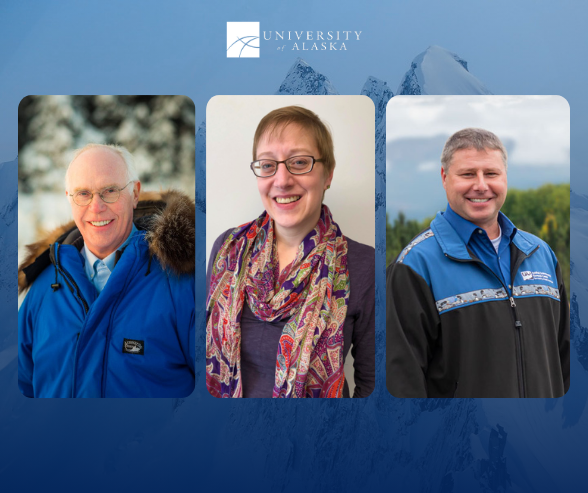
The President’s Arctic Professors named are Dr. Larry HinzmanJeff Libby, and Dr. Erica Hill

The initiative, one of the Board of Regents’ strategic priorities, is designed to position Alaskans as world leaders in the Arctic, give students and early career professionals the foundation and network needed to lead in the changing Arctic, and enhance the reputation of UA’s universities as centers of Arctic expertise.

Contact: Jonathon Taylor

photos of the three professors, with a snow-capped mountain in the backgroundFrom left to right: Dr. Hinzman, Dr. Hill, and PhD candidate Jeff Libby


Labor Contract on the Horizon for UA System Grad Student Employee Union

AGWA, the first graduate student union in Alaska, is affiliated with the International Union, United Automobile, Aerospace and Agricultural Workers of America, better known as United Auto Workers (UAW), one of the largest unions in the country. UAW often partners with academic units, including student employees at University of Washington and University of California.

The May ratification vote was completed in a single day, which union organizer Abigail Schiffmiller says is “unheard of.” According to Schiffmiller, the shortest ratification drive that UAW representatives had previously seen at other schools was three days.

Contact: Jonathon Taylor


Did you know UAA Professor Travis Rector's stunning images of stars and galaxies have appeared in books, galleries, National Geographic, and the New York Times?

Travis Rector, professor of astrophysics at UAA, merges passion and education through his astrophotography, teaching and authorship. Through his work in and out of the classroom, he is empowering UAA students to explore cosmic frontiers, and fostering a legacy of scientific inquiry and environmental stewardship.

By combining filtered images taken at many wavelengths, he creates vibrant images with colors reflecting the chemical makeup of the object. This work not only produces visually captivating results but also provides valuable insights into the composition and behavior of objects in space, merging artistic expression with science.

Contact: Jonathon Taylor


The University of Alaska is an equal opportunity/equal access employer and educational institution. The university is committed to a policy of nondiscrimination against individuals on the basis of any legally protected status.