Integrated Pest Management is a common sense approach to achieving long-term management of pest problems with minimal impact on human health, the environment and non-target organisms. IPM focuses on the biology of pests and their relationship to the environment. IPM strategies may include the application of physical, cultural, mechanical, biological and chemical controls. The first step in an IPM program is to identify any organism in question, and to completely investigate the situation. Oftentimes a plant problem is caused by cultural factors, and insects that are present are identified as beneficial.
Purpose and Background
The IPM program addresses the public need for pest management education within the state of Alaska. Offering nonbiased, research-based information, this resource is widely used by residents across the entire state. The AKIPM program has provided educational outreach in Alaska since 1981. This unique program was originally designed to meet the public demand for IPM information and continues to develop accordingly in response to public needs and the changing pest trends in Alaska. Read More about the IPM Program here.
Services Provided
- Specimen evaluation & of plant disorders (click here for specimen submittal guidlines and here for specimen identification request form)
- Identification of Insect, plant and disease specimens
- Researching information about various pests and IPM control options.
- Rcommendation of IPM control options to reduce pest problems
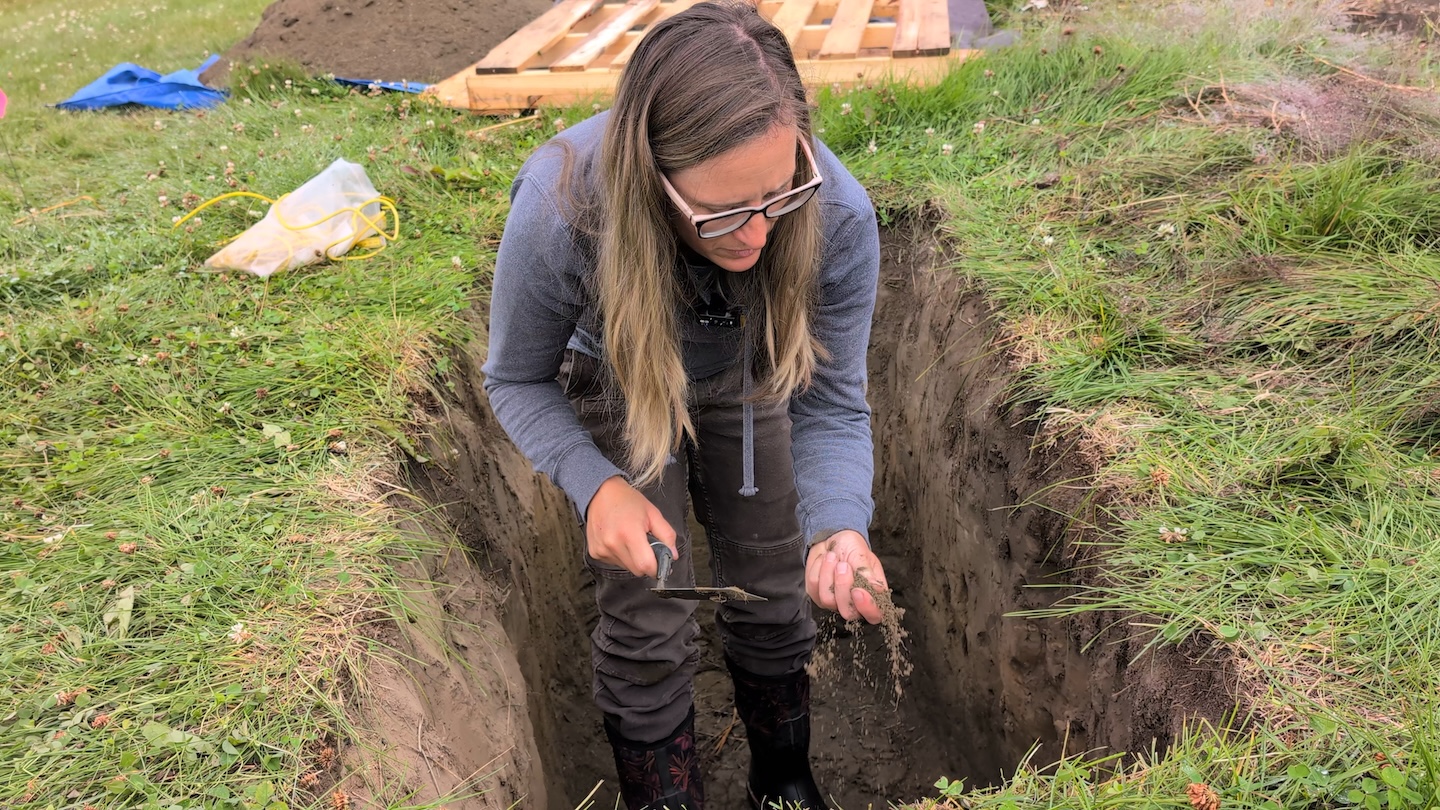
- Site visits to examine tree disorders in the field
Areas of Emphasis
-
IPM Education
Educational programs focus on teaching the Alaskan public about the systematic IPM approach to problem solving. Clients learn about pest identification, the variety of methods and many benefits of IPM. -
Community and Urban Forest Health
Community forest pest topics include the identification of pests and diseases on both native and landscape woody ornamental plants. Information about abiotic conditions, landscape plant material selection, cultural care and hardiness issues are also addressed. IPM technicians also assist USDA Forest Service researchers with insect pest sampling and monitoring projects. -
Exotic and Imported Pests
This category is essential to assist program partners with the identification and tracking of imported pests and diseases. It also addressed the public demand for information about subjects appearing in the national media, such as the Asian long-horned beetle, and the Asian gypsy moth. -
Noxious and Invasive Weeds
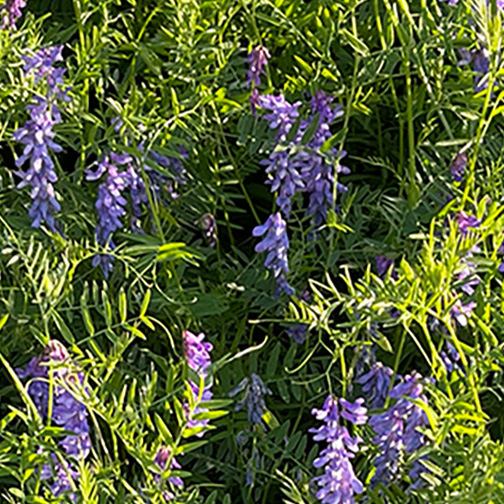
In addition to public outreach on this subject, IPM technicians scout for and map noxious and invasive weeds and provide information on control options. The program cooperates with public and private agencies, assists with noxious and invasive plant identification, and works toward educating landowners and the general public.
Outreach
- Clientele contact is made by telephone, mail, e-mail, or in person.
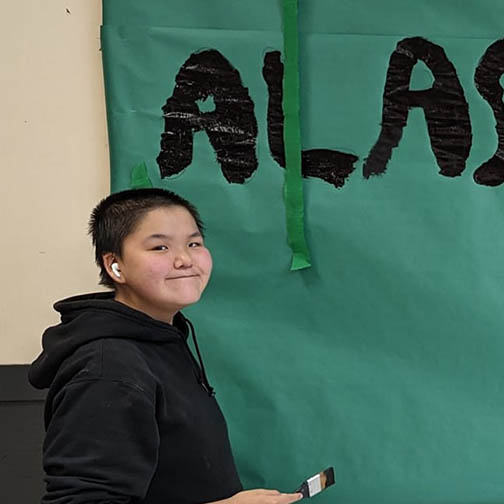
- IPM educational programs in the classroom and field are provided to children and adults.
- Media contact occurs on television, radio, the internet, and in newspapers and newsletters.
- Educational clinics are advertised and held where clients receive direct assistance.
Administration
The statewide IPM program is a cooperative effort, combining the resources of the University of Alaska Fairbanks Cooperative Extension Service and the USDA Forest Service, State and Private Forestry, Forest Health Protection. The USDA Cooperative State Research, Education, and Extension Service also provides significant funding. A partnership with the State of Alaska DNR facilitates additional exotic pest monitoring.
Extension manages the daily operation of the program, oversees grants, and provides office space, supervision, training and administrative support. The IPM Program operates with 3 full-time staff members, 6 seasonal technicians, and a faculty oversight committee. The USDA Forest Service, State and Private Forestry provides significant financial support for IPM personnel in addition to training and technical assistance from their specialists.
IPM Program Partnerships:
How to Contact the IPM Program
Faculty IPM Program Coordinator:
Tom Jahns, Resource Agent, Soldotna
262-5824
fftrj@uaf.edu
Statewide IPM Program Manager
Corlene Rose, Anchorage
786-6316
ancr@uaa.alaska.edu
Invasive Plants Instructor
Jamie Snyder, Anchorage
743-9448
fnjms2@uaf.edu
Statewide IPM Technician
Michael Rasy, Anchorage
786-6309
anmwr@uaa.alaska.edu
Anchorage Area - Seasonal
786-6300
Fairbanks/Tanana Valley - Seasonal
474-5702
Juneau - Seasonal
465-8545
Delta Junction - Seasonal
895-4215
Palmer/Matanuska-Susitna - Seasonal
745-3360
Soldotna/Kenai - Seasonal
262-5824